Lambeth is one of South London’s most visually distinctive boroughs, with street art, large-scale murals, community artwork and public installations across Brixton, Stockwell, Waterloo, Vauxhall and other neighbourhoods. Its creative identity reflects Caribbean heritage, local music, political expression, social history and contemporary urban culture.
- What Makes Lambeth an Important Destination for Street Art and Murals?
- Where Can Visitors Find Street Art and Murals in Brixton?
- How Does Brixton’s Caribbean Heritage Influence Its Street Art?
- Where Can Visitors Discover Street Art Around Stockwell?
- What Street Art Can Visitors Explore Around Waterloo and the South Bank?
- Why Is Leake Street Arches Significant to London’s Graffiti Culture?
- Where Can Visitors Find Public Art Around Vauxhall?
- What Types of Street Art and Murals Can Visitors See in Lambeth?
- How Does Lambeth’s History Shape Its Street Art and Public Artwork?
- Which Lambeth Neighbourhoods Should Visitors Include in a Street Art Walking Tour?
- How Can Visitors Reach Lambeth’s Street Art Locations?
- When Is the Best Time to Explore Lambeth’s Street Art?
- How Can Visitors Photograph Lambeth’s Murals Responsibly?
- How Does Street Art Support Lambeth’s Local Communities?
- What Should Visitors Know Before Planning a Lambeth Street Art Visit?
- Which Specific Public Artworks Should Visitors Look For in Lambeth?
Visitors exploring Lambeth encounter artwork on building walls, railway structures, public spaces, independent business premises and cultural venues. Brixton is particularly associated with bold murals and Black British cultural heritage, while Waterloo combines contemporary street art with creative public spaces. Stockwell and Vauxhall also contribute to the borough’s wider visual identity.
Street art in Lambeth is not limited to decoration. It provides a public record of community experiences, cultural movements and changing neighbourhood identities. Understanding the locations, artists and historical influences behind the artwork helps visitors explore the borough beyond its conventional tourist attractions.
What Makes Lambeth an Important Destination for Street Art and Murals?
Lambeth is an important South London destination for street art because its neighbourhoods combine community murals, independent creative spaces, cultural heritage and contemporary public artwork. Brixton, Stockwell, Waterloo and Vauxhall offer different examples of how visual art connects with local identity.
Lambeth is a London borough on the south bank of the River Thames. It extends from Waterloo and the South Bank towards Brixton, Streatham, Norwood and the surrounding residential neighbourhoods. Its geographical range creates a varied environment for public art.
Street art refers to visual artwork created in public or publicly accessible urban environments. It includes murals, painted lettering, stencils, paste-ups, graffiti and large-scale illustrations. A mural is a painting or artwork applied directly to a wall or another permanent surface.
Public art is a broader category. It includes sculptures, installations, memorials and commissioned artworks designed for public spaces. These categories overlap across Lambeth, where artists use buildings, streets and community spaces as creative platforms.
The borough’s artistic identity is closely connected to its multicultural population. Brixton, in particular, has a long association with Caribbean communities, Black British cultural expression, independent music and grassroots activism.
Lambeth’s street art also reflects changes in urban development. Regeneration projects, independent businesses, cultural organisations and community initiatives have influenced the appearance of neighbourhood streets.
Visitors benefit from exploring these connections rather than treating murals as isolated photographic attractions.
Where Can Visitors Find Street Art and Murals in Brixton?
Brixton is a central destination for experiencing Lambeth’s street art, with murals, painted shopfronts, cultural references and public artwork around Brixton Road, Electric Avenue, Atlantic Road and nearby streets. Its artwork frequently reflects Caribbean heritage and Black British cultural identity.
Brixton is one of Lambeth’s most recognisable cultural neighbourhoods. Its streets contain visual references to music, migration, community identity and social change.
Electric Avenue
Electric Avenue is one of Brixton’s historic commercial streets. It became famous for its early electric street lighting and its connection to the area’s retail history.
The street provides an opportunity to experience Brixton’s urban atmosphere, traditional shopfronts and changing commercial landscape. Visitors can also explore nearby streets for painted walls and independent creative businesses.
Atlantic Road
Atlantic Road connects Brixton’s commercial centre with Brixton Village and Market Row. Its pedestrian activity, independent shops and food businesses contribute to the neighbourhood’s creative environment.
Visitors should examine building façades and surrounding lanes for changing examples of public artwork. Not every painted surface represents a permanent commissioned mural.
Brixton Market
Brixton Market includes several historic market areas, notably Brixton Village and Market Row. The area combines independent retail, food businesses and multicultural influences.
Street-level exploration reveals how creative expression appears alongside everyday commercial activity. Painted signs, decorative façades and artwork contribute to the visual character of the market district.
Black cultural heritage
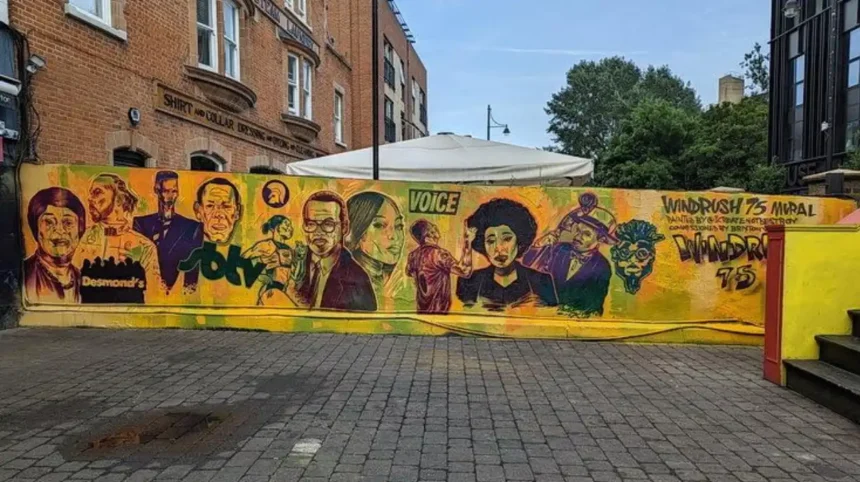
Brixton’s murals frequently reference Black British history, Caribbean heritage, music and community activism. These themes are important because the neighbourhood has played a significant role in London’s Black cultural development.
Visitors interested in the history behind this artwork should also explore the [historical development of Brixton and its Caribbean communities](Insert Anchor Text for History Article Here). This background explains the relationship between migration, cultural identity and the neighbourhood’s contemporary artistic expression.
How Does Brixton’s Caribbean Heritage Influence Its Street Art?
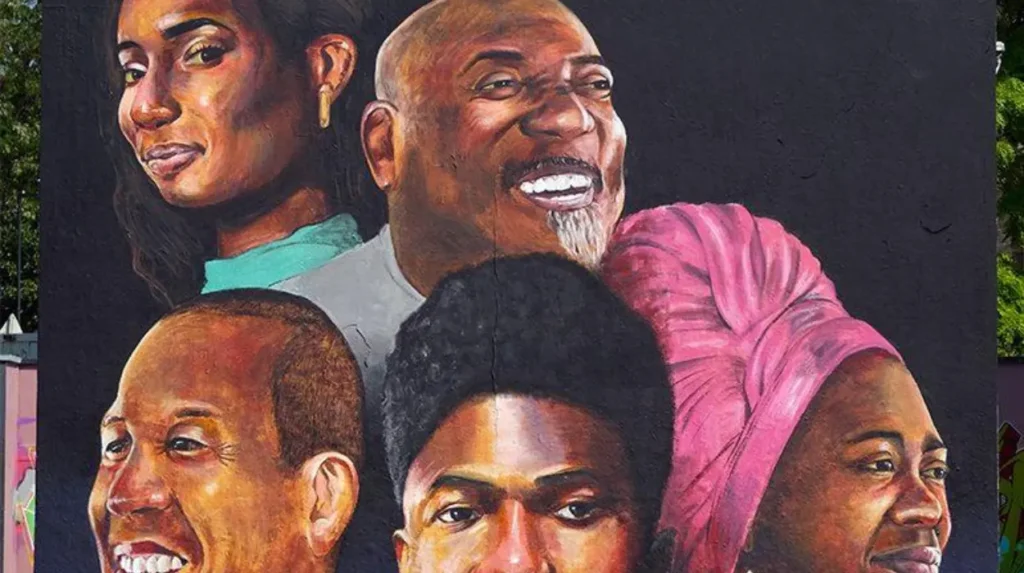
Brixton’s Caribbean heritage influences its street art through portraits, cultural symbols, historical references and themes connected to migration, identity and community achievement. These visual elements reflect the neighbourhood’s longstanding connections with Caribbean communities and wider Black British cultural history.
Caribbean migration significantly shaped Brixton’s population and cultural development during the twentieth century. The arrival of people from Jamaica, Barbados, Trinidad and Tobago and other Caribbean territories transformed the neighbourhood’s social and commercial life.
The arrival of the Empire Windrush in 1948 is an important reference point in modern British migration history. Its passengers included Caribbean people who became part of the wider post-war migration movement.
Brixton developed into an important centre for Caribbean businesses, cultural organisations, music and community activity.
These influences appear in public artwork through several recurring themes.
Portraiture and community figures
Murals featuring portraits recognise influential individuals, local residents and cultural contributors. Portraiture gives public visibility to people whose achievements form part of neighbourhood history.
Caribbean cultural references
Artists use colours, patterns, flags, musical instruments and other visual symbols to communicate Caribbean connections. These details help visitors understand the cultural influences behind individual artworks.
Music and performance
Brixton has strong associations with reggae, ska, soul, punk and other musical movements. Visual references to musicians and performance culture connect its street art with the area’s wider creative history.
Identity and representation
Public murals also explore representation, belonging and social equality. Their placement in everyday streets makes cultural discussion accessible beyond galleries and museums.
Brixton’s cultural artwork therefore serves as both public decoration and a visible expression of local heritage.
Where Can Visitors Discover Street Art Around Stockwell?
Stockwell offers opportunities to explore Lambeth’s community-focused public art through residential streets, local businesses and public spaces. Its multicultural identity and proximity to Brixton create a wider cultural landscape for visitors interested in neighbourhood murals and local creative projects.
Stockwell sits between Brixton, Clapham and Vauxhall. Its location makes it a useful extension to a street art visit centred on Brixton.
The neighbourhood has a diverse population and a strong connection to London’s Portuguese-speaking communities, alongside its wider multicultural identity.
Visitors exploring Stockwell should pay attention to community buildings, local commercial streets and publicly accessible walls. Artwork in these locations often reflects neighbourhood identity rather than the commercial objectives of major tourist attractions.
Stockwell’s community environment
Community artwork frequently addresses themes such as cultural diversity, neighbourhood relationships, education and environmental awareness.
Some projects involve local residents, schools and community organisations. These initiatives provide opportunities for people to participate in the creation of public artwork.
Residential street exploration
Stockwell’s residential streets offer a different experience from Brixton’s busy commercial centre. Visitors can observe the relationship between local architecture, public spaces and smaller examples of urban creativity.
Respect for residents is important. Visitors should avoid photographing private properties or entering residential spaces without permission.
Connecting Stockwell with Brixton
Stockwell and Brixton form a practical combined walking area. Their proximity allows visitors to compare the visual character of two neighbourhoods without travelling across the entire borough.
What Street Art Can Visitors Explore Around Waterloo and the South Bank?
Waterloo and the South Bank offer a combination of contemporary public art, creative spaces, cultural venues and changing urban installations. Visitors can explore artwork around Leake Street, Lower Marsh and the wider South Bank while experiencing one of London’s busiest cultural districts.
Waterloo is one of Lambeth’s principal cultural and transport centres. Its location near the River Thames, major railway infrastructure and South Bank attractions makes it accessible to domestic and international visitors.
Leake Street Arches
Leake Street is one of Waterloo’s best-known street art locations. It contains a pedestrian tunnel beneath the railway infrastructure near Waterloo Station.
The tunnel is widely associated with graffiti and street art. Artists use its walls for colourful lettering, large-scale paintings and frequently changing compositions.
Leake Street became particularly well known following the 2008 Cans Festival, an organised street art event associated with artist Banksy.
Its artwork changes over time. New pieces frequently cover or replace older work, creating an evolving public gallery rather than a fixed exhibition.
Visitors should follow any displayed rules and respect artists working in the tunnel.
Lower Marsh
Lower Marsh is a historic shopping street close to Waterloo Station. It contains independent businesses, food outlets and traditional commercial buildings.
Its local character provides a useful contrast with the large cultural institutions of the South Bank. Visitors can look for decorative shopfronts, street-level artwork and creative business displays.
The South Bank
The South Bank is a cultural district beside the River Thames. It includes major institutions and public spaces associated with theatre, music, exhibitions and performance.
Public artwork across the wider area includes sculptures, installations and temporary creative displays. These works are not all street murals, but they contribute to the district’s public art environment.
Visitors can combine Waterloo’s street art locations with riverside walks and cultural attractions.
Why Is Leake Street Arches Significant to London’s Graffiti Culture?
Leake Street Arches is significant because it provides a publicly accessible environment associated with graffiti and contemporary street art. Its connection with the 2008 Cans Festival established its international recognition, while its changing walls demonstrate the temporary nature of urban artwork.
Leake Street Arches is located beneath the railway arches near Waterloo Station. The tunnel provides a distinctive environment for graffiti artists because its walls support large-scale painted compositions.
The 2008 Cans Festival brought international attention to the location. The event was associated with Banksy and featured artists using spray paint and other techniques to create public artwork.
The festival helped establish Leake Street as an important destination for people interested in contemporary urban art.
Graffiti and street art
Graffiti and street art overlap, but they are not identical terms.
Graffiti traditionally includes lettering, tags and stylised signatures. Street art encompasses a wider range of visual approaches, including figurative paintings, political images and commissioned murals.
Leake Street accommodates different approaches to urban painting. Its changing surfaces demonstrate how artists communicate through public space.
Why does the artwork change?
Unlike a conventional gallery, Leake Street does not preserve every artwork permanently. Artists paint over existing pieces, producing a constantly changing visual environment.
This process makes repeat visits different. A photograph taken during one visit does not necessarily represent the tunnel’s appearance several weeks later.
Visitor considerations
Leake Street is a working public environment rather than a controlled museum exhibition. Visitors should remain aware of other pedestrians and avoid obstructing artists.
Photography is generally part of the visitor experience, but permission is appropriate before taking identifiable close-up photographs of artists or other individuals.
Where Can Visitors Find Public Art Around Vauxhall?
Vauxhall combines public spaces, railway infrastructure, commercial development and cultural venues that contribute to Lambeth’s wider public art landscape. Visitors can explore the area around Vauxhall Cross, Vauxhall Pleasure Gardens and nearby streets for visual installations and urban artwork.
Vauxhall occupies a strategic position between Waterloo, Stockwell and Kennington. Its transport connections and riverside location make it a useful stop on a wider Lambeth exploration.
Vauxhall Cross
Vauxhall Cross is an important transport interchange. Its surroundings combine roads, railway infrastructure, commercial premises and pedestrian routes.
Visitors can observe how artwork and visual design contribute to the appearance of urban infrastructure.
Vauxhall Pleasure Gardens
Vauxhall Pleasure Gardens is a public green space with historical connections to the area’s former pleasure gardens.
The present park provides an opportunity to explore the relationship between public space, landscape and cultural activity.
Railway arches and commercial spaces
Vauxhall contains railway infrastructure and commercial buildings that form part of its urban character. Painted surfaces and creative business displays appear in the wider area, although individual artworks vary in permanence and public accessibility.
Vauxhall is best approached as part of a wider public art walk rather than as a single concentrated mural destination.
What Types of Street Art and Murals Can Visitors See in Lambeth?
Lambeth’s street art includes large-scale murals, graffiti lettering, stencil paintings, portraiture, community artwork and temporary installations. Examples range from the changing graffiti at Leake Street to heritage-inspired murals and smaller creative displays across Brixton and Stockwell.
Understanding the different forms of street art helps visitors recognise the techniques and messages behind individual works.
Large-scale murals
Large-scale murals cover substantial sections of walls or building façades. They often feature portraits, landscapes, abstract designs and cultural references.
Their size makes them visible from a distance and gives artists an opportunity to communicate complex subjects.
Graffiti lettering
Graffiti lettering uses stylised typography, signatures and decorative writing. Artists develop individual lettering techniques that distinguish their work from conventional signage.
Leake Street provides examples of this approach.
Stencil art
Stencil art uses cut-out templates to create repeated shapes and images. Artists apply paint through the openings to produce recognisable figures, symbols and text.
This technique supports detailed compositions while allowing relatively quick application.
Portrait murals
Portrait murals depict identifiable or symbolic people. They often commemorate community figures, musicians, historical personalities and cultural contributors.
Brixton’s heritage makes portraiture particularly relevant to its public art environment.
Community murals
Community murals involve residents, schools, artists and local organisations. Their themes frequently include local identity, environmental awareness, education and neighbourhood pride.
Temporary installations
Temporary public artwork includes creative displays designed for limited periods. Examples include festival installations, seasonal displays and commissioned projects associated with cultural events.
These categories help visitors distinguish permanent public artworks from changing graffiti and temporary creative displays.
How Does Lambeth’s History Shape Its Street Art and Public Artwork?
Lambeth’s public artwork reflects its history as a borough shaped by riverside trade, industrial development, migration, music and community activism. Waterloo, Brixton, Stockwell and Vauxhall each contribute different historical influences to the borough’s contemporary visual identity.
Lambeth’s history extends beyond its contemporary reputation for entertainment and street culture.
Riverside development
Waterloo and the South Bank developed around the River Thames, transport connections and commercial activity. Their public spaces reflect the borough’s changing relationship with industry, transport and cultural development.
Migration and cultural diversity
Twentieth-century migration shaped the social character of Brixton and surrounding neighbourhoods. Caribbean communities contributed to local businesses, religious institutions, music and political movements.
These historical developments influence the themes represented in local murals.
Music and popular culture
Brixton’s association with reggae and other musical movements has influenced its artistic identity. Music-related imagery connects public art with the borough’s wider cultural contribution.
Community activism
Lambeth has a history of community organising and public campaigns. Public artwork provides a visible medium for communicating messages about identity, equality and neighbourhood change.
Urban regeneration
Changes in property development, transport infrastructure and commercial activity have altered the appearance of many Lambeth streets.
Street art sometimes accompanies regeneration projects, while independent artists and community organisations also create work outside formal development programmes.
The relationship between history and contemporary artwork makes Lambeth’s public spaces valuable cultural resources.
Which Lambeth Neighbourhoods Should Visitors Include in a Street Art Walking Tour?
Visitors should include Brixton, Stockwell, Waterloo and Vauxhall when planning a Lambeth street art walking tour. These neighbourhoods provide different experiences, from Brixton’s cultural heritage to Leake Street’s graffiti environment and Vauxhall’s public spaces.
A neighbourhood-based route helps visitors understand Lambeth’s creative geography without treating every artwork as part of one concentrated attraction.
Brixton exploration
Start around Brixton Station and explore Brixton Road, Electric Avenue, Atlantic Road and the market district.
Allow approximately 60–90 minutes for exploring the commercial streets, cultural surroundings and publicly accessible artwork.
Stockwell exploration
Continue towards Stockwell to experience a more residential neighbourhood environment.
Allow approximately 30–45 minutes for exploring public spaces and community surroundings. The walk should focus on publicly accessible streets rather than private residential areas.
Waterloo exploration
Visit Leake Street Arches and Lower Marsh. These locations offer a more concentrated street art experience.
Allow approximately 45–60 minutes, depending on photography and time spent examining individual works.
Vauxhall exploration
Finish around Vauxhall Cross and Vauxhall Pleasure Gardens.
Allow approximately 30–45 minutes for exploring the public environment and connecting the visit with nearby riverside spaces.
The route is flexible. Visitors with limited time can concentrate on Brixton and Waterloo rather than attempting to cover the entire borough.
How Can Visitors Reach Lambeth’s Street Art Locations?
Lambeth’s main street art neighbourhoods are accessible through London Underground, National Rail, buses and walking routes. Brixton, Stockwell, Waterloo and Vauxhall each have transport connections that allow visitors to explore individual locations or combine them into a wider itinerary.
London’s public transport network makes Lambeth accessible from central London and other parts of the capital.
Brixton transport
Brixton Underground Station is on the Victoria line. Brixton also has a National Rail station, providing additional connections.
Stockwell transport
Stockwell Underground Station serves the Northern and Victoria lines. It is a useful starting point for exploring the area between Brixton and Clapham.
Waterloo transport
Waterloo Station is a major Underground and National Rail interchange. It provides access to the South Bank, Lower Marsh and Leake Street.
Vauxhall transport
Vauxhall Station provides Victoria line and National Rail connections. The area also has extensive bus services.
Walking is useful for exploring individual neighbourhoods, but distances between southern and northern Lambeth locations require additional travel time.
Visitors should check Transport for London’s journey planner for current service information, engineering works and accessible route options.
When Is the Best Time to Explore Lambeth’s Street Art?
Daylight hours are generally the most practical time to explore Lambeth’s street art because natural light improves visibility, photography and navigation. Weekday and weekend visits offer different neighbourhood atmospheres, while outdoor artwork remains subject to weather and changing conditions.
Street art is generally accessible without the opening hours associated with galleries and museums. However, individual locations have different access arrangements.
Morning visits
Morning visits provide opportunities to explore Brixton’s commercial streets before the busiest trading periods.
Visitors can examine murals and architectural details with fewer pedestrian interruptions.
Afternoon visits
Afternoons provide more daylight for photography and allow visitors to combine street art exploration with markets, cafés and cultural attractions.
Evening visits
Evening visits offer a different atmosphere, particularly around Waterloo and Brixton. However, reduced light makes it harder to examine artwork and photograph detailed compositions.
Visitors should use well-lit public routes and remain aware of their surroundings.
Seasonal considerations
Spring and summer generally provide longer daylight hours. Autumn and winter visits require greater attention to sunset times and weather conditions.
Rain can affect photography and reduce visibility on painted surfaces.
Because graffiti and some murals change regularly, visitors should avoid relying on old photographs as confirmation that a particular artwork remains in place.
How Can Visitors Photograph Lambeth’s Murals Responsibly?
Visitors can photograph Lambeth’s murals responsibly by using public viewpoints, respecting pedestrians, avoiding private property and seeking permission before taking close-up photographs of identifiable individuals. They should also recognise artists’ work and follow location-specific photography restrictions.
Photography is an important part of exploring public artwork. Murals provide opportunities to document colours, compositions, lettering and architectural details.
However, responsible photography requires awareness of the public environment.
Respect artists and residents
Avoid blocking narrow pavements or entrances while photographing walls. Ask permission before including artists or local residents prominently in photographs.
Avoid trespassing
A mural visible from a public street does not give visitors permission to enter private property. Photograph artwork from publicly accessible areas.
Recognise the artist
Where an artist’s name or signature appears, retain that information when publishing photographs. Credit is particularly important when images appear in blogs, websites and social media.
Check photography restrictions
Some venues and privately managed spaces impose their own rules. Visitors should follow displayed notices and staff instructions.
Understand copyright
A publicly visible mural remains an artistic work. UK copyright law generally protects original artistic works, including paintings, subject to applicable legal exceptions.
Visitors publishing mural photographs commercially should consider copyright, licensing and the legal circumstances of their intended use.
How Does Street Art Support Lambeth’s Local Communities?
Street art supports Lambeth’s communities by providing public cultural expression, recognising local heritage, creating opportunities for collaboration and improving the visual identity of neighbourhood spaces. Community-led murals also encourage participation from residents, schools and local organisations.
Public artwork has social and cultural functions beyond its visual appearance.
Cultural representation
Murals featuring local history and cultural figures give neighbourhood communities visible recognition. In Brixton, Caribbean and Black British references connect contemporary public spaces with historical experiences.
Community participation
Community mural projects create opportunities for residents to work with professional artists. Schools, charities and local groups also use public art activities for education and engagement.
Creative opportunities
Public art provides platforms for emerging artists and established practitioners. Commissioned projects can create paid opportunities, while community programmes support participation and skills development.
Neighbourhood identity
Artwork helps distinguish individual streets and neighbourhoods. Local visual references contribute to the character that residents and visitors associate with particular places.
Tourism and independent businesses
Street art exploration can bring visitors into local shopping streets and independent commercial areas. Brixton’s markets and Waterloo’s independent businesses benefit from the wider visitor economy.
These relationships make public artwork an important part of Lambeth’s cultural environment.
Explore More Area Guide
What Can Visitors Discover About Lambeth’s Literary Heritage?
Lambeth Musical History: 7 Attractions in South London
What Should Visitors Know Before Planning a Lambeth Street Art Visit?
Visitors should plan around changing artwork, public transport, walking distances and local access arrangements. Brixton and Waterloo offer particularly useful starting points, while Stockwell and Vauxhall extend the experience into other parts of Lambeth.
A little preparation helps visitors make better use of their time.
Check artwork locations
Individual murals can be painted over, removed or replaced. Confirm the current appearance of a specific artwork before travelling specifically to see it.
Wear suitable footwear
Street art exploration involves walking across pavements, market streets and public spaces. Comfortable footwear is useful for longer routes.
Plan transport connections
Use Brixton, Stockwell, Waterloo and Vauxhall stations according to the neighbourhoods included in the itinerary.
Respect public spaces
Do not obstruct entrances, damage walls or interfere with people using public facilities.
Combine cultural activities
Visitors can combine street art exploration with Brixton Market, the South Bank, Lower Marsh and Vauxhall’s public spaces.
Allow flexible time
Some locations contain concentrated artwork, while others require neighbourhood exploration. A flexible itinerary accommodates changing conditions and unexpected discoveries.
Lambeth’s public art is an evolving part of its cultural identity. Its murals and street paintings connect visitors with the borough’s history, creative communities and contemporary urban environment.
Which Specific Public Artworks Should Visitors Look For in Lambeth?
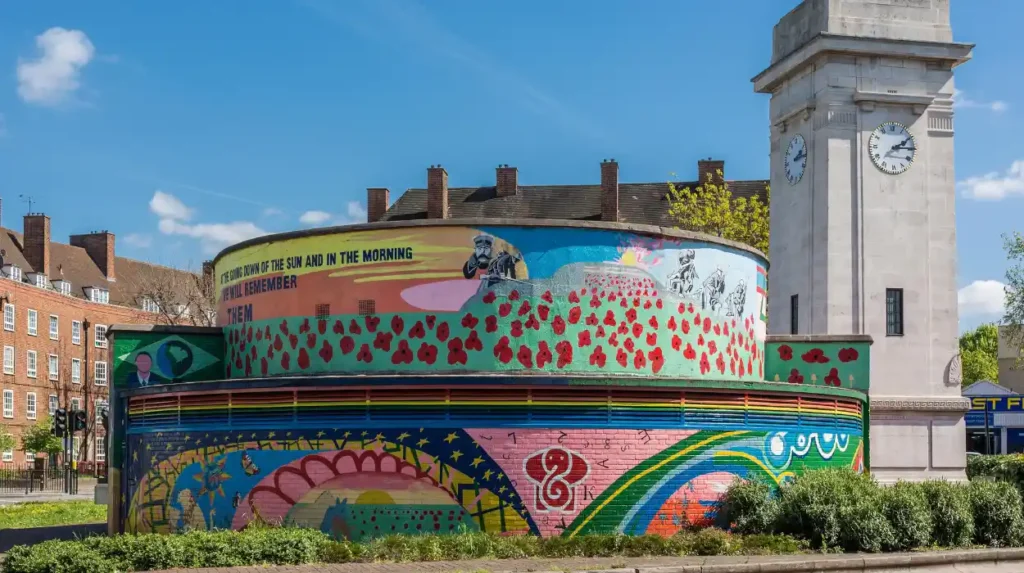
Several named public artworks provide useful reference points for visitors exploring Lambeth. These include the Violette Szabó mural and Bronze Woman sculpture in Stockwell Memorial Gardens, the African and Caribbean War Memorial at Windrush Square and the evolving graffiti at Leake Street.
These locations provide more specific cultural landmarks than an informal search for street art alone.
Violette Szabó mural, Stockwell
The Violette Szabó mural is located on a ventilation building in Stockwell Memorial Gardens. It was unveiled in 2001 and commemorates Violette Szabó, a Second World War heroine and local resident, alongside Stockwell residents who died during the war.
Szabó was a British Special Operations Executive agent who served during the Second World War. Her story connects the neighbourhood’s public artwork with wartime history.
Bronze Woman, Stockwell
The Bronze Woman sculpture stands in Stockwell Memorial Gardens. Sculpted by Aleix Barbat, it was inspired by Cecile Nobrega’s poem Bronze Woman and unveiled on 8 October 2008.
The sculpture honours Black Caribbean women and represents an important cultural landmark in Lambeth’s public environment.
African and Caribbean War Memorial, Brixton
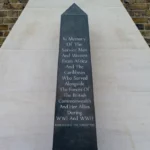
The African and Caribbean War Memorial stands at Windrush Square. It recognises African and Caribbean service personnel who fought in the First and Second World Wars.
Windrush Square also contains the Cherry Groce Memorial Pavilion, installed in 2021. Designed by architect Sir David Adjaye, it commemorates Cherry Groce, who was shot in her home by police in 1985.
These landmarks demonstrate how Lambeth’s public art connects remembrance, representation and community history.
Where can visitors see street art in Lambeth?
Visitors can explore street art in Brixton, Stockwell, Waterloo and Vauxhall. Leake Street Arches in Waterloo is particularly well known for its changing graffiti, while Brixton features cultural murals and heritage-inspired artwork.