Visiting Lambeth with limited mobility is easier when attractions, transport connections, accessible toilets and step-free routes are planned together. The South London borough includes major cultural venues, riverside spaces, historic landmarks and indoor attractions. Accessibility varies by building, entrance, route surface and available facilities, so checking the arrangements before travelling helps visitors choose suitable experiences.
- What does accessible tourism mean in Lambeth?
- Which Lambeth attractions are suitable for visitors with limited mobility?
- Is the South Bank a good choice for an accessible visit?
- Can visitors with limited mobility explore the Imperial War Museum London?
- Is the Garden Museum accessible to wheelchair users?
- Which Lambeth riverside experiences involve the least walking?
- Which Lambeth parks and green spaces suit visitors with limited mobility?
- How accessible is public transport for visitors travelling around Lambeth?
- Where can visitors find accessible toilets and rest facilities in Lambeth?
- How can visitors with limited mobility plan an accessible half-day in Lambeth?
- How does Lambeth’s history influence accessibility at visitor attractions?
- What should visitors check before choosing an accessible Lambeth experience?
This guide explains accessible visitor experiences in Lambeth, including the South Bank, the Southbank Centre, the Garden Museum, the Imperial War Museum London, accessible riverside routes and local transport options. It focuses on practical information for wheelchair users, people with walking difficulties, older visitors and anyone who needs frequent rest breaks.
What does accessible tourism mean in Lambeth?
Accessible tourism in Lambeth means visiting attractions, public spaces and cultural venues with facilities that accommodate different mobility requirements. It includes step-free entrances, accessible toilets, suitable paths, seating and transport connections. Visitors benefit from checking individual access arrangements before choosing an attraction or route.
Accessible tourism covers the design and delivery of visitor experiences for people with physical disabilities, reduced stamina, balance difficulties and other access requirements. It also benefits families with pushchairs and travellers recovering from injuries.
Lambeth is a borough in South London, extending from the River Thames around Waterloo and the South Bank towards areas including Brixton, Clapham, Streatham and Norwood. Its attractions differ considerably in layout. Modern cultural buildings often provide lifts and accessible facilities, while historic buildings and outdoor spaces have features shaped by their original design.
A suitable visit depends on more than whether an attraction advertises wheelchair access. The distance between the entrance and the main exhibition, the availability of seating, the gradient of outdoor paths and the location of accessible toilets all influence the experience.
Visitors should distinguish between three practical accessibility features. Step-free access means reaching a space without stairs. Wheelchair-accessible facilities accommodate wheelchair users through suitable dimensions and layouts. Assisted access involves arrangements such as staff support, loan wheelchairs or help with particular entrances. These features are not interchangeable, and each venue has its own arrangements.
The most effective approach is to select one main attraction, check its current accessibility information and plan a manageable route with rest opportunities.
Which Lambeth attractions are suitable for visitors with limited mobility?
Several Lambeth attractions offer cultural experiences that suit visitors who need accessible entrances, indoor facilities or opportunities to rest. The Southbank Centre, Imperial War Museum London and Garden Museum are useful starting points, subject to checking current access provisions.
Southbank Centre
The Southbank Centre is a major arts complex comprising concert halls, performance spaces and public areas. Its cultural programme includes music, talks and exhibitions. Visitors should check the access arrangements for the specific building and event, including step-free routes, seating and accessible toilets.
Imperial War Museum London
This museum explores the history and consequences of modern conflict through objects, exhibitions and personal accounts. An indoor visit allows visitors to plan time around particular galleries rather than covering the entire building. Confirm lift availability, seating, accessible toilets and exhibition-specific restrictions before arrival.
Garden Museum
The Garden Museum explores British gardening history and garden design. Its setting beside the Thames offers a distinct cultural experience in a historic building. Because historic structures can have uneven surfaces or changes in level, visitors should verify the accessible entrance and the route to each area.
These venues provide different types of experiences, from live performances to historical exhibitions. The right choice depends on mobility needs, preferred activities and the amount of walking a visitor can comfortably manage.
Before booking, check whether the venue provides companion seating, wheelchair spaces, hearing assistance, accessible parking or a wheelchair loan service. These facilities vary by attraction and event.
Is the South Bank a good choice for an accessible visit?
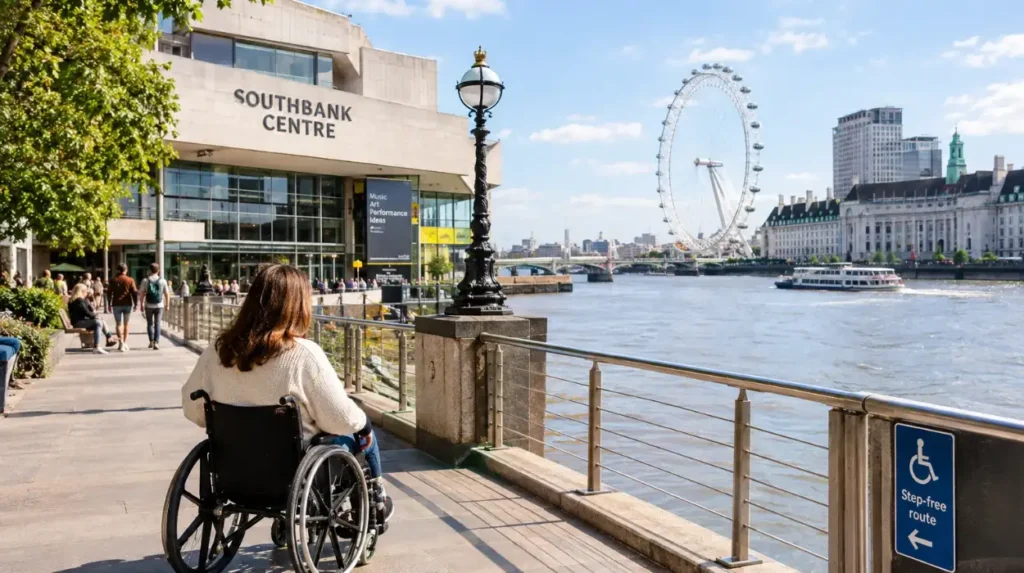
The South Bank suits visitors with limited mobility who prefer cultural venues, riverside views and places to sit within one area. The Southbank Centre provides step-free access information, accessible toilets and assistance, although individual routes and facilities require checking.
The South Bank is the stretch of the River Thames around Waterloo and the neighbouring cultural district. It provides access to arts venues, cafés, public spaces and views across the river towards Westminster.
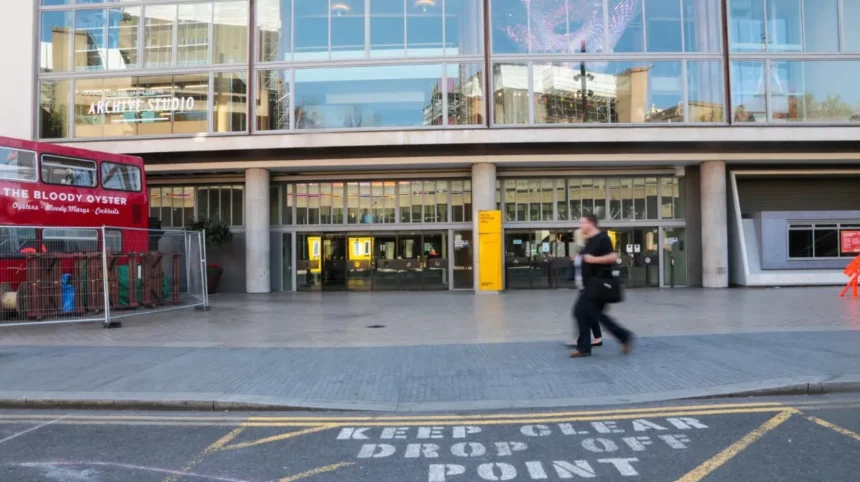
The Royal Festival Hall forms part of the Southbank Centre. Its published access guidance describes step-free routes, wheelchair spaces and accessible toilets. The centre also provides access maps showing routes from nearby stations and car parks.
Visitors who need to minimise walking should choose one venue rather than attempt to cover the entire riverside district. A concert, exhibition or café visit provides a clear destination and an opportunity to rest indoors.
The riverside promenade also offers views of the Thames and landmarks across the water. However, the accessibility of the complete route depends on the chosen starting point, temporary obstructions, pedestrian density and the distance between resting places.
Check the weather before travelling. Rain creates additional challenges for visitors using mobility aids, particularly where outdoor paving becomes slippery. During busy periods, allow extra time for pedestrian crossings and crowded public areas.
For a manageable itinerary, arrive at the selected venue using a verified step-free route, enjoy the main activity, and use the same route to return.
Can visitors with limited mobility explore the Imperial War Museum London?
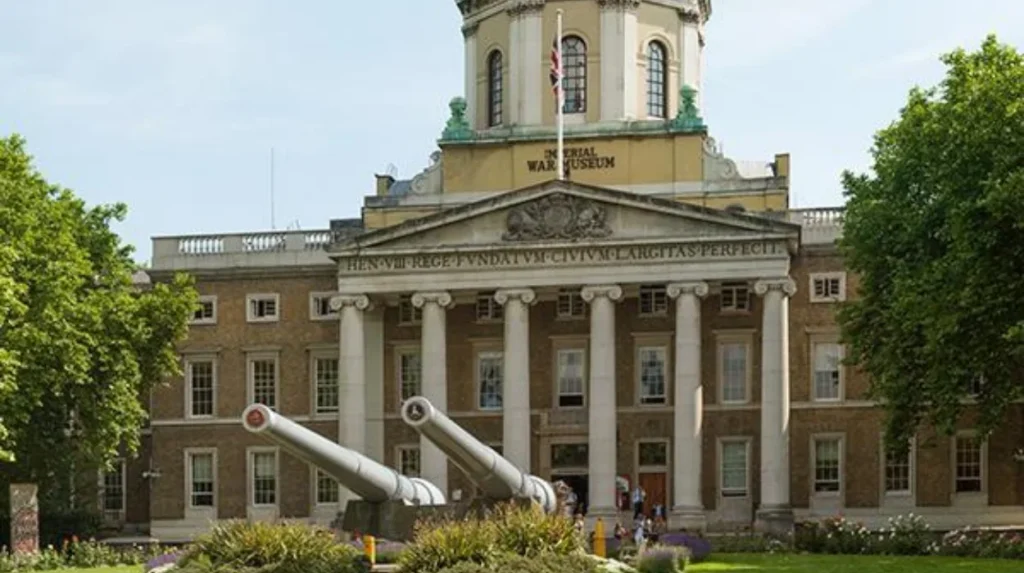
The Imperial War Museum London provides an indoor historical experience with step-free entry through its West Entrance, plus lifts and ramps inside the building. Visitors should plan their gallery route around available seating, energy levels and individual access requirements.
The Imperial War Museum London, located on Lambeth Road, examines the history and effects of conflict through exhibitions, objects, documents and personal accounts. It offers an alternative to outdoor sightseeing because visitors can focus on selected displays within one building.
The museum identifies its West Entrance as the step-free entrance for wheelchair users and people using mobility aids. Its published guidance also states that the building is accessible internally through lifts and ramps. Wheelchairs are available to borrow from the West Entrance on a first-come, first-served basis. Imperial War Museums
These arrangements make the museum a practical option for visitors who need to avoid stairs. Nevertheless, an accessible building does not mean every visitor can comfortably complete every gallery. Exhibition distances, standing time and the amount of visual information all affect the duration of a visit.
Before travelling, review the museum’s current accessibility guidance and identify the galleries that matter most. Ask staff about seating, accessible toilets and any temporary changes to visitor routes.
Allow time for security checks at the entrance. Visitors should also check whether a temporary exhibition has separate access arrangements or requires a timed booking.
A shorter visit concentrating on one or two areas provides a practical alternative to trying to see the whole museum in one session.
Is the Garden Museum accessible to wheelchair users?
The Garden Museum provides wheelchair access through its Garden Café entrance, a lift to its permanent collection and an accessible toilet on the ground floor. Visitors should confirm lift availability and account for uneven surfaces in the courtyard garden. Garden Museum+1
The Garden Museum stands on Lambeth Palace Road beside Lambeth Palace and the River Thames. It explores gardening history, landscape design, plants and the people associated with horticulture.
Its official accessibility guide identifies several useful facilities. Level access is available through the Garden Café, the permanent collection on the first floor is accessible by lift, and wheelchair-accessible toilets are available on the ground floor. The museum recommends contacting staff in advance to confirm that the lift is operating. Garden Museum
The courtyard garden provides a small outdoor space within the museum complex. However, some of its surfaces are uneven and become slippery when wet. Visitors using wheelchairs, walking frames or sticks should take these conditions into account.
The building’s historic character also makes advance planning important. Ask staff about the most suitable route through the galleries and whether any temporary exhibition has particular access limitations.
The museum is especially suitable for people who enjoy horticulture but prefer an indoor cultural visit over a long walk through a large park.
The museum’s official guide identifies the nearest Changing Places toilets at the Imperial War Museum and St Thomas’ Hospital. A Changing Places toilet is a larger accessible facility designed for people who need additional space and equipment, such as a height-adjustable changing bench or hoist. Confirm availability and access arrangements directly with the relevant venue before travelling. Garden Museum
Which Lambeth riverside experiences involve the least walking?
Short riverside visits around Waterloo and the South Bank provide opportunities to enjoy Thames views without committing to a long walking route. Choose a single accessible entrance, confirm the pavement conditions and use nearby cafés or indoor venues for rest breaks.
The River Thames forms an important part of Lambeth’s visitor landscape. Riverside views offer an outdoor experience without requiring admission to a museum or performance.
Visitors can focus on a short section of the South Bank, stop for refreshments and return to their starting point. This approach is more manageable than following a lengthy riverside route between several attractions.
The route should be selected according to the visitor’s walking distance, wheelchair type and need for level surfaces. Public areas are not all equally accessible, and construction works or crowded pavements sometimes alter the easiest route.
Three practical ways to structure a riverside visit include:
- A stationary viewpoint: Choose a suitable riverside location and enjoy the scenery without covering a long distance.
- A café-based visit: Combine a short outdoor stop with seating and toilet facilities at a nearby venue.
- A cultural visit with river views: Attend an event at the Southbank Centre and spend a short period outdoors before or after it.
For visitors who need frequent rests, the third option offers a defined indoor destination and an opportunity to check facilities in advance.
Do not assume that every riverfront café, public bench or viewing area has step-free access. Confirm the entrance and facilities at the chosen establishment, particularly when using a powered wheelchair or larger mobility scooter.
Which Lambeth parks and green spaces suit visitors with limited mobility?
Lambeth’s green spaces provide opportunities for fresh air, quiet breaks and short outdoor visits. Visitors should select routes according to path surfaces, gradients, seating and toilet provision, checking the relevant park’s current facilities before travelling.
Green spaces offer a different kind of accessible experience from museums and performance venues. A short visit can include sitting outdoors, observing plants or meeting friends without the pressure of completing a formal attraction.
However, a park’s general accessibility does not establish that every path is suitable for every mobility requirement. Gravel, grass, tree roots, slopes and wet surfaces affect wheelchair users and people with balance difficulties.
When choosing a green space, consider whether the entrance is level, whether the intended route remains firm and whether seating is available near the entrance. Confirm toilet opening times and whether accessible toilets are present.
For a short outdoor break, select one defined destination rather than planning a circuit around the entire park. Visitors who need powered mobility aids should also consider battery range, weather conditions and the availability of charging facilities at their accommodation.
A visit to a garden or park can also complement an indoor attraction. For example, a visitor can spend the morning at a museum and use a nearby outdoor space for a brief rest, provided the connecting route has been checked.
Outdoor accessibility changes with maintenance, weather and seasonal conditions. Current local authority information is more useful than relying on a general description of a park.
How accessible is public transport for visitors travelling around Lambeth?
Transport for London operates accessible buses and provides step-free access at selected Tube and rail stations. Visitors should check the entire journey, including platform-to-train gaps, lift availability and the route between the station and their destination. Transport for London+1
Transport for London (TfL) manages much of London’s public transport network. Its accessibility guidance explains step-free station access, wheelchair boarding arrangements and ways to avoid stairs.
TfL reports that its network includes step-free Tube stations, London Overground stations and all Elizabeth line stations, alongside step-free access across the DLR and tram network. However, not every Tube station offers step-free access between street level and the platform. Transport for London
Waterloo is an important transport hub for visitors to the South Bank. It has lifts, but its accessibility information also identifies a specific limitation: the southbound Bakerloo line platform has large gaps between the platform and train, with no manual boarding ramps, making it unsuitable for wheelchair users and people with pushchairs. Transport for London+1
This distinction matters because a station can have lifts and still present a barrier on a particular line. Visitors should verify the intended route rather than relying only on a station’s general step-free status.
London buses provide another option for reaching destinations across Lambeth. Check the specific service, stop location and walking distance from the stop to the attraction.
For greater reliability, plan transport in this order:
- Confirm the attraction’s accessible entrance.
- Identify a suitable station or bus stop.
- Check TfL’s live service and accessibility information.
- Review the walking route from the stop to the entrance.
- Identify an alternative route in case a lift is unavailable.
A taxi or pre-booked accessible vehicle is another option for visitors who need to minimise transfers. Confirm wheelchair accommodation, boarding arrangements and the drop-off location before booking.
Where can visitors find accessible toilets and rest facilities in Lambeth?
Accessible toilets and suitable resting places are essential when planning a visit with limited mobility. The Southbank Centre and Garden Museum publish information about accessible facilities, while the Imperial War Museum provides visitor accessibility guidance. Check opening hours and any access restrictions before departure.
An accessible toilet is designed to accommodate people who cannot use standard toilet facilities comfortably. Depending on the venue, features include wider doorways, grab rails, transfer space and suitable washbasin arrangements.
Some visitors require a Changing Places toilet, which provides additional space and specialist equipment for people with more complex personal care needs. These facilities are different from standard accessible toilets.
The Southbank Centre identifies a Changing Places toilet on Level 1 of the Royal Festival Hall, with a height-adjustable bench, tracking hoist and accessible basin. The centre states that visitors can obtain the key from the Level 2 Welcome Desk. Check the current opening arrangements before visiting. Southbank Centre
The Garden Museum provides wheelchair-accessible toilets on its ground floor. Its accessibility information also identifies nearby Changing Places facilities at the Imperial War Museum and St Thomas’ Hospital. Garden Museum
Rest facilities deserve equal attention. A venue with suitable seating allows visitors to manage fatigue without leaving the attraction. Visitors who cannot stand in queues should ask about priority entry or alternative arrangements.
When planning a day out, check the location of the nearest accessible toilet, whether it is available to the public and whether staff assistance is required. These details help visitors avoid unnecessary walking and unexpected interruptions.
How can visitors with limited mobility plan an accessible half-day in Lambeth?
An accessible half-day in Lambeth works best when it centres on one main attraction, a nearby refreshment stop and a short optional outdoor visit. Confirm opening times, step-free routes, toilet facilities and transport arrangements before setting out.
A half-day itinerary does not require several attractions. Limiting travel between destinations reduces fatigue and gives visitors greater control over their schedule.
The following example uses the South Bank as a base. It is a planning framework rather than a guarantee that every route or facility will suit every visitor.
First stop
Choose one cultural attraction
Spend approximately 60–90 minutes at the Southbank Centre or select an indoor museum visit. Adjust the duration according to energy levels and the venue’s opening arrangements.
Break
Take a seated refreshment break
Allow 30–45 minutes at a café or restaurant with a verified step-free entrance, accessible seating and suitable toilet facilities.
Optional
Enjoy a short riverside stop
Spend 15–30 minutes enjoying Thames views if the weather, surfaces and remaining energy levels permit. Return by the planned accessible route.
The timings are illustrative, not official recommendations. Visitors who experience fatigue, pain or balance difficulties should shorten the itinerary and prioritise the main attraction.
For a visit centred on the Garden Museum, allow additional time for its historic setting and confirm the lift is working. For the Imperial War Museum, use the West Entrance for step-free access and plan which galleries to visit before arrival.
Keep the return journey flexible. A delayed lift, crowded transport service or longer-than-expected exhibition visit can affect the schedule.
Explore More Area Guide
What International Students Can Explore in Lambeth
How Students Can Explore Lambeth’s History Outside the Classroom
How does Lambeth’s history influence accessibility at visitor attractions?
Lambeth’s historic buildings and changing riverside landscape contribute to its cultural appeal, but older structures sometimes have uneven floors, restricted entrances or changes in level. Understanding a site’s heritage helps visitors plan around its physical layout and identify suitable accessible routes.
Lambeth developed around historic settlements, religious institutions, river crossings and expanding urban neighbourhoods. Its location beside the Thames influenced trade, movement and the development of public buildings.
Lambeth Palace, the historic residence of the Archbishop of Canterbury, stands beside the Garden Museum. The museum itself occupies the former church of St Mary-at-Lambeth, linking its present exhibitions with the area’s religious and architectural history.
Historic buildings often require a different approach to accessibility from purpose-built modern venues. Original steps, narrow passages, uneven paving and protected architectural features affect how spaces are adapted. The actual arrangements differ by building, so heritage status alone does not establish whether a venue is accessible.
As you explore modern Lambeth, you are also encountering its architectural and cultural heritage. Read the full [Insert Anchor Text for Lambeth History Article Here] to understand how the area’s historic sites and urban development shaped today’s visitor landscape.
The historical context is useful when choosing attractions because it explains why some venues require advance planning. Visitors can still enjoy a historic site through accessible entrances, selected exhibitions and staff guidance, even when not every original space is accessible.
Check the venue’s access statement rather than assuming that a ramp or lift serves every historic section. Where access is restricted, ask whether an alternative exhibition, accessible viewing area or guided experience is available.
What should visitors check before choosing an accessible Lambeth experience?
Visitors should confirm the entrance, internal routes, toilets, seating and transport access before committing to an itinerary. Checking these details directly with the attraction helps identify barriers, prevent unnecessary journeys and match each experience to individual mobility needs.
Accessibility needs vary. A wheelchair user requires different information from someone who walks short distances with a stick or needs frequent places to sit.
A practical pre-visit check should cover the following details:
- Entrance: Confirm the correct step-free entrance and whether it differs from the main entrance.
- Internal access: Ask about lifts, ramps, door widths and changes in floor level.
- Toilets: Confirm accessible toilet locations and whether a Changing Places facility is available if needed.
- Seating: Check for resting places, wheelchair spaces and companion seating.
- Transport: Review station access, lift status, bus stops and the route from the stop.
- Parking: Confirm Blue Badge spaces, booking requirements, restrictions and drop-off arrangements.
- Tickets: Ask about concessionary tickets, companion tickets and priority entry.
- Temporary restrictions: Check for building works, exhibition changes, closures or special-event arrangements.
Official access pages are the best starting point because they provide venue-specific details. For example, the Southbank Centre publishes access maps and step-free route guidance, while the Garden Museum provides detailed information about its entrance, lift and courtyard. Southbank Centre+1
Visitors should recheck these details shortly before travelling. Lift maintenance, roadworks, temporary closures and event arrangements change over time.
The most suitable Lambeth experience is the one that fits the visitor’s own requirements, not necessarily the attraction with the greatest number of facilities. A short, well-planned visit provides more control over travel, comfort and rest.
Which attractions in Lambeth are suitable for visitors with limited mobility?
The Southbank Centre, Imperial War Museum London and Garden Museum are useful options. Each provides accessibility information to help visitors plan around step-free entrances, internal access and available facilities.