Lambeth, in South London, offers visitors access to some of London’s most distinctive specialist museum collections. Beyond conventional historical displays, its cultural institutions preserve unusual objects connected with gardening, cinema, medical history, wartime experiences, Black British heritage, architecture and scientific research. These collections provide a different perspective on London’s development and the people who shaped it.
- What Makes Lambeth’s Museum Collections Unusual?
- How Do Specialist Collections Differ from Traditional Museums?
- Why Is Lambeth Important to London’s Museum Landscape?
- Which Unusual Collections Can Visitors Explore at the Garden Museum?
- What Is Special About the John Tradescant Collection?
- Which Gardening Objects and Archives Are Worth Discovering?
- Why Is the Museum Building Historically Significant?
- What Rare Medical Objects Are Preserved at the Florence Nightingale Museum?
- Why Is Athena the Owl an Unusual Museum Object?
- Which Nursing and Medical Artefacts Can Visitors Discover?
- How Does the Collection Explain Modern Nursing?
- What Vintage Cinema Memorabilia Can Visitors Discover at the Cinema Museum?
- Which Objects Explain the History of Cinema?
- Why Is Charlie Chaplin’s Connection Important?
- How Can Visitors Access the Cinema Museum?
- What Unusual Wartime Collections Can Visitors See at IWM London?
- What Makes the Curiosities of War Collection Interesting?
- How Does IWM London Document Civilian Experiences?
- Is IWM London Suitable for Different Types of Visitors?
- Where Can Visitors Discover Rare Botanical and Scientific Collections in Lambeth?
- What Is a Herbarium?
- Why Are the Historical Plant Specimens Important?
- Can Visitors Examine the Botanical Collections?
- What Extraordinary Artistic Objects Can Visitors Discover at 575 Wandsworth Road?
- What Makes the Hand-Carved Fretwork Unusual?
- Which Personal Collections Are Preserved Inside the House?
- How Does 575 Wandsworth Road Connect Art and Cultural Heritage?
- What Rare Historical and Cultural Records Are Held at Black Cultural Archives?
- Which Unusual Historical Materials Are Preserved?
- How Does Black Cultural Archives Document the Windrush Generation?
- Can Visitors Access the Original Archive?
- How Do Lambeth’s Museum Collections Connect with the Borough’s History?
- How Does the River Thames Influence Lambeth’s Collections?
- How Does Migration Shape Lambeth’s Cultural Collections?
- Why Are Personal Collections Important to Historical Research?
- How Can Visitors Plan a Museum Visit Around Lambeth’s Unusual Collections?
- Which Museums Are Suitable for Different Interests?
- What Should Visitors Check Before Travelling?
- Can Digital Nomads and Business Travellers Benefit from These Collections?
- Why Will Lambeth’s Unusual Museum Collections Remain Important for Future Generations?
The borough’s museum landscape combines nationally significant institutions with smaller heritage attractions and specialist archives. Visitors can explore historic gardening equipment, personal belongings of influential nurses, early cinema technology, wartime artefacts and remarkable examples of decorative craftsmanship. Each collection focuses on a particular subject and uses original objects, photographs, documents and exhibitions to explain its historical importance.
Lambeth’s geographical position also contributes to its cultural identity. The River Thames, historic Lambeth Palace, former industrial buildings and changing residential neighbourhoods connect its museums with centuries of social and economic development. The area offers opportunities to combine museum visits with architectural exploration, riverside walks and visits to independent cultural venues.
What Makes Lambeth’s Museum Collections Unusual?
Lambeth’s museum collections are unusual because they preserve specialised subjects often overlooked by general museums. Visitors discover historic gardening tools, cinema memorabilia, nursing artefacts, wartime objects and cultural archives that document distinctive aspects of British history.
A specialist museum collects, preserves and interprets objects relating to a particular subject, profession, historical period or cultural community. Unlike general museums, which cover several broad historical themes, specialist institutions organise their collections around a defined area of knowledge.
Lambeth offers several examples of this approach. The Garden Museum explores horticulture and landscape design. The Florence Nightingale Museum documents the development of modern nursing. The Cinema Museum preserves the history of film exhibition and cinema-going. The Imperial War Museum London examines the human experiences of modern conflict.
These institutions contribute to London’s wider heritage sector by preserving objects that explain how particular industries, communities and professions developed.
How Do Specialist Collections Differ from Traditional Museums?
Traditional museums frequently organise exhibitions around broad themes such as national history, fine art, archaeology and natural science. Specialist museums concentrate on a narrower subject and provide greater detail about its individual objects.
For example, a general history museum can display a historical photograph of a cinema. The Cinema Museum provides a wider context through projection equipment, advertising material, film memorabilia and objects associated with the experience of watching films.
This approach helps visitors understand the relationship between objects and everyday life. It also supports historical research, education and the preservation of material culture.
Why Is Lambeth Important to London’s Museum Landscape?
Lambeth has a strong connection with London’s cultural and industrial development. Its Thames-side location supported manufacturing, trade and transport. From the eighteenth century onwards, glassmaking and pottery production became important local industries.
The borough also experienced significant social change during the twentieth century. Post-war reconstruction, migration and the development of major cultural institutions transformed parts of the South Bank and surrounding neighbourhoods.
The London Museum collection records 851 Lambeth-related collection results, illustrating the range of objects associated with the borough’s history. London Museum
Understanding this background helps visitors recognise why Lambeth’s specialist collections extend beyond conventional historical displays.
Which Unusual Collections Can Visitors Explore at the Garden Museum?
The Garden Museum preserves unusual collections connected with British horticulture, historic gardening equipment, botanical exploration and landscape design. Its displays also examine John Tradescant’s famous Ark, an early collection of natural and man-made curiosities.
The Garden Museum is one of Britain’s most distinctive specialist museums. It occupies the former St Mary-at-Lambeth Church, beside Lambeth Palace and close to the River Thames.
Founded in 1977 by John and Rosemary Nicholson, the museum was established to rescue the abandoned church from demolition. It now explores the art, history and design of gardens through permanent collections, temporary exhibitions and educational programmes.
What Is Special About the John Tradescant Collection?
John Tradescant the Elder (c.1580–1638) was an English gardener and plant collector who worked for prominent aristocratic households and later served Charles I. He established a collection of botanical specimens and unusual objects at his Lambeth home.
His collection became known as the Ark. It contained natural and manufactured curiosities representing different aspects of the world, including plants, scientific specimens, artworks and objects associated with different cultures.
The younger John Tradescant continued developing the collection. Visitors today can discover its historical significance through the museum’s Wolfson Ark Gallery.
The original collection eventually passed into the ownership of Elias Ashmole. In 1683, it became the foundation of the Ashmolean Museum at the University of Oxford.
Objects connected with the Ark have subsequently returned to Lambeth on loan from Oxford institutions, including the Ashmolean Museum, the Pitt Rivers Museum and the Oxford University Museum of Natural History. Garden Museum
Which Gardening Objects and Archives Are Worth Discovering?
The Garden Museum’s collections cover several areas of horticultural history, including:
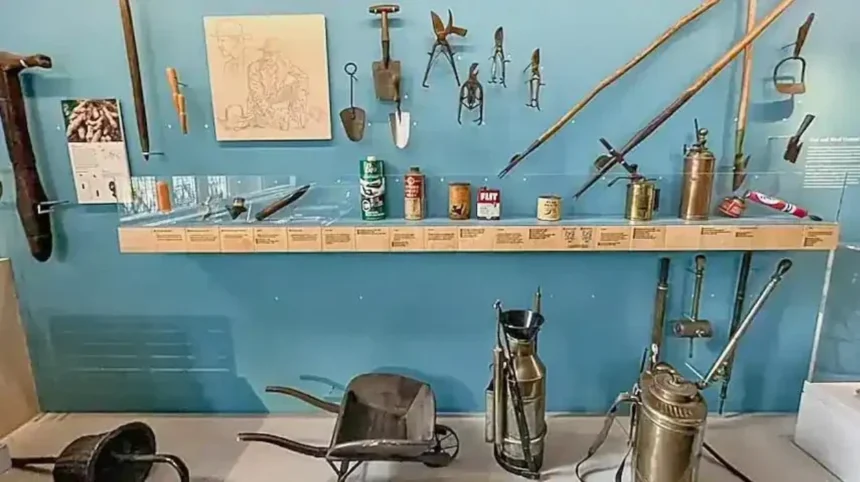
- Historic gardening tools, such as equipment used for planting, pruning and maintaining gardens.
- Botanical material, including objects connected with plant collectors and horticultural research.
- Garden design records, documenting the development of British landscape architecture.
- Decorative and artistic objects, showing how gardens influenced visual culture.
- Historical material associated with influential gardeners and designers.
Its Archive of Garden Design preserves working records from leading twentieth- and twenty-first-century British garden designers. These documents help researchers understand the development of garden planning, planting styles and landscape architecture.
Why Is the Museum Building Historically Significant?
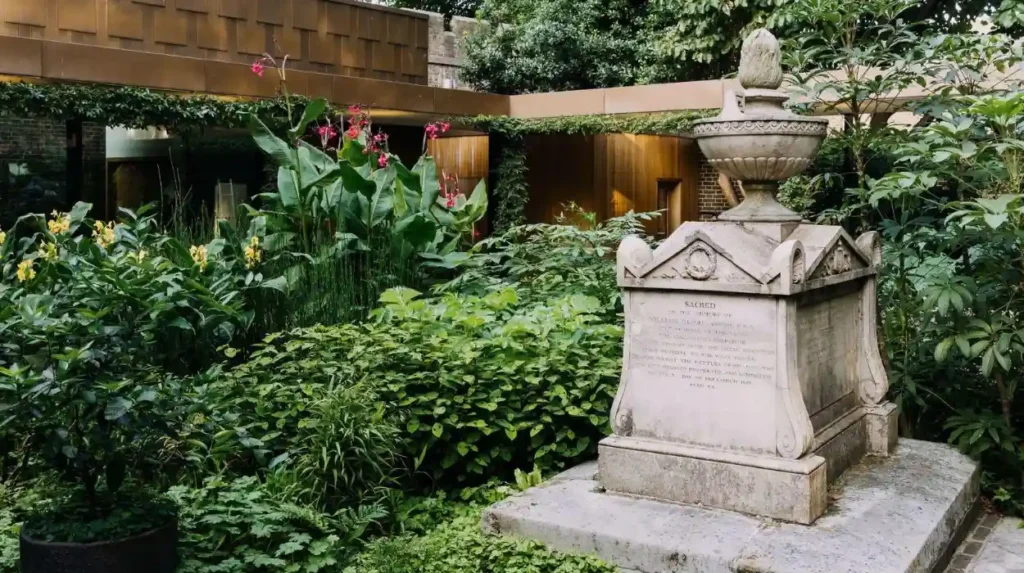
The museum occupies a former medieval church with a long connection to Lambeth’s religious and architectural history. Its courtyard contains the tomb of John Tradescant, making the building itself an important part of the collection’s historical narrative.
The museum also includes a garden, café and exhibition spaces. The historic medieval tower contains 131 steps, although the museum’s published information identifies it as temporarily closed for maintenance, with reopening planned for later in 2026. Visitors should check its current status before travelling.
What Rare Medical Objects Are Preserved at the Florence Nightingale Museum?
The Florence Nightingale Museum preserves almost 3,000 artefacts connected with nursing, healthcare reform and Florence Nightingale’s life. Its unusual objects include her pet owl Athena, personal clothing, nursing uniforms, historical letters and Crimean War records.
The Florence Nightingale Museum is located at St Thomas’ Hospital on Lambeth Palace Road. It examines the life and professional achievements of Florence Nightingale (1820–1910), a pioneering British nurse, statistician and healthcare reformer.
The museum opened in 1989 on the site of the original Nightingale Training School for Nurses. Its collection contains almost 3,000 artefacts relating to Nightingale’s life, work and legacy. Florence Nightingale Museum London+1
Why Is Athena the Owl an Unusual Museum Object?
One of the museum’s most distinctive objects is Athena, Florence Nightingale’s preserved pet owl.
Nightingale rescued the little owl from children who were mistreating it during a holiday in Greece. She named the bird Athena and brought it back to England as a pet. Following its death, the owl was preserved.
The specimen provides an unusual personal connection to a historical figure whose public reputation primarily concerns nursing and healthcare reform.
Which Nursing and Medical Artefacts Can Visitors Discover?
The collection includes several important objects:
- The Crimean War lamp: An object associated with Nightingale’s nursing work during the Crimean War (1853–1856).
- Personal clothing: Dresses and garments associated with Nightingale’s life.
- Nursing uniforms: Clothing connected with the development of professional nurse training.
- Historical letters and books: Written material documenting her work, ideas and professional relationships.
- Nursing registers: Records of women who worked under Nightingale in military hospitals during the Crimean War.
The register of nurses sent to military hospitals in the East is particularly valuable because it documents the women involved in wartime nursing.
How Does the Collection Explain Modern Nursing?
Florence Nightingale helped establish the Nightingale Training School at St Thomas’ Hospital in 1860. Its first intake consisted of 15 probationer nurses.
The school helped establish structured nurse training and professional standards. Nightingale also promoted improvements in hospital sanitation, public health, military healthcare and hospital design.
The museum connects these reforms with original historical objects. Its collection therefore documents the development of nursing as a recognised profession rather than focusing exclusively on Nightingale’s biography.
The museum has also made approximately 80% of its collection accessible through its online eHive database, supporting research beyond physical visits.
What Vintage Cinema Memorabilia Can Visitors Discover at the Cinema Museum?
The Cinema Museum preserves cinema-going history through historic projection equipment, film memorabilia, advertising material, photographs and objects associated with British cinema. Its collection documents the experience of watching films from the 1890s onwards.
The Cinema Museum is a specialist cultural attraction in Kennington, South London. It preserves the material history of cinema and the experience of visiting cinemas.
The museum occupies the former Lambeth Workhouse, a building associated with the childhood of Charlie Chaplin (1889–1977). Chaplin entered the workhouse as a child when his family faced poverty.
This historical connection gives the institution an important relationship with London’s social history as well as its film heritage.
Which Objects Explain the History of Cinema?
The museum’s collection covers the period from the 1890s to the present day.
Its specialist material includes:
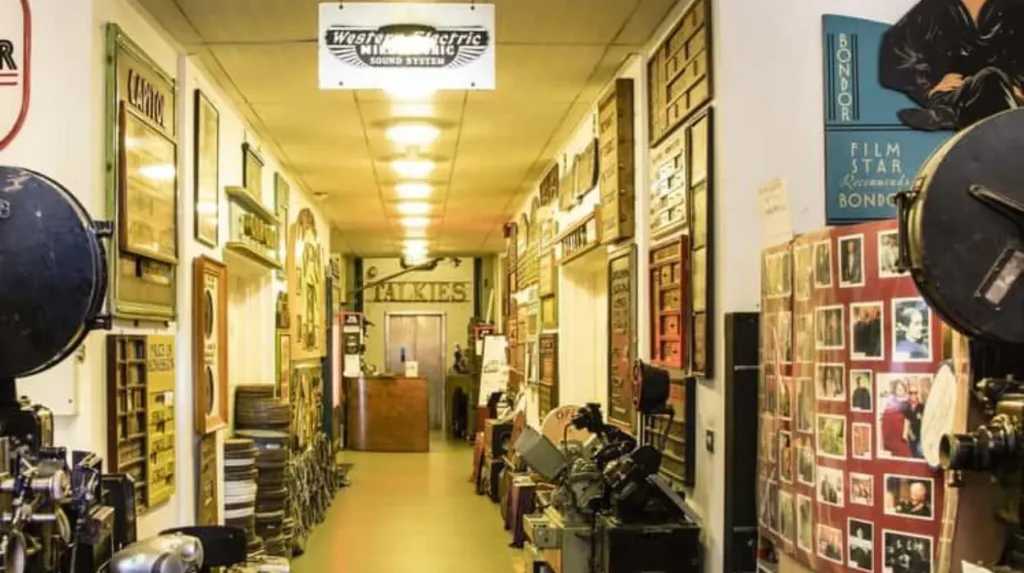
- Historic film projection equipment used to screen moving pictures.
- Cinema advertising and promotional material associated with film releases.
- Photographs documenting cinema buildings, audiences and film culture.
- Memorabilia connected with actors, filmmakers and cinema-going.
- Historical equipment illustrating changes in film exhibition technology.
These objects help explain how cinema developed from early moving-picture entertainment into a major international cultural industry.
Why Is Charlie Chaplin’s Connection Important?
Charlie Chaplin became one of the most influential figures in silent cinema. His character, the Little Tramp, became internationally recognised through films combining physical comedy and social commentary.
The Cinema Museum preserves objects and displays connected with Chaplin’s early life and his relationship with Lambeth.
His childhood experience at the former workhouse adds a social-history dimension to the collection. Visitors can connect the development of cinema with the economic conditions and working-class experiences of nineteenth- and twentieth-century London.
How Can Visitors Access the Cinema Museum?
The Cinema Museum does not operate as a conventional walk-in attraction with regular daily opening hours. Visitors must book a place on a scheduled guided tour.
According to its published visitor information, tours last approximately two hours and include a screening of around 30 minutes of short films.
The published admission prices are £15 for adults and £12 for concessions. Prices and scheduled tour availability should be checked before visiting.
What Unusual Wartime Collections Can Visitors See at IWM London?
IWM London preserves unusual objects documenting the experiences of people affected by modern warfare. Its collections include military equipment, personal belongings, photographs, artwork, documents and objects illustrating everyday life during periods of conflict.
The Imperial War Museum London is one of Lambeth’s most significant historical institutions. It examines the causes, experiences and consequences of modern conflict.
The museum opened in 1920 to document the First World War and its impact on British society and the wider world. Its collections subsequently expanded to cover later conflicts and their effects on civilian populations.
Unlike museums that focus exclusively on military equipment, IWM London places considerable emphasis on individual experiences.
What Makes the Curiosities of War Collection Interesting?
The Curiosities of War display introduces visitors to unusual objects associated with conflict.
Such objects demonstrate how war affects ordinary possessions, personal experiences and everyday activities. Items that appear ordinary outside a conflict setting often acquire a different historical meaning when connected with military service or civilian survival.
The wider IWM collection includes:
- Military objects, including equipment and uniforms.
- Personal belongings, illustrating individual experiences of conflict.
- Photographs and documents, recording military and civilian events.
- Artwork, representing the visual interpretation of warfare.
- Historical vehicles and large-scale military objects.
These collections support historical understanding by connecting major military events with individual experiences.
How Does IWM London Document Civilian Experiences?
The museum explores how warfare affects people beyond the battlefield.
Its exhibitions cover subjects including displacement, bombing, military occupation, persecution and the consequences of armed conflict.
The Holocaust Galleries provide a detailed historical examination of the persecution and murder of European Jews by Nazi Germany and its collaborators. These galleries contain historical objects, documents and testimony.
The museum also presents changing exhibitions, giving visitors opportunities to explore specific conflicts and historical subjects in greater detail.
Is IWM London Suitable for Different Types of Visitors?
IWM London attracts tourists, students, researchers and people interested in military and social history.
Its permanent galleries provide an extensive introduction to modern conflict. Educational displays also support school visits and historical learning.
General admission is free, although selected temporary exhibitions require paid tickets. The museum is situated on Lambeth Road, close to Lambeth North Underground station and Waterloo.
Where Can Visitors Discover Rare Botanical and Scientific Collections in Lambeth?
The South London Botanical Institute preserves specialist botanical collections, including historic pressed plants, lichens, mosses and other specimens. Its herbarium provides scientific evidence of plant diversity, botanical exploration and historical changes in regional vegetation.
The South London Botanical Institute is an important specialist botanical institution.
Founded in 1910 by botanist and naturalist Allan Octavian Hume (1829–1912), the institute promotes botanical education, research and public understanding of plant life.
Its collection provides an opportunity to explore scientific specimens outside the conventional museum environment.
What Is a Herbarium?
A herbarium is a scientifically organised collection of preserved plant specimens. Plants are dried, pressed and mounted on sheets with information about their collection locations and identification.
Botanists use these specimens to compare plant characteristics, verify species identification and study geographical distribution.
The South London Botanical Institute maintains several specialist herbarium collections, including:
- British and Irish flowering plants.
- European flowering plants.
- Lichens, mosses and liverworts.
- Slime moulds and other specialist botanical specimens.
The institute also holds historical material from botanical collectors and natural history societies.
Why Are the Historical Plant Specimens Important?
Herbarium specimens provide evidence of plant life across different periods. They help researchers investigate how species distributions change over time and how environmental conditions influence vegetation.
The institute’s collections include specimens dating from the nineteenth century. Its bryophyte collection, which covers mosses and liverworts, includes material collected as early as 1829.
The collection also incorporates botanical specimens from the Croydon Natural History and Scientific Society.
More than 47,000 specimen photographs and associated records are accessible through the Herbaria@Home project. South London Botanical Institute
Can Visitors Examine the Botanical Collections?
The institute welcomes people interested in botanical research and specimen identification when its facilities are open.
Its herbarium supports educational activities, individual study and scientific investigation. Visitors can also learn about the history of plant collecting and the methods used to preserve botanical material.
Access arrangements should be checked in advance, particularly for visitors who want to examine specific specimens.
What Extraordinary Artistic Objects Can Visitors Discover at 575 Wandsworth Road?
575 Wandsworth Road preserves thousands of carefully arranged objects and intricate handmade decorations created by Kenyan-born artist Khadambi Asalache. Its unusual collection combines carved wooden fretwork, textiles, ceramics, paintings and personal possessions.
The 575 Wandsworth Road is a Grade II-listed Georgian terraced house managed by the National Trust.
Its significance comes from the extraordinary transformation carried out by Khadambi Asalache (1935–2006), a Kenyan-born poet, novelist and British civil servant.
Asalache purchased the property in 1981 and spent approximately 19 years decorating its interior with intricate handmade designs.
What Makes the Hand-Carved Fretwork Unusual?
Fretwork is a decorative pattern created by cutting and shaping material into intricate designs.
Asalache used reclaimed timber, including discarded wooden floorboards, to create elaborate patterns across walls, ceilings and other interior surfaces.
His designs incorporated influences from African, Moorish, Ottoman and British artistic traditions.
The decoration demonstrates how everyday building materials can become part of a detailed artistic collection.
Which Personal Collections Are Preserved Inside the House?
The house contains thousands of objects arranged as part of Asalache’s original domestic environment.
Notable items include:
- Textiles and decorative fabrics.
- Pink and copper lustreware ceramics.
- Illustrations depicting African landscapes.
- Personal furniture and household possessions.
- Painted decorations and intricate wooden panels.
The collection is important because the objects remain connected with the artist’s personal arrangement of his home.
Rather than presenting isolated items in conventional display cases, the National Trust preserves the relationship between the objects and the interior.
How Does 575 Wandsworth Road Connect Art and Cultural Heritage?
The property demonstrates the contribution of an individual artist to London’s architectural and cultural heritage.
Asalache’s work reflects his personal background and his interest in international decorative traditions. Its preservation also provides opportunities to explore the connections between African artistic influences and British domestic architecture.
The National Trust acquired the property in 2010 and opened it to the public in 2013. Access is limited because of the house’s size and the fragile nature of its interiors. Visitors should reserve a place before travelling.
What Rare Historical and Cultural Records Are Held at Black Cultural Archives?
Black Cultural Archives in Brixton preserves an extensive collection documenting the experiences, achievements and cultural contributions of people of African and Caribbean descent in Britain. Its holdings include photographs, personal papers, organisational records, publications and historical objects.
The Black Cultural Archives (BCA) is a national heritage institution located at 1 Windrush Square, Brixton.
Established in 1981, it works to collect, preserve and share the histories of people of African and Caribbean descent in Britain.
Its collections address historical gaps in conventional archives by preserving community experiences, individual achievements and records of social movements.
Which Unusual Historical Materials Are Preserved?
The archive contains several important categories of material:
- Personal papers belonging to activists, writers and community leaders.
- Photographs documenting Black British communities and historical events.
- Organisational records from campaigning groups and community associations.
- Printed ephemera, including posters, pamphlets and event programmes.
- Periodicals and publications documenting cultural and political developments.
- Historical objects connected with Black British heritage.
The collection provides evidence of migration, education, employment, community organisation and cultural development.
How Does Black Cultural Archives Document the Windrush Generation?
The Windrush Generation refers to people who migrated from Caribbean countries to Britain during the post-war period, particularly between 1948 and the early 1970s.
The arrival of the ship Empire Windrush at Tilbury in 1948 became an important symbol of post-war Caribbean migration.
BCA preserves documents and historical material that explain the experiences of Caribbean communities as they established new lives in Britain.
Its exhibitions also explore the contributions of Black Britons to education, politics, literature, music and community activism.
The institution’s online exhibition programme includes subjects such as the Windrush Generation, Black women’s movements and the 1981 Brixton uprising.
Can Visitors Access the Original Archive?
BCA provides access to its collections through its reading room, reference library, exhibitions and digital resources.
However, its current official visitor information states that the institution is not open for unrestricted walk-in visits. Reading-room access requires advance arrangements.
Its catalogue contains more than 3,500 records across 41 collections. Researchers should identify relevant items and contact the archive before arranging an appointment.
How Do Lambeth’s Museum Collections Connect with the Borough’s History?
Lambeth’s unusual museum collections reflect centuries of religious heritage, industrial development, scientific discovery, migration and cultural change. Their objects provide evidence of how local communities, professions and creative industries shaped South London’s identity.
Lambeth’s heritage extends beyond the walls of its museums. Historic buildings, former industrial sites, riverside locations and residential streets provide important context for understanding the objects preserved in its collections.
The borough’s location beside the Thames supported manufacturing, transportation and commercial activity. Its historic communities also contributed to London’s changing cultural and social landscape.
How Does the River Thames Influence Lambeth’s Collections?
The River Thames played an important role in the development of Lambeth.
Its riverside position supported industries such as pottery and glassmaking. Water transport also connected local manufacturers with wider commercial networks.
These industrial developments influenced the growth of Lambeth’s settlements and employment opportunities.
The Garden Museum provides an example of how the area’s religious and horticultural history survives through a historic building and specialist collections.
As you explore Lambeth’s museums and modern cultural landmarks, you are also crossing an area shaped by centuries of development. Discover the full [Insert Anchor Text for Lambeth’s Historical Background Article Here] to understand the origins of its historic buildings, communities and cultural institutions.
How Does Migration Shape Lambeth’s Cultural Collections?
Migration has played an important role in Lambeth’s modern identity, particularly in Brixton.
Caribbean migration following the Second World War contributed to the development of significant Black British communities in the borough.
Black Cultural Archives preserves this history through documents, photographs and personal records.
The collections demonstrate how migration influenced British music, education, politics, literature, entrepreneurship and community organisations.
The history of migration also explains why community archives are important. They preserve experiences that traditional institutional records frequently overlooked.
Why Are Personal Collections Important to Historical Research?
Personal collections provide information that official records do not always contain.
Letters, photographs, household objects, clothing and personal possessions reveal how individuals experienced particular historical periods.
For example, Florence Nightingale’s personal objects provide information about her professional life and personality. Khadambi Asalache’s preserved household collections reveal his artistic interests and international influences.
These objects allow researchers to examine history through individual experiences as well as major public events.
Explore More Area Guide
Lambeth’s Historic Boundary Streets: A Visitor’s Guide
Where to Discover Lambeth’s Local Traditions and Cultural Heritage
How Can Visitors Plan a Museum Visit Around Lambeth’s Unusual Collections?
Visitors can explore Lambeth’s unusual museum collections by organising visits around geographical locations and specialist interests. Combining the Garden Museum, Florence Nightingale Museum, Cinema Museum and Black Cultural Archives creates a varied South London heritage experience.
Planning a museum itinerary helps visitors make better use of their time. Lambeth’s cultural attractions are spread across different neighbourhoods, so selecting nearby institutions reduces unnecessary travel.
Which Museums Are Suitable for Different Interests?
Lambeth Palace Road and the South Bank: The Garden Museum and Florence Nightingale Museum are close to each other. Visitors can combine gardening history with the history of nursing and healthcare.
Kennington: The Cinema Museum offers a specialist film-history experience. It requires advance booking for guided tours.
Brixton: Black Cultural Archives provides opportunities to explore Black British heritage through exhibitions, archives and research resources.
Wandsworth Road: 575 Wandsworth Road offers a distinctive experience centred on decorative craftsmanship and personal collections.
West Norwood: The South London Botanical Institute provides opportunities to explore historic plant specimens and botanical research.
IWM London is another important attraction for visitors interested in military history and the experiences of people affected by conflict.
What Should Visitors Check Before Travelling?
Museum admission arrangements, opening schedules and exhibition programmes differ.
Visitors should check:
- Current opening hours and admission prices.
- Advance booking requirements for guided tours.
- Temporary exhibition schedules.
- Access arrangements for historic buildings.
- Photography and research policies.
- Accessibility facilities and transport connections.
The Cinema Museum and 575 Wandsworth Road require particular attention because access is organised differently from conventional museums. Black Cultural Archives also requires advance arrangements for reading-room research.
Can Digital Nomads and Business Travellers Benefit from These Collections?
Lambeth’s specialist collections offer useful cultural activities for people working or travelling in London.
Digital nomads can organise museum visits around their working schedules, using nearby cafés and public spaces for breaks between cultural activities.
Business travellers staying near Waterloo, Vauxhall or Brixton can explore museums during free afternoons or before evening commitments.
Researchers, students and professionals working in healthcare, architecture, horticulture and media can also use these institutions to develop subject-specific knowledge.
The archives and digital collections at several institutions provide additional research opportunities for people who cannot attend every exhibition in person.
Why Will Lambeth’s Unusual Museum Collections Remain Important for Future Generations?
Lambeth’s unusual museum collections protect historical evidence, preserve specialist knowledge and support cultural education. Their continued development helps future generations understand Britain’s gardening traditions, healthcare reforms, cinema heritage, migration history and changing communities.
Museums do more than display historical objects. They preserve materials that support research, education and public understanding.
Lambeth’s specialist institutions demonstrate the importance of collecting subjects that general museums do not always explore in detail.
The Garden Museum protects horticultural knowledge and historic design records. The Florence Nightingale Museum preserves evidence of professional nursing and healthcare reform. The Cinema Museum safeguards material documenting cinema-going culture.
Black Cultural Archives addresses historical underrepresentation by preserving community records and Black British experiences. The South London Botanical Institute maintains scientific specimens that contribute to botanical research.
How Does Digital Preservation Support Museum Collections?
Digital catalogues, online exhibitions and digitised photographs increase access to historical information.
Researchers can explore collection records without travelling to the institution. Digital resources also support education, academic research and international collaboration.
The Florence Nightingale Museum’s online catalogue and the South London Botanical Institute’s digital herbarium records demonstrate how specialist collections benefit from digital access.
Black Cultural Archives also provides online exhibitions that introduce historical material to wider audiences.
Why Does Collection Preservation Matter?
Historical objects deteriorate through exposure to light, humidity, temperature changes and physical handling.
Museums use professional conservation methods to protect vulnerable objects. These include controlled storage environments, careful documentation, specialist packaging and restoration where appropriate.
Archives also use cataloguing systems to record the origin, ownership and historical significance of their material.
Preservation ensures that important evidence remains available for future researchers and visitors.
Lambeth’s unusual museum collections provide a distinctive introduction to South London’s cultural and historical development.
Visitors can discover John Tradescant’s botanical curiosities at the Garden Museum, Florence Nightingale’s personal possessions at the Florence Nightingale Museum and historic film equipment at the Cinema Museum. IWM London documents the experiences of modern conflict, while Black Cultural Archives preserves important records of Black British history.
The South London Botanical Institute introduces visitors to rare botanical specimens, and 575 Wandsworth Road demonstrates the artistic possibilities of everyday materials through Khadambi Asalache’s remarkable interiors.
Together, these institutions demonstrate that Lambeth’s heritage extends far beyond conventional historical exhibitions. Its specialist collections preserve scientific discoveries, personal experiences, creative achievements and community histories that contribute to a broader understanding of London.
For tourists, residents, students and researchers, exploring these collections provides an opportunity to discover a different side of South London while supporting the preservation of its cultural heritage.
What are the most unusual museums in Lambeth?
Some of Lambeth’s most unusual museums include the Garden Museum, Florence Nightingale Museum, Cinema Museum and South London Botanical Institute. Each preserves specialist collections covering gardening, nursing, cinema history and botanical science.