Lambeth’s working-class heritage is preserved in its historic streets, former industrial sites, community museums, Victorian housing, railway infrastructure and records of social reform. Located on the south bank of the River Thames in South London, the London Borough of Lambeth developed through centuries of trade, manufacturing, transport, migration and working-class activism.
- What Is Lambeth’s Working-Class Heritage?
- How Did the River Thames Shape Working-Class Life in Lambeth?
- Where Can Visitors Learn About Lambeth’s Industrial Past?
- What Is the Connection Between Lambeth and Doulton Pottery?
- How Can Historic Maps Help Explain Industrial Change?
- How Does Brixton Preserve Lambeth’s Working-Class and Community History?
- Where Can Visitors Learn About Black British Working-Class History in Brixton?
- Why Are Brixton Market and Electric Avenue Historically Important?
- What Role Did Housing Play in Lambeth’s Working-Class History?
- How Did Transport Shape Working-Class Communities in Lambeth?
- Where Can Visitors Research Lambeth’s Working-Class History in Archives and Museums?
- What Can Visitors Discover Through Lambeth Archives?
- Why Is the Imperial War Museum London Relevant to Working-Class History?
- How Did Working-Class Activism Influence Lambeth’s Communities?
- How Can Visitors Explore Lambeth’s Working-Class Heritage on Foot?
- Why Is Lambeth’s Working-Class Heritage Important Today?
- How Can Visitors Prepare for a Working-Class Heritage Visit to Lambeth?
Visitors exploring Lambeth can discover this history through the Black Cultural Archives, the Imperial War Museum London, historic Brixton, Vauxhall’s industrial landscape and the area’s surviving streets and public buildings. These locations explain how employment, housing, political organisation and cultural identity shaped everyday life across Lambeth.
Working-class heritage includes the experiences of factory workers, railway employees, market traders, domestic servants, dock workers, builders, shopkeepers and migrant communities. It also covers trade unionism, housing reform, public services and campaigns for equal rights. Understanding these connections gives visitors a clearer picture of Lambeth’s development and its place in London’s wider social history.
What Is Lambeth’s Working-Class Heritage?
Lambeth’s working-class heritage describes the history, workplaces, housing, traditions and community movements of people who earned their living through manual, industrial, service and other wage-based employment. It includes Victorian neighbourhoods, transport networks, markets, political activism and the cultural contributions of successive migrant communities.
Lambeth’s position beside the Thames helped establish its early economic importance. Riverside activity supported transport, trade, manufacturing and employment. As London expanded, villages and settlements across the borough became increasingly connected to the capital’s commercial economy.
During the nineteenth century, population growth and industrial development transformed parts of Lambeth. Workers found employment in construction, pottery production, engineering, printing, transport, retail and domestic service. These industries generated demand for affordable housing, local shops, schools, places of worship and public facilities.
The resulting neighbourhoods developed distinct identities. Brixton became an important commercial and residential centre, while Vauxhall combined transport connections, industry and housing. Kennington and Stockwell developed established residential communities with buildings reflecting different periods of London’s urban expansion.
Working-class history also involves the people who challenged poor housing, insecure employment, political exclusion and racial discrimination. Local history therefore extends beyond buildings. It includes the organisations, campaigns, family histories and everyday experiences that shaped the borough.
How Did the River Thames Shape Working-Class Life in Lambeth?
The River Thames supported Lambeth’s working population through riverside transport, manufacturing, construction and commercial activity. Its banks connected local employment to London’s wider economy, while bridges, roads and railways expanded access to workplaces, markets and residential districts across South London.
The Thames was a major route for moving people and goods before modern road transport became dominant. Lambeth’s riverside position encouraged workshops, warehouses, industrial premises and businesses serving London’s growing population.
Workers associated with riverside commerce included labourers, carriers, builders, boatmen and employees in manufacturing and distribution. Their work depended on transport links and the demand created by a rapidly expanding city.
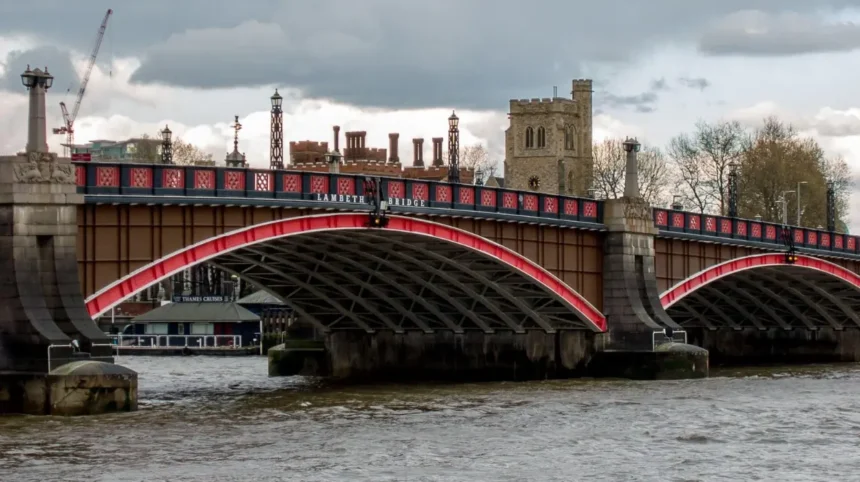
The construction and maintenance of bridges also generated employment. Westminster Bridge, Lambeth Bridge and Vauxhall Bridge strengthened connections between northern and southern London. These crossings supported commuting, trade and the movement of materials used in construction.
Where Can Visitors Explore Lambeth’s Riverside History?
The riverside between Lambeth Bridge and Vauxhall offers opportunities to examine how infrastructure shaped the area. Historic buildings, bridges and changing land use reveal the relationship between commercial development and urban life.
Visitors should examine the relationship between the river, transport routes and nearby streets rather than expecting a single dedicated museum covering every aspect of Lambeth’s industrial past.
The modern riverside also reflects major changes in employment. Former industrial land has undergone redevelopment, with residential buildings, offices and public spaces replacing or adapting older commercial sites. Comparing present-day development with historic maps helps visitors identify the changing function of the riverfront.
Where Can Visitors Learn About Lambeth’s Industrial Past?
Visitors can investigate Lambeth’s industrial history through surviving streets, historic buildings, local archives and museums documenting London’s manufacturing and transport economy. Areas around Vauxhall, Kennington and the Thames provide context for industries that employed labourers, artisans, engineers, builders and service workers.
Lambeth’s industrial development formed part of London’s wider transformation during the eighteenth and nineteenth centuries. Population growth increased demand for building materials, household goods, transport, food and commercial services.
The borough became associated with pottery and ceramics, including the wider Lambeth tradition represented by the historic Doulton works. Henry Doulton’s pottery business developed into a major manufacturer of ceramic products, including sanitary ware, during the nineteenth century.
Industrial production relied on skilled craftspeople and manual workers. Manufacturing also supported suppliers, transport employees and local businesses. This network demonstrates why industrial heritage includes entire neighbourhoods rather than only factory buildings.
What Is the Connection Between Lambeth and Doulton Pottery?
Doulton pottery is an important part of Lambeth’s manufacturing heritage. The company became associated with industrial ceramics, artistic pottery and sanitary products, linking skilled craftsmanship with mass production.
The historic Lambeth pottery works are no longer operating as the original industrial complex. Visitors researching the subject should consult museum collections, historical records and local heritage resources to establish the location, development and legacy of the works.
Ceramic objects also provide evidence of everyday working life. They illustrate how industrial production supplied homes, hospitals and public buildings during periods of urban expansion.
How Can Historic Maps Help Explain Industrial Change?
Historic maps allow visitors to compare former factories, railway lines, housing and commercial streets with the present landscape. They identify changes in land use and show how industrial areas became residential, commercial or mixed-use districts.
The Lambeth Archives is a useful starting point for researching historic photographs, maps, documents and local records. Researchers should check current access arrangements and catalogue availability before visiting.
Visitors can also consult the London Metropolitan Archives for wider London records, including collections relevant to historic businesses, organisations and communities.
These resources help connect individual buildings with the people who worked in them. They also provide evidence of how industrialisation affected housing, public health and neighbourhood development.
How Does Brixton Preserve Lambeth’s Working-Class and Community History?
Brixton preserves working-class history through its markets, commercial streets, residential neighbourhoods, political movements and Black British cultural heritage. Its development reflects changing employment patterns, migration, community organisation and campaigns for equality, making it an important area for understanding modern Lambeth.
Brixton developed as an increasingly urban district during the nineteenth century. Improved transport links and residential expansion encouraged shops, services and businesses to serve a growing population.
Its markets became important centres of everyday commerce. Market traders, shop workers, delivery workers and small business owners contributed to the area’s local economy. Markets also provided spaces for social interaction and cultural exchange.
During the twentieth century, Brixton became a significant centre of Caribbean settlement and Black British cultural life. Post-war migration from the Caribbean, including migration associated with the Windrush generation, helped transform local businesses, religious institutions, music, food and community organisations.
These changes form an essential part of Lambeth’s working-class heritage because they demonstrate how employment, housing and migration shaped neighbourhood identity.
Where Can Visitors Learn About Black British Working-Class History in Brixton?
The Black Cultural Archives is a major resource for exploring the history of African and Caribbean people in Britain. Its collections, exhibitions and educational work document Black British experiences, contributions and struggles for recognition.
Located in Brixton, the institution provides context for understanding the connections between migration, work, political participation and community life. Visitors should check its official website for current exhibitions, opening arrangements and events.
Nearby Windrush Square provides a public setting for considering the significance of Caribbean migration and Black British history. Brixton’s surrounding streets add further context through independent businesses, community institutions and long-established commercial activity.
The area’s history also includes campaigns against racial discrimination and social inequality. Understanding these movements requires attention to the historical circumstances, community organisations and political developments associated with each period.
Why Are Brixton Market and Electric Avenue Historically Important?
Brixton Market and Electric Avenue illustrate the role of local commerce in working-class neighbourhoods. Traders supplied everyday goods, created livelihoods and helped maintain the area’s identity as its population changed.
Electric Avenue became one of Brixton’s best-known commercial streets. Its historic name and built environment provide a starting point for examining the development of shopping, public infrastructure and street-based commerce in London.
Modern Brixton markets reflect the influence of different communities, including Caribbean and other migrant entrepreneurs. Visitors should approach the area as a living commercial district rather than simply a preserved historical attraction.
As you explore Brixton’s modern streets, you are crossing a landscape shaped by earlier generations. Read the full [Brixton’s Historical Development and Working-Class Heritage] to understand its origins and the changes that shaped the neighbourhood.
What Role Did Housing Play in Lambeth’s Working-Class History?
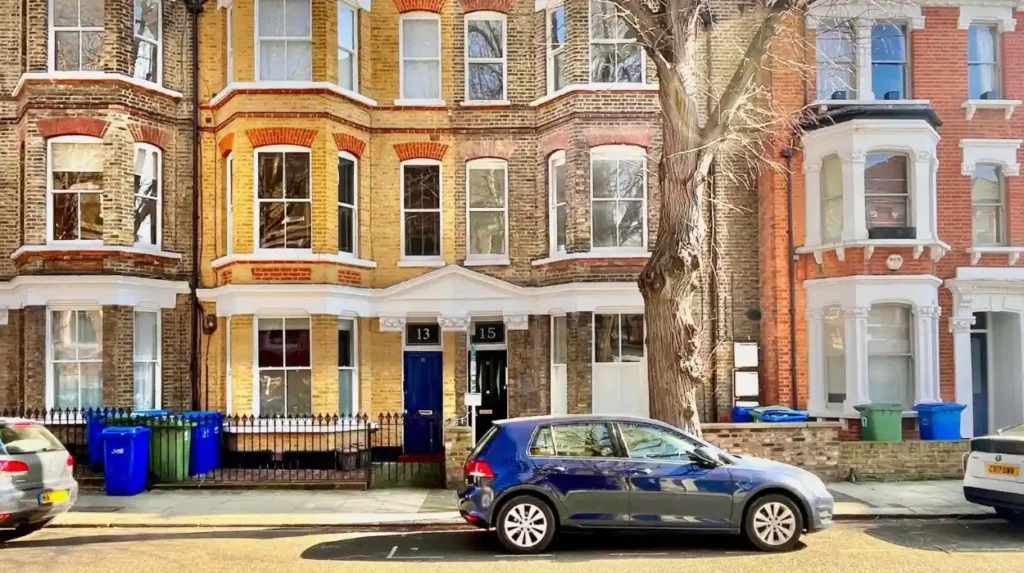
Working-class housing in Lambeth developed in response to industrial employment, population growth and the need for affordable accommodation. Victorian terraces, converted houses, purpose-built estates and post-war housing schemes reveal changing approaches to overcrowding, sanitation, public health and the provision of homes for London’s workers.
During the nineteenth century, London’s expanding population increased demand for housing close to workplaces. Lambeth’s growing neighbourhoods accommodated workers employed in factories, shops, transport, construction and domestic service.
Housing conditions varied considerably. Some families occupied small terraced houses, while others lived in subdivided properties containing several households. Overcrowding and inadequate sanitation became major concerns in working-class districts across London.
Public health reform gradually influenced building standards and local government responsibilities. Improvements to drainage, water supply, street design and housing regulation changed the conditions in which residents lived.
The twentieth century introduced further changes through council housing, slum clearance and redevelopment. Local authorities developed housing schemes to address poor conditions and provide more secure accommodation. These changes also altered established communities when redevelopment displaced residents from familiar streets.
Where Can Visitors See Historic Working-Class Housing in Lambeth?
Kennington, Stockwell, Brixton and other Lambeth neighbourhoods contain residential streets that help explain the borough’s urban development. Building styles, street layouts and the relationship between homes and shops provide clues about how communities developed.
Visitors should look at the scale of houses, the arrangement of terraces, the presence of former shops and the location of public transport. These details help explain how workers balanced housing costs with access to employment.
For a more detailed investigation, Lambeth Archives provides historic maps, photographs and house-history resources. Its collections help researchers compare the appearance of streets over time and identify changes in land use.
Housing heritage also includes the stories of tenants, landlords, housing associations and campaigners. Examining these experiences explains why access to secure and healthy accommodation remains relevant to discussions about urban inequality.
How Did Transport Shape Working-Class Communities in Lambeth?
Railways, bridges, roads and Underground services connected Lambeth’s residential districts with employment across London. Transport infrastructure supported commuting, commercial activity and industrial growth, while railway construction and maintenance created jobs for engineers, labourers, drivers, station staff and other transport workers.
Lambeth’s development accelerated as transport connections improved. Railways made it easier for people to travel between residential areas and workplaces, while roads supported deliveries, construction and local trade.
Railway construction also changed the physical landscape. Tracks, bridges, stations and associated buildings occupied land and influenced the location of housing and commercial development.
Transport employment extended beyond driving trains. Railway networks required maintenance workers, signal staff, cleaners, ticket sellers, engineers and administrative employees. Their work supported the daily movement of people and goods.
The Underground and bus networks later strengthened connections across the borough. Brixton, Stockwell, Vauxhall and Waterloo became important points in London’s wider transport system.
Which Transport Landmarks Help Explain Lambeth’s Past?
Waterloo Station illustrates the relationship between railway development and London’s growth. Its role as a major transport interchange demonstrates how rail travel connected residential districts with employment, commerce and regional journeys.
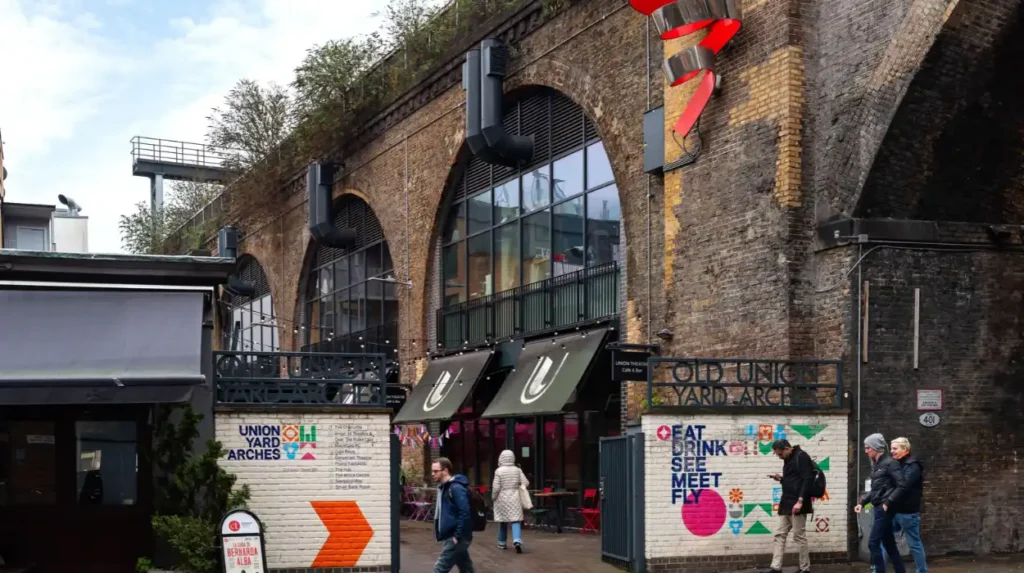
Vauxhall’s railway infrastructure provides another example of transport shaping an urban neighbourhood. Railway arches and related structures have supported changing commercial uses, reflecting the continuing adaptation of transport-related land.
Stockwell and Brixton offer further opportunities to explore the relationship between public transport and neighbourhood development. Visitors can examine station locations alongside surrounding streets to understand how improved connectivity influenced local commerce and residential expansion.
These locations are active parts of London’s transport network, not static museums. Visitors should follow station safety guidance and use public footpaths when examining historic infrastructure.
Where Can Visitors Research Lambeth’s Working-Class History in Archives and Museums?
Lambeth Archives is a leading starting point for researching the borough’s social and industrial history. Its documents, maps, photographs and local studies collections support investigations into workers, housing, businesses, transport, migration and community organisations across Lambeth.
Lambeth Archives, located at 16 Brixton Hill, London SW2 1ET, collects and preserves records relating to the borough and its residents. The collection includes local government records, business documents, photographs, maps, publications and materials connected with community organisations.
Visitors can use these resources to investigate individual streets, former workplaces, family histories and changes in local services. Research does not require a professional historian. The archive’s guidance helps visitors identify relevant material and plan enquiries.
What Can Visitors Discover Through Lambeth Archives?
The archive’s online image resource, Lambeth Landmark, provides access to more than 16,000 photographs, illustrations, maps and other documents. These materials help users explore the borough’s changing streets and built environment.
Historic photographs reveal changes in shopfronts, housing, public buildings and industrial premises. Maps show how streets developed and how former sites relate to present-day neighbourhoods.
Visitors researching family history can investigate local directories and other records where available. House-history research can reveal previous occupants, former uses and changes to buildings.
The archive also supports research into social history, women’s history, Black history, transport and local organisations. These subjects help place individual experiences within the wider development of Lambeth.
Check the council’s official archive page for current opening times, access arrangements and catalogue information before travelling.
Why Is the Imperial War Museum London Relevant to Working-Class History?
The Imperial War Museum London provides historical context for understanding how conflict affected ordinary people, workers and families. Its collections examine warfare and its consequences for civilian life, military personnel and society.
War transformed employment patterns through military recruitment, industrial production, public services and changes to household responsibilities. Women entered or expanded their participation in several areas of paid employment during wartime, while families experienced separation, loss and disruption.
The museum’s exhibitions and collections provide a wider framework for examining how national events affected communities in Lambeth and across London. Visitors should distinguish this broader national history from records documenting individual Lambeth residents.
Check the museum’s official visitor information for current exhibitions, admission arrangements and opening hours.
How Did Working-Class Activism Influence Lambeth’s Communities?
Working-class activism in Lambeth formed part of wider campaigns for better housing, fairer employment, political representation and equal treatment. Trade unions, tenants’ organisations, community groups and anti-racist movements helped residents organise around shared concerns and influence public debate throughout London’s modern history.
Industrialisation and urban growth created economic opportunities alongside difficult living conditions. Workers and residents organised to address concerns about wages, employment security, overcrowding and access to public services.
Trade unions represented workers in different industries, while housing campaigns focused on the quality and affordability of accommodation. Political associations and community organisations created opportunities for residents to influence local and national decision-making.
Lambeth’s social history also includes campaigns against racism and discrimination. Brixton became particularly significant in discussions about policing, racial equality and relations between public institutions and Black communities.
The Brixton disturbances of April 1981 were a major turning point in national discussions about policing and racial inequality. The subsequent Scarman Report examined the events and their wider social context. This episode belongs to a broader history of economic disadvantage, community tensions and demands for institutional reform.
How Can Visitors Understand Brixton’s Political History?
Visitors can explore this history through the Black Cultural Archives, local historical records and heritage resources documenting community campaigns. These sources help explain how individuals and organisations responded to discrimination and worked to preserve cultural identity.
Oral histories, photographs, campaign materials and contemporary records offer different perspectives on political events. Reading these sources together helps distinguish individual experiences from official accounts and wider historical interpretations.
Brixton’s public spaces and community institutions provide a geographical context for these developments. Visitors should approach the subject through historical evidence and the experiences of people who lived through the events.
The history of activism remains relevant because housing affordability, policing, employment opportunities and racial equality continue to influence urban policy and community life.
How Can Visitors Explore Lambeth’s Working-Class Heritage on Foot?
Visitors can explore Lambeth’s working-class heritage through a walking route connecting riverside infrastructure, historic residential streets, Brixton’s commercial centre and local heritage institutions. A route linking Vauxhall, Kennington and Brixton reveals changes in employment, housing, transport and community identity.
A self-guided walk allows visitors to examine historic buildings alongside modern developments. The most useful approach is to connect places with a clear historical theme rather than treating every landmark as an isolated attraction.
A practical itinerary starts in Vauxhall, continues through Kennington and finishes in Brixton. Public transport can shorten the journey between districts, making it suitable for visitors with limited time.
1. Vauxhall: transport and industrial change
Explore railway infrastructure, bridges and streets shaped by commercial and transport development. Observe how former industrial land has been adapted to contemporary uses.
2. Kennington: housing and urban growth
Examine residential architecture, historic street layouts and the relationship between homes, local services and central London employment.
3. Brixton: markets and community history
Explore local commerce, Windrush Square and the Black Cultural Archives to understand migration, cultural identity and community activism.
Visitors should allow additional time for archive or museum visits. The Black Cultural Archives reading room and library operate by appointment, so check arrangements before including a research visit.
Walking conditions, opening times and travel connections vary. Check current transport information and use accessible routes where needed.
Explore More Area Guide
Explore Lambeth’s Public Monuments and Historic Memorials
Lambeth Postwar Reconstruction: Key Sites and History
Why Is Lambeth’s Working-Class Heritage Important Today?
Lambeth’s working-class heritage explains how employment, migration, housing and community organisation shaped South London. Preserving this history supports local identity, historical research, education and responsible tourism while helping visitors understand the social changes behind the borough’s present-day neighbourhoods.
Historic buildings and archives provide evidence of how Lambeth changed from a collection of settlements and industrial districts into a densely developed part of London.
The borough’s heritage also demonstrates that working-class history is not confined to factories. Markets, homes, schools, transport facilities, religious institutions and community organisations all reveal how people earned a living and supported their families.
Migration is another essential element. Caribbean communities and other migrant groups contributed to Lambeth’s commercial activity, cultural life and political organisation. Their histories broaden the understanding of working-class experiences beyond traditional accounts of industrial labour.
Preservation requires more than retaining old buildings. Archives need to safeguard records, heritage organisations need to make collections accessible, and communities need opportunities to document their own experiences.
Visitors contribute to this process by using credible historical sources, respecting active neighbourhoods and recognising that Lambeth’s heritage belongs to a living community. Local history research also helps residents understand how earlier decisions about housing, transport and public services shaped present-day conditions.
How Can Visitors Prepare for a Working-Class Heritage Visit to Lambeth?
Visitors can prepare by selecting a historical theme, checking archive and museum access, reviewing transport connections and consulting reliable local records. Combining an archive visit with a walk through Brixton, Kennington or Vauxhall creates a clearer understanding of Lambeth’s changing social and economic history.
Begin with the subject that interests you most. Industrial heritage suits visitors researching manufacturing and transport, while Brixton offers important connections to Black British history, migration and community activism.
Consult official websites before travelling. Archive collections often require advance research, and specialist reading rooms operate under different access arrangements from public galleries or outdoor landmarks.
These resources provide documentary evidence that complements the streets, markets and buildings visitors encounter in person.
Lambeth’s working-class heritage is best understood as a connected history of labour, housing, transport, migration and community action. Exploring the borough through its archives, historic neighbourhoods and cultural institutions reveals how generations of residents helped shape South London.
Where can visitors learn about Lambeth’s working-class heritage?
Visitors can explore Lambeth’s working-class heritage at Lambeth Archives, the Black Cultural Archives in Brixton, historic markets, Victorian residential streets and former industrial areas around Vauxhall. These places reveal the borough’s history of employment, housing, migration and community activism.