Key Points
- The Greenwich Council is advocating for an automatic speed limit of 20mph for all the council-controlled roads within the Greenwich Borough to increase road safety and save lives.
- Presently, 72 per cent of roads in the South East London Borough have been labeled 20mph zones.
- According to TfL’s statistics, there were 939 fatalities and serious injuries sustained in the roads of the Greenwich Borough during the last decade.
- It is estimated that about 77 per cent of these fatalities and serious injuries were caused by accidents on roads with speed limits more than 30mph.
- The major roads like A2, A206, and A102, which are controlled by TfL, will not fall under this category and keep the high-speed limit.
- The council is making progress toward conducting a statutory consultation on the Traffic Management Order (TMO reference T9/26).
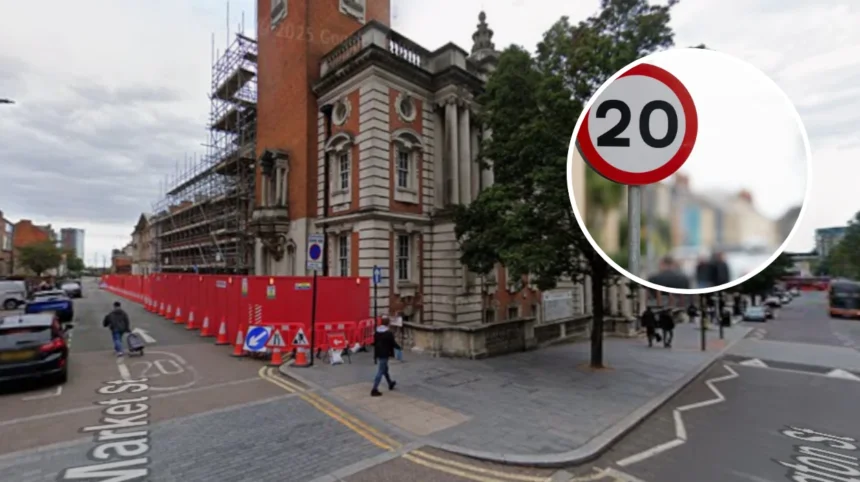
GREENWICH, LONDON — (South London News), September 9, 2026 — Greenwich Council has formally announced new plans to introduce a blanket 20mph speed limit on all council-managed roads across the local authority area in a effort to save lives and create safer, more welcoming streets. As reported by Cameron Blackshaw of MyLondon, the South East London authority confirmed it is advancing proposals to bring the remaining 28 per cent of its local road network in line with existing low-speed areas, hoping to enact the changes later this year. Local authority figures show that 72 per cent of Greenwich roads already operate under 20mph limits, and officials maintain that extending the threshold borough-wide will make speed restrictions far easier for motorists to understand and observe.
What Are the Key Arguments and Statistics Behind the Proposal?
According to reporting by Cameron Blackshaw of MyLondon, Councillor Calum O’Byrne Mulligan, Greenwich Council’s Cabinet Member for Transport, Climate Change, Waste and Streets, outlined the core rationale behind the speed limit reduction, stating:
“We are proposing to align with other London boroughs with a 20mph default speed limit on council-managed roads, improving safety and consistency.”
Councillor O’Byrne Mulligan further highlighted the severe human cost associated with faster moving traffic across the local network. As recorded by Cameron Blackshaw of MyLondon, Councillor O’Byrne Mulligan stated that:
“Most accidents in the borough happen on our faster moving roads, where accidents are more likely to have serious consequences, and fatalities are known to be five times higher for accidents at 30mph than those at 20mph. Safer speeds are a simple but powerful way to make our roads safer and more welcoming for everyone in Greenwich.”
He added that the measures
“which would bring the few local roads that are not already 20mph in line with the rest, can also make it more straightforward for drivers with consistent speed limits across the borough.”
The urgency of the initiative is further underscored by historical collision statistics provided by Transport for London (TfL). As detailed by Cameron Blackshaw of MyLondon, TfL data indicates that 939 people have been killed or seriously injured on roads within Greenwich over the last ten years. Crucially, approximately 77 per cent of those casualties occurred on carriageways with speed limits of 30mph or above.
Beyond reducing casualty rates, Greenwich Council asserts that lower speeds will deliver broader urban benefits. As noted by Cameron Blackshaw of MyLondon, the council claims that a uniform 20mph limit will benefit pedestrians, cyclists, and vehicle drivers alike. The local authority stated that traffic flows more smoothly at 20mph and noted that vehicle occupants themselves face a higher risk of injury when involved in collisions on 30mph roads.
Explore More Greenwich Council News
Greenwich Council Approves Stone Foundries Open-Air Venue in Charlton Riverside 2026
Greenwich Council Advances Major Woolwich Exchange Regeneration Scheme Greenwich 2026
Which Roads Are Included and How Can Residents Participate in the Consultation?
As reported by Cameron Blackshaw of MyLondon, the proposed blanket restriction will not apply universally to every single road within the physical boundaries of the borough. Key strategic transit routes managed directly by Transport for London—including major highways such as the A2, A206, and A102—are specifically excluded from the council’s plans and will remain at their existing higher speed limits.
Furthermore, Greenwich Council clarified that no final operational decision has been made yet. The local authority is currently moving forward with plans to open a statutory consultation on the proposed Traffic Management Order (TMO). As set out by Cameron Blackshaw of MyLondon, local residents and stakeholders wishing to submit feedback can write directly to the council’s Traffic Team via email at traffic.team@royalgreenwich.gov.uk or send physical letters to Traffic Team, Floor 3, The Woolwich Centre, 35 Wellington Street, London, SE18 6HQ, quoting reference T9/26.
What Is the Background to This Transport Policy Development?
The move by Greenwich Council represents the latest phase in a widespread regional shift toward lower urban speed limits across Greater London. Over the past decade, Transport for London and individual London borough councils have systematically rolled out 20mph zones to align with Vision Zero—the Mayor of London’s policy target aiming to eliminate all road deaths and serious injuries on the capital’s transport network by 2041.
Greenwich follows several other inner and outer London local authorities that have already enacted default 20mph policies on their borough-maintained networks. As highlighted by Cameron Blackshaw of MyLondon, neighboring and central authorities such as the Royal Borough of Kensington and Chelsea, alongside the City of Westminster, have already established blanket 20mph limits across all council-managed roads. By moving to standardize speed limits across the remaining 28 per cent of its local streets, Greenwich is taking steps to eliminate confusing speed transitions between adjacent neighborhoods and create a single, predictable traffic environment for South East London motorists.
What Is the Prediction for How This Development Will Affect the Main Stakeholders?
If formally approved and implemented following the statutory consultation, the default 20mph limit will directly impact four primary audience groups across Greenwich: drivers, vulnerable road users, local residents, and enforcement agencies.
For motorists and delivery drivers, the immediate effect will be a requirement to adapt driving habits across previously designated 30mph residential and feeder roads. While some drivers may express concern over slightly increased journey times, regional traffic studies consistently demonstrate that lower top speeds smooth out stop-and-start congestion, resulting in minimal impact on overall travel duration in dense urban settings. Drivers will also experience less ambiguity regarding speed limits when navigating between different neighborhoods.
For vulnerable road users—specifically pedestrians, cyclists, children, and elderly residents—the reduction in maximum vehicle speeds significantly lowers collision risks. Lower speeds grant drivers greater stopping distances and reaction times, which is predicted to decrease both the frequency and physical severity of accidents. This safer environment is expected to encourage higher rates of active travel, prompting more residents to walk or cycle for local journeys. Consequently, local neighborhoods may experience minor improvements in air quality and noise reduction, contributing to quieter, safer residential environments. Finally, the burden of monitoring compliance will shift to the Metropolitan Police and local automated speed camera systems, with enforcement expected to be key in ensuring driver adherence across the newly designated roads.