Key Points
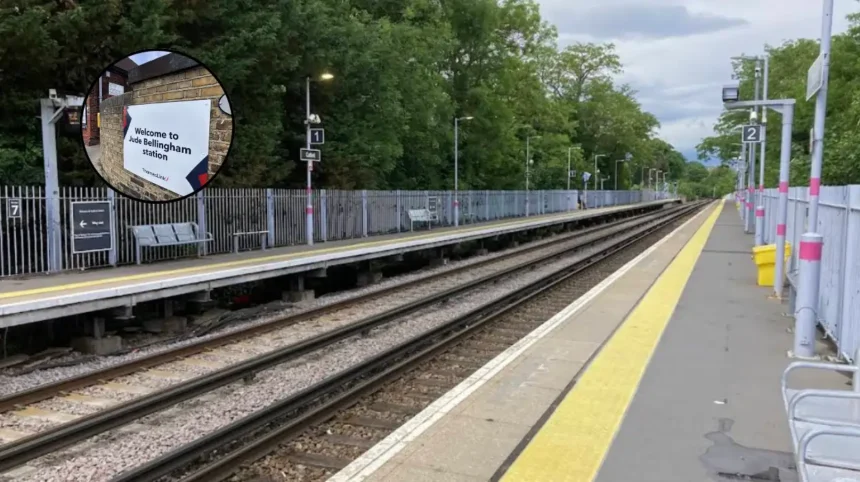
- A railway station in Catford, South London, was temporarily renamed “Jude Bellingham” on 5 July in support of England’s star midfielder before the World Cup Round of 16 match against Mexico.
- The renaming was carried out by Thameslink, which described the move as “a salute from South London to one of England’s stars”.
- The change was originally intended to last for one day only, but Thameslink has now extended the duration of the signage.
- A Thameslink spokesperson said that, given England’s result and Bellingham’s man-of-the-match performance, the signs will remain in place until Sunday.
- This means the renamed signs will be on display during England’s quarter-final match against Norway on Saturday 11 July at 10pm.
- The station is officially Bellingham railway station, located in the borough of Lewisham and served by the Thameslink.
- The temporary renaming was widely reported as a tribute after Bellingham’s performance in the match against Mexico.
- The decision to extend the renaming reflects local enthusiasm in South London for Bellingham’s contribution to England’s campaign.
- The extension was confirmed following approval from relevant authorities to keep the altered signage in place beyond the original one-day plan.
- The story was reported by Alex Orr, who wrote that the station in Catford will keep its new name after England’s win against Mexico.
South London (South London News) July 8, 2026: the signage at Bellingham railway station, which is located in the borough of Lewisham and served by the Thameslink, was changed on 5 July in a show of support for England’s star midfielder before the World Cup Round of 16 match against Mexico.
- Key Points
- What exactly happened at the station on 5 July and how was the renaming carried out?
- Why was the station chosen for the tribute?
- How did England’s match against Mexico influence the decision to extend the renaming?
- What does the extension mean for the timeline of the signage?
- What has been the reaction in South London and among commuters?
- What does this say about the connection between Jude Bellingham and South London?
- Background of the development
- Prediction: How can this development affect South London commuters and the wider community?
- Potential longer-term effects on local identity and transport branding
Thameslink called the move “a salute from South London to one of England’s stars”, and it was originally intended as a temporary measure for one day only.
But a spokesperson for Thameslink said today:
“Given yesterday’s result and Jude’s star performance, we are now looking to extend the duration that the signs stay up for.”
They said approval had been granted for the signs to stay in place until Sunday, meaning they will be on display during England’s quarter-final match against Norway on Saturday 11 July at 10pm.
The station’s official name remains Bellingham railway station; the “Jude Bellingham” signage is a temporary overlay intended as a fan tribute rather than a permanent rebranding of the station.
The extension follows widespread local reaction in South London celebrating Bellingham’s man-of-the-match performance in the Round of 16.
What exactly happened at the station on 5 July and how was the renaming carried out?
On 5 July, Thameslink replaced or supplemented the existing station signage with new panels bearing the name “Jude Bellingham” instead of the station’s usual name.
The change was made publicly visible to commuters and passers-by in Catford, within the borough of Lewisham.
As reported by Alex Orr, the renaming was framed as a show of support for England’s star midfielder ahead of the World Cup Round of 16 match against Mexico.
The operator described the gesture as “a salute from South London to one of England’s stars,” underlining the local connection between the station and the player.
The original plan was for the altered signage to remain for a single day only, aligning with the date of the match against Mexico. Thameslink had not initially indicated that the tribute would continue beyond that date.
Why was the station chosen for the tribute?
Bellingham railway station shares the player’s surname, making it a natural focal point for a naming tribute. Located in Catford, South London, the station is part of the Thameslink network and serves residents across Lewisham.
The choice of this station reflects Thameslink’s intent to highlight a local landmark that directly echoes Jude Bellingham’s name, creating a clear and immediate link between the player and the area.
The operator’s description of the move as “a salute from South London” suggests the decision was also motivated by regional pride.
How did England’s match against Mexico influence the decision to extend the renaming?
According to Thameslink, the extension was prompted by “yesterday’s result and Jude’s star performance” in the World Cup Round of 16 match against Mexico.
The operator specifically referred to Bellingham as a “man-of-the-match” performer, indicating that his contribution was central to England’s win.
As reported by Alex Orr, the temporary renaming was originally scheduled before the match against Mexico, but the decision to extend it came after the outcome of that game.
Thameslink’s spokesperson linked the extension directly to Bellingham’s impact on the result, rather than to the match result alone.
What does the extension mean for the timeline of the signage?
Thameslink confirmed that approval had been granted for the “Jude Bellingham” signage to stay in place until Sunday, following the match against Mexico.
This means the renamed signs will remain visible through England’s quarter-final match against Norway on Saturday 11 July at 10pm.
The extension therefore covers at least the period between the Round of 16 match and the quarter-final, allowing commuters and visitors to see the tribute during a key phase of England’s World Cup campaign. No further extension beyond Sunday has been announced in the original report.
What has been the reaction in South London and among commuters?
The renaming was described by Thameslink as “a salute from South London to one of England’s stars,” implying that the gesture was intended to reflect local support.
While the original report by Alex Orr does not include detailed quotes from commuters, the decision to extend the signage suggests a positive response from the public.
The visibility of the “Jude Bellingham” name at a station in Catford, within Lewisham, has made the tribute accessible to a wide range of local residents, including those using the Thameslink for daily travel.
The extension indicates that Thameslink perceived sufficient local interest to justify keeping the altered signage beyond its initial one-day window.
What does this say about the connection between Jude Bellingham and South London?
Jude Bellingham is widely known as an England midfielder, and the use of a station sharing his surname to celebrate his performance highlights a symbolic link between the player and South London.
Thameslink’s framing of the tribute as coming “from South London” suggests the operator sees Bellingham as a figure of regional pride, even if his personal background is not detailed in the report.
The renaming also demonstrates how local infrastructure can be used to express community enthusiasm for national sporting events, particularly during high-profile tournaments like the World Cup.
Background of the development
The renaming of Bellingham railway station to “Jude Bellingham” is part of a broader trend of temporary, fan-led tributes to football players during major international tournaments.
Operators such as Thameslink have previously used station signage, train branding, and digital displays to celebrate England players and match outcomes.
This development arises during the World Cup, when public interest in England’s team is particularly high. The station’s existing name, Bellingham, provided a convenient basis for a quick, visually clear tribute without requiring a permanent change to the station’s official designation.
The initial one-day plan reflected a standard approach to such temporary renaming: a short, focused period aligned with a specific match.
The decision to extend the signage was triggered by Jude Bellingham’s man-of-the-match performance in the Round of 16 against Mexico.
Thameslink’s spokesperson explicitly linked the extension to both the result and Bellingham’s individual contribution, indicating that the operator viewed his performance as a significant factor in England’s success.
The approval process for keeping altered signage in place beyond the original date suggests that Thameslink followed internal and possibly regulatory procedures to ensure the temporary change remained compliant with station naming standards.
The event reflects how transport operators can act as community partners during major sporting events, using their networks to amplify local support for national teams.
In this case, the tribute is confined to signage at a single station rather than a broader network-wide rebranding, limiting its scope while still creating a visible focal point in Catford.
Explore More Local South London News
London swelters under record June heatwave as red warning grips the capital
South London Rapist Identified via DNA in Abbey Wood 2026
Prediction: How can this development affect South London commuters and the wider community?
For passengers using Bellingham railway station, the extended “Jude Bellingham” signage will create a temporary but noticeable change in the station’s identity.
Commuters may find the altered name initially confusing, particularly those who rely on spoken announcements or digital displays that still refer to the station as “Bellingham”.
However, the tribute is likely to be viewed positively by many residents, especially those who support England or Jude Bellingham personally.
The extension through the quarter-final match against Norway means the signage will remain visible during a period of heightened interest in the tournament, potentially increasing its symbolic value for local fans.
Potential longer-term effects on local identity and transport branding
While the current renaming is temporary, the decision to extend it suggests that Thameslink sees value in using station signage for community engagement during major sporting events.
If similar tributes are repeated in future tournaments, South London stations could become recurring focal points for football-related celebrations, reinforcing the area’s connection to national sporting culture.
For the wider community, the development may strengthen the sense that local infrastructure reflects regional pride and support for England players.
It could also encourage other transport operators or local businesses in South London to consider similar temporary tributes, particularly if England continues to perform well in the World Cup.
However, as long as the change remains limited to signage and is clearly temporary, it is unlikely to have any lasting impact on the station’s official name or on formal transport branding practices.