Key Points
- Popular Bombay-style restaurant chain Dishoom has made formal planning applications to Lambeth Council for opening up a new venue in London’s South Bank area.
- The proposed site is one where Latin American restaurant chain Las Iguanas was located until now, right beside the Royal Festival Hall.
- Proposed plans include a £2 million revamp plan which would consist of a verandah structure with a retractable roof and sliding glass side panels for dining throughout the year.
- Further structural changes involve a completely glazed walkway between the dining level and outdoor pavilion surrounded by perimeter planters.
- This South Bank outlet is the ninth planned outlet for Dishoom in London and thirteenth overall in the wake of its announcement for opening up at Grade II listed Hop Exchange in Borough.
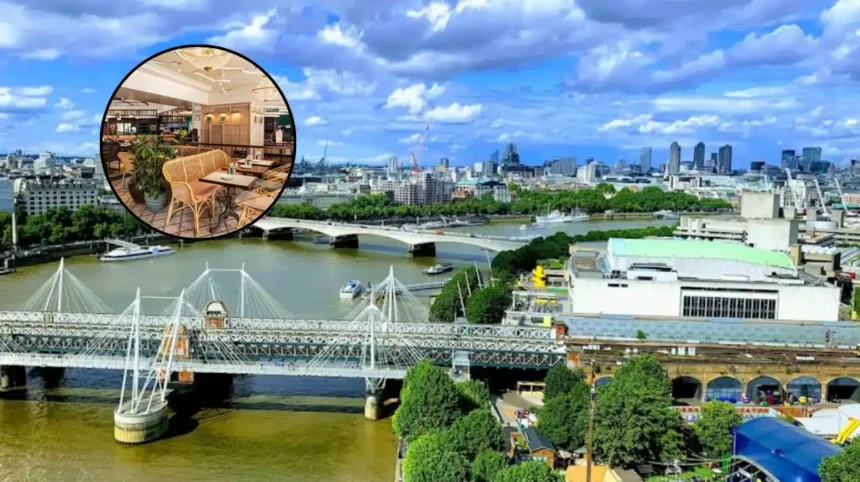
Lambeth (South London News) September 2, 2026 — As reported by Amy Houghton of Time Out London, the Bombay-inspired dining chain Dishoom has formally lodged planning application documents with Lambeth Council detailing intentions to establish a new restaurant space along London’s South Bank. The expansion plans center on the former premises of Las Iguanas, located in immediate proximity to the landmark Royal Festival Hall.
According to planning submissions highlighted by Holly Brencher of London Now, the proposals outline a comprehensive multi-million-pound refurbishment of the vacant riverside premises. Central to the design scheme is the installation of an updated outdoor verandah structure. The proposed architectural changes incorporate a retractable roof mechanism along with fully openable side enclosures, engineered specifically to render the alfresco dining space operational across all four seasons.
As documented by Amy Houghton of Time Out London, the architectural filings detail the installation of an elevated glazed ramp designed to seamlessly link the main interior restaurant floor to the exterior dining pavilion. To manage foot traffic and maintain clear boundaries along the public promenade, the exterior perimeter will be encased in structured planter boxes, separating seated patrons from pedestrian walkways along the South Bank.
As noted by Holly Brencher of London Now, the structural development and fit-out works carry an estimated construction cost of up to £2 million. Official planning documents project that initial structural alterations could reach completion by 10 October 2026, subject to regulatory approval by Lambeth Council, though an official commercial opening date has not yet been confirmed by the brand.
How Does The South Bank Site Fit Into Dishoom’s Wider Expansion Strategy?
As reported by The Independent, Dishoom’s submission to Lambeth Council represents the latest step in a sustained period of commercial expansion for the restaurant group. Founded in 2010 by co-founders Shamil Thakrar and Kavi Thakrar, the Irani café-inspired concept has grown from its single initial venue in Covent Garden into a major hospitality brand across the United Kingdom.
As outlined by Amy Houghton of Time Out London, the proposed South Bank restaurant follows the announcement of another upcoming capital site situated at the Grade II-listed Hop Exchange near Borough Market. Upon completion of both developments, the South Bank location will mark Dishoom’s ninth venue within Greater London and its thirteenth location globally.
The chain currently operates established premises in King’s Cross, Covent Garden, Carnaby, Shoreditch, Kensington, Battersea Power Station, and Canary Wharf, alongside regional sites in Manchester, Edinburgh, Birmingham, and Glasgow.
What Is The Background Of This Particular Development?
The location targeted by Dishoom was previously occupied by Las Iguanas, a long-standing Latin American chain restaurant that operated under the Casual Dining Group (and subsequently Big Table Group) portfolio. The closure of the South Bank Las Iguanas unit left a prominent vacant commercial footprint along the Southbank Centre promenade, one of London’s highest-density pedestrian zones for arts, tourism, and culture.
The Southbank Centre complex, anchored by the Royal Festival Hall, the Hayward Gallery, and the Queen Elizabeth Hall, receives millions of domestic and international visitors annually. Hospitality units along this riverfront strip are strictly governed by local council regulations and landlord planning standards due to high pedestrian traffic, architectural heritage considerations, and open-air space utilization rules. Dishoom’s decision to submit a £2 million structural application highlights the commercial premium placed on prime riverfront real estate capable of handling heavy all-day dining traffic.
What Is The Prediction For How This Development Will Affect Stakeholders?
The opening of Dishoom South Bank is projected to impact three primary groups: local diners, neighboring hospitality operators, and the commercial ecosystem of Lambeth’s cultural district.
For local restaurant-goers and tourists, the addition of a high-capacity venue beside the Royal Festival Hall will help absorb the heavy customer demand that routinely leads to extended waiting times at Dishoom’s nearby Central London locations in Covent Garden and King’s Cross. The inclusion of a weather-protected, year-round verandah will increase outdoor covers during off-peak winter months, offering enhanced capacity in a notoriously crowded dining precinct.
For adjacent business operators and competing chain restaurants along the South Bank, Dishoom’s entry introduces a major commercial anchor known for driving significant foot traffic. While this increased footfall may benefit neighboring retail and cultural venues, nearby casual dining establishments may experience intensified competition for peak-hour dinner bookings and pre-theatre dining crowds.
Finally, for Lambeth Council and the Southbank Centre estate, the successful redevelopment of a prominent vacant unit into a £2 million venue reinforces the commercial resilience of the South Bank’s food and beverage sector, boosting local business rate receipts and creating employment opportunities across front-of-house and kitchen operations.