Key Points
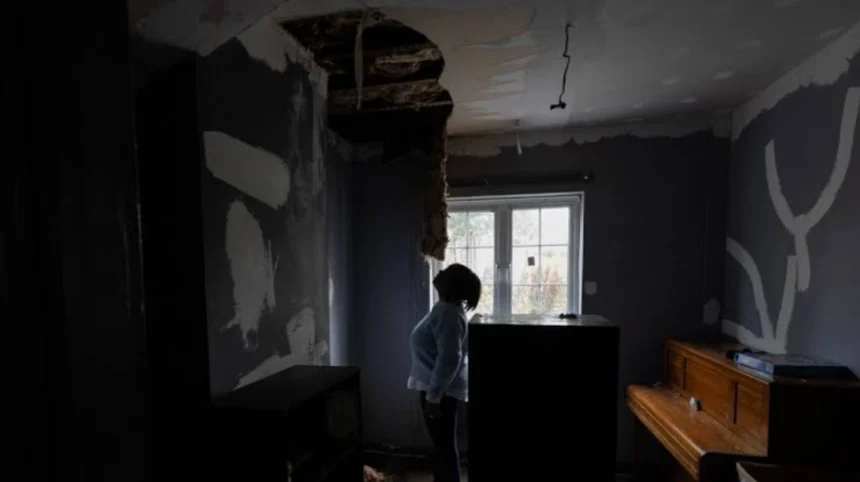
- Venesha Rose, a south London resident living in Gipsy Hill, experienced two ceiling collapses in her Lambeth Council home within an eight-month period.
- The first collapse occurred in January, narrowly missing her three-year-old daughter, after initial complaints regarding water leaks were made in 2024.
- A council worker allegedly inspected the property hours before the January collapse and claimed there was no active leak.
- Following temporary relocation, Rose and her family returned to the property in May after being informed that almost all repair work was complete.
- A second collapse took place in August, causing physical injuries to Rose and her nephew that required hospital treatment.
- Lambeth Council confirmed that a senior surveyor inspected the home immediately after the August collapse and stated that remedial works are currently underway.
Gipsy Hill (South London News) October 14, 2026 – A south London mother and her nephew were forced to seek hospital treatment after a ceiling inside their council property collapsed for the second time in eight months, raising serious questions regarding local authority maintenance standards and tenant safety.
- Key Points
- Why did the first ceiling collapse occur at the Gipsy Hill property?
- How did Lambeth Council respond following the return of the tenant in May?
- What is the background of council housing maintenance issues in Lambeth?
- How can this development affect social housing tenants and local authorities?
Venesha Rose, who resides in a Lambeth Council property located in Gipsy Hill, reported that the structural integrity of her home was repeatedly compromised despite multiple warnings provided to local housing officials. The initial incident occurred in January, when structural plaster and ceiling material collapsed without warning, narrowly missing her three-year-old daughter. Following that initial breakdown, Rose and her family were temporarily re-housed by the local authority while restoration work was undertaken. They subsequently returned to the address in May, having been informed that the necessary structural repairs had been carried out.
However, in August, a second major collapse occurred at the same residence. The falling debris caused physical injuries to both Rose and her nephew, necessitating emergency medical attention at a local hospital. According to Rose, the repair work executed by contractors following the January incident failed to address the root cause of the structural failure, leaving the underlying water ingress unresolved.
Lambeth Council issued a formal statement confirming that a senior surveyor was dispatched to inspect the address immediately following the August collapse. The local authority maintained that teams have been actively engaged in executing comprehensive repairs to ensure the residence is restored to a safe and habitable state.
Why did the first ceiling collapse occur at the Gipsy Hill property?
The ongoing problems at the Gipsy Hill residence began when Rose first raised formal complaints with Lambeth Council regarding persistent water leaks entering her home in 2024. Despite registering these concerns through official reporting channels, no decisive structural repairs were completed prior to the initial collapse.
Shortly before the incident in January, a council representative visited the address to inspect the reported moisture and water marks. Rose stated that the worker concluded the inspection by asserting there was no active leak present within the property structure. Merely hours after the maintenance officer departed the premises, the ceiling in a first-floor bedroom and the ceiling directly below in the ground-floor study collapsed simultaneously.
The immediate impact of the falling plasterwork narrowly avoided striking Rose’s three-year-old daughter, who was present in the room at the time. The severity of the damage rendered the property uninhabitable, forcing the local authority to arrange temporary accommodation for the family while contractors assessed the building.
How did Lambeth Council respond following the return of the tenant in May?
Between January and May, Rose and her children remained in temporary housing while municipal contractors worked on the affected rooms. In May, municipal officials notified Rose that the property was cleared for re-entry, stating that all major structural items and maintenance requirements had been addressed, save for one minor outstanding item.
Upon moving back into the residence, Rose observed recurring signs of moisture and potential water ingress. She repeatedly raised formal concerns with Lambeth Council throughout the early summer months, noting that the cosmetic repairs appeared to cover up rather than rectify the primary source of the leak.
These warnings culminated in August when the ceiling collapsed once again. The falling material struck both Rose and her nephew, inflicting physical injuries that required treatment at a local emergency department. Rose publicly expressed that the authority had failed to execute due diligence during the initial repair phase between January and May.
In response to the second collapse, a spokesperson for Lambeth Council stated that the local authority treated the incident with high urgency. A senior housing surveyor was sent to inspect the Gipsy Hill property immediately after the August event was reported. The council affirmed that its maintenance teams have been continuously working on site to complete all structural repairs, fix the underlying leakages, and render the property entirely safe for occupancy.
What is the background of council housing maintenance issues in Lambeth?
The events at Gipsy Hill occur against a broader backdrop of ongoing scrutiny regarding local authority housing conditions and repair backlogs across various London boroughs. Municipal housing departments across the United Kingdom operate under strict statutory obligations, including the Homes (Fitness for Human Habitation) Act, which mandates that social landlords ensure properties are free from serious hazards, including dampness, structural instability, and water leaks.
In recent years, social housing providers have faced increasing pressure regarding the speed and quality of response times to urgent repairs. Housing Ombudsman reports across the social housing sector have repeatedly highlighted how unresolved water ingress can lead to rapid deterioration of internal plasterwork, creating significant structural risks to occupants. When leaks remain unaddressed at their source, superficial repairs—such as replastering or repainting—often fail to secure the long-term safety of the structure.
Lambeth Council manages a substantial portfolio of social housing units across south London. Like many metropolitan authorities, the borough manages extensive maintenance schedules alongside emergency call-outs. The case in Gipsy Hill illustrates the operational challenges faced by municipal housing teams in identifying concealed moisture routes within older residential building stock and ensuring contractor work fully resolves deep-seated structural issues.
How can this development affect social housing tenants and local authorities?
This development carries notable implications for both social housing residents and municipal authorities responsible for property management:
Impact on social housing tenants
For individuals and families residing in local authority housing, recurring structural failures underscore potential safety risks within maintained properties. Tenants who encounter unaddressed water leaks or structural defects may experience heightened concerns regarding personal safety and health hazards such as persistent mold or collapsing masonry. The situation emphasizes the critical necessity for tenants to maintain detailed records of maintenance requests, formal complaints, and municipal inspections when safety issues arise.
Impact on local authorities and housing managers
For Lambeth Council and comparable municipal housing providers, this case highlights potential legal and operational liabilities stemming from repair failures. When maintenance inspections clear properties that subsequently suffer structural failures, local authorities face increased scrutiny from the Housing Ombudsman, potential legal claims for personal injury, and additional costs associated with emergency temporary accommodation and secondary repair works. Consequently, this development may encourage local authorities to review contractor oversight protocols, mandate rigorous structural testing before allowing tenants to return following major leaks, and prioritize fundamental plumbing rectifications over superficial cosmetic repairs.