Key Points
- Comment Deadline Extended: Local residents have been granted an extension until 26th July 2026 to submit formal representations regarding the major planning application at the Crown & Sceptre public house.
- Structural Demolition Proposed: The proposed scheme involves the complete demolition of the existing interior walls and floors of the popular establishment, substituting it with a downsized commercial footprint.
- Residential Overhaul: The architectural plans outline the erection of a five-storey building wrapped around the site, introducing 117 residential co-living units alongside a designated co-working area.
- Community Integration Threatened: Local patrons and cultural groups have raised substantial concerns that a severely reduced pub area will effectively end the venue’s role as a vital late-night social hub for the Streatham Latino community.
- Technical Delays at Council: The extension was formalised following systemic infrastructure failures with the Lambeth Council planning portal, which repeatedly crashed and prevented members of the public from lodging their feedback.
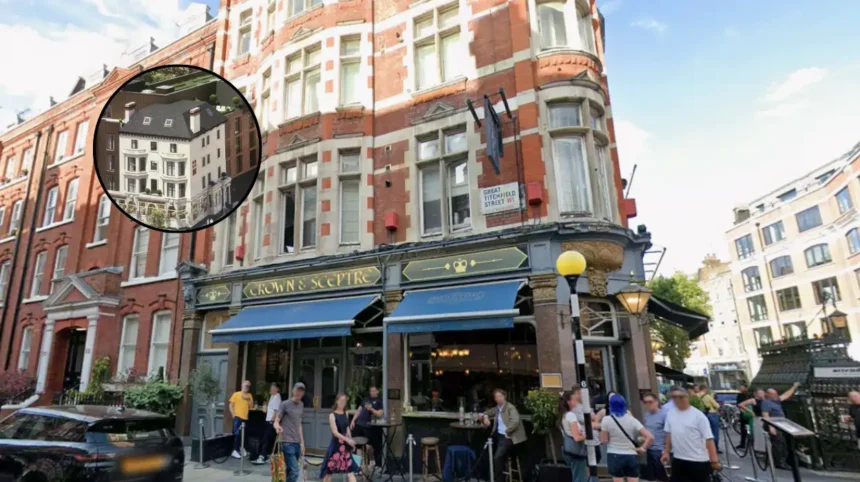
Streatham (South London News) June 24, 2026 –As reported by Daniel of Brixton Buzz, a significant administrative extension has been introduced for residents wishing to lodge their formal feedback regarding a massive residential development surrounding the Crown & Sceptre public house.
- Key Points
- What Are the Specific Architectural Alterations Planned for the Streatham Landmark?
- How Will the Introduction of 117 Co-Living Units Affect the Local Latino Community?
- What Role Did the Council’s Technical Failures Play in the Decision to Extend the Deadline?
- Background of the Particular Development
- Prediction
The local planning authority, Lambeth Council, has adjusted the consultation window to accommodate public input until 26th July 2026 under official reference number 26/01394/FUL. The decision follows widespread public frustration regarding the persistent instability of the local authority’s digital infrastructure.
According to statements compiled by regional community groups, including the volunteer-run heritage charity The Friends of Streatham Hill Theatre, the online planning portal experienced consecutive technical failures, effectively preventing local stakeholders from logging objections or expressions of support.
The structural proposal, put forward by developer Smart Urban Living Streatham Ltd alongside planning consultants Third Revolution Projects, seeks authorization for comprehensive structural interventions at 2A Streatham Hill, 1A Streatham Place, and 3 Streatham Place.
What Are the Specific Architectural Alterations Planned for the Streatham Landmark?
The documentation uploaded to the public register indicates that the physical footprint of the venue will undergo a dramatic reconfiguration.
As detailed in the public consultation literature issued via SEC Newgate, the project entails the total demolition of the interior walls, floors, and adjacent properties at 1A and 3 Streatham Place. In their place, the developers intend to erect a modern five-storey complex complete with a basement level.
While the corporate documentation asserts that the scheme represents a “refurbishment and extension to the Public House,” local analysts observe that the actual commercial drinking space will be drastically downsized. The architectural drawings show that a “fake” extended frontage will be appended to the exterior to mimic the historical facade, while the internal volume will be heavily altered to accommodate a manager’s apartment, 103 square metres of shared co-working office space designed for approximately 60 people, and a massive residential layout.
How Will the Introduction of 117 Co-Living Units Affect the Local Latino Community?
The primary source of friction between the project applicants and the local community lies in the density and nature of the proposed housing.
The multi-storey wrap-around structure is designed to house 117 independent “co-living” residential units, which are compact single-occupancy rooms supported by communal kitchen and lounge facilities.
Patrons of the venue have expressed acute concern that integrating a dense residential block directly over and around an active commercial premises will permanently compromise the operational viability of the business.
In a feature published by Brixton Buzz, it was highlighted that the Crown & Sceptre currently functions as a highly popular late-night bar that serves as a cornerstone for the local Latino diaspora. Representatives from the community have argued that the chances of the venue continuing its traditional evening entertainment schedule look very slim indeed given the inevitability of noise complaints from the adjacent 117 residential units.
What Role Did the Council’s Technical Failures Play in the Decision to Extend the Deadline?
The extension of the public notice period became a legal necessity after technical errors systematically blocked democratic participation.
In the weeks following the initial publication of the planning notices, community organisers heavily encouraged local readers and nearby residents to submit formal comments directly via the municipal website.
However, users trying to access the platform were met with consistent system crashes. Sources tracking local government operations confirmed that Lambeth’s planning portal was unable to handle the sudden surge in traffic generated by concerned citizens.
Without an administrative extension, a significant volume of the local populace would have ended up entirely without a voice in a major urban transformation project. In response to these systemic issues, the planning department confirmed that representations would also be accepted via direct email to planning@lambeth.gov.uk to bypass the faulty digital portal.
Background of the Particular Development
The controversy surrounding the Crown & Sceptre is part of a broader ongoing shift in Lambeth’s urban planning dynamics, occurring against a backdrop of historic political change in the borough where the Green Party recently took cabinet positions, breaking a 20-year period of absolute Labour control. Structurally, the site sits within the historic Streatham Hill Triangle, an area that has evolved continuously since its late 18th-century transition from managed woodland to residential villas.
The trend of adapting traditional South London public houses into high-density co-living blocks gained momentum around January 2024, when industry publications like Urban Living News highlighted that developers were aggressively targeting commercial leisure spaces for residential makeovers.
To counter the rapid loss of such venues, Lambeth Council historically established protective frameworks, specifically Policy ED8 of the Local Plan.
This policy mandates that any application involving the redevelopment or partial demolition of a pub must explicitly prove that the business is no longer economically viable via a continuous 12-month marketing portfolio, and must guarantee that the change will not result in the loss of a service holding particular cultural or social value to the local community.
Prediction
The ultimate determination of application 26/01394/FUL is expected to establish a binding precedent for how municipal planners weigh corporate high-density housing against the preservation of minority cultural spaces.
Should the planning committee approve the five-storey co-living framework, the immediate consequence will likely be a swift transformation of the immediate nighttime economy around Streatham Place.
For the primary audience affected—the local Latino community and long-term neighbourhood residents—this development is predicted to trigger a displacement of cultural expression.
The severe reduction of internal floor space combined with the arrival of over a hundred residents living directly above the dance floors will almost certainly necessitate strict noise abatement conditions and shortened operating hours. Consequently, the Latino community will likely lose an accessible, central gathering space, forcing these cultural late-night events to migrate further south or out of the borough entirely, while altering the streetscape of Streatham Hill into a highly transient residential zone.