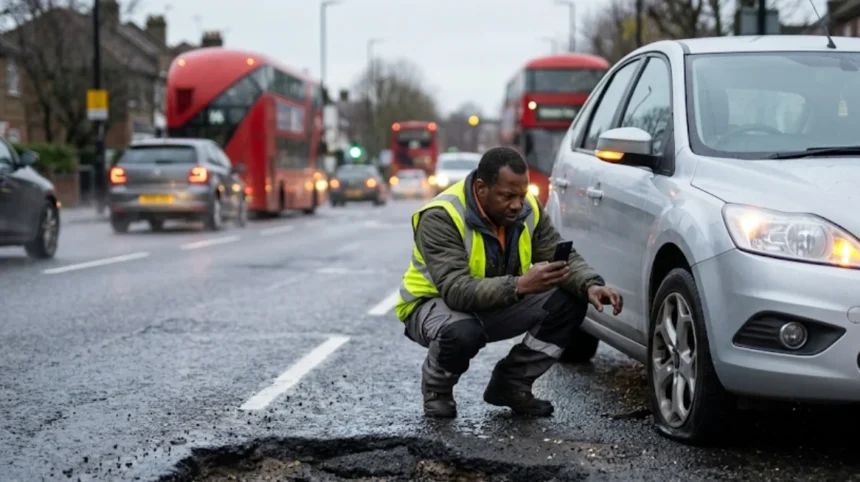
You can claim for car damage from South London potholes by contacting the road authority responsible for the road where the damage occurred, providing evidence that the pothole caused the damage, and submitting a formal compensation request. For most South London roads, this means using your local council’s pothole claim process; for red routes, you contact Transport for London; for A‑roads and motorways, you contact National Highways.
- What is the legal right to claim for pothole damage in South London?
- How do you identify which authority is responsible for the road in South London?
- What evidence do you need to prove pothole damage for a South London claim?
- How do you report a pothole before making a compensation claim in South London?
- What steps do you follow to make a pothole damage claim with a South London council?
- How do you claim pothole damage compensation from Transport for London on red routes?
- How do you claim pothole damage compensation from National Highways for A‑roads and motorways?
- What size and condition must a pothole have to qualify for compensation in South London?
- When should you claim through the council or authority instead of using your car insurance?
- What happens if your pothole damage claim is rejected by a South London authority?
- How long does a pothole damage claim take to process in South London?
- What costs can you claim for when making a pothole damage compensation claim in South London?
What is the legal right to claim for pothole damage in South London?
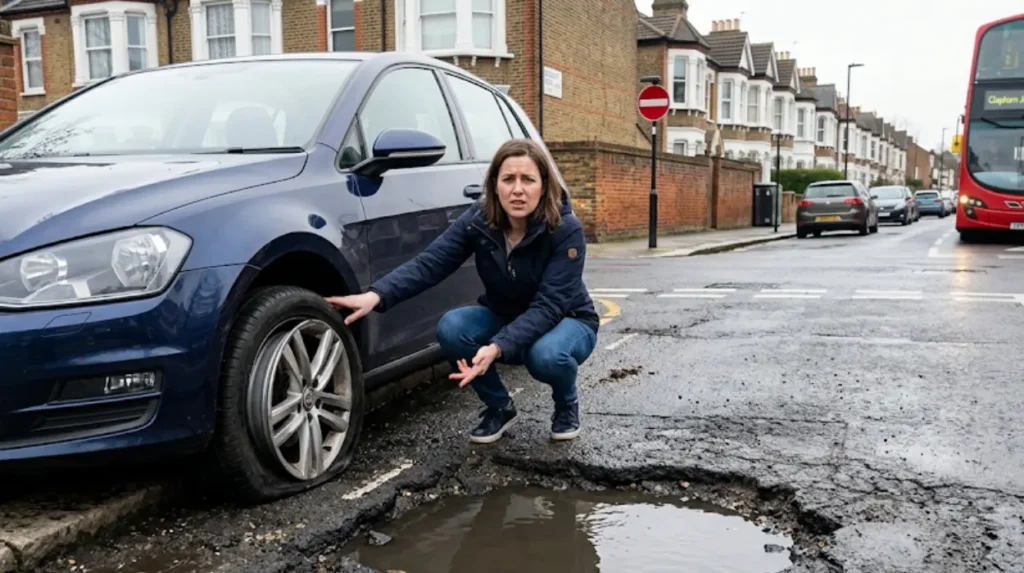
You have a legal right to claim compensation for vehicle damage caused by a road authority’s failure to maintain its road safely, provided you can prove the pothole caused the damage and that the authority was negligent. This right is based on public law duties under the Highways Act 1980 and related road maintenance legislation, which require highway authorities to keep roads in a reasonable state of repair.
The legal basis for pothole claims in England is the duty owed by highway authorities to maintain the road network. Under Section 41 of the Highways Act 1980, the highway authority must “maintain” the highway, and courts have interpreted this as a duty to take reasonable care to keep the road safe for users. If a pothole exists and the authority knew or should have known about it but failed to repair it within a reasonable time, that can amount to negligence.
In South London, the “highway authority” is usually the local council (for example, Lambeth, Southwark, Wandsworth, Kingston, Merton, Richmond, Sutton, Croydon, Bromley, Lewisham, Greenwich). For red routes and some key thoroughfares, the authority is Transport for London (TfL). For major A‑roads and motorways, the authority is National Highways. Each authority has its own claims process, but the underlying legal test is the same: negligence in maintenance plus provable damage.
To succeed, you must show:
- There was a pothole of sufficient size to cause damage.
- The pothole caused the specific damage to your vehicle.
- The authority knew or should have known about the pothole and failed to act.
If you cannot prove these points, the claim will fail regardless of the legal right.
How do you identify which authority is responsible for the road in South London?
You identify the responsible authority by checking the type and location of the road: South London local roads are managed by the relevant borough council, red routes by Transport for London, and most A‑roads and motorways by National Highways. You can use the road name, postcode, or marker post number to determine ownership before starting your claim.
In South London, the majority of residential and local roads are managed by the local council for that borough. Examples include:
- Southwark Council for roads in Southwark.
- Lambeth Council for roads in Lambeth.
- Wandsworth Council for roads in Wandsworth.
- Kingston, Merton, Richmond, Sutton, Croydon, Bromley, Lewisham, and Greenwich councils for their respective areas.
For each of these councils, the highway authority is the council itself. You can confirm this by entering the postcode where the incident occurred on the council’s website or on the GOV.UK “Find your local council” service. Some councils also have dedicated “report a pothole” forms that state they will handle any subsequent claim if damage occurs.
If the road is a “red route” (clearway routes with double red lines), then the highway authority is Transport for London, not the local council. Red routes are major roads in London designed to keep traffic flowing, and they are managed by TfL. Common red routes in South London include parts of the A20, A2, A3, and other key arterial roads. If your car was damaged on a red route, you must contact TfL for compensation, not the borough council.
For A‑roads and motorways outside the red route network, the highway authority is usually National Highways. This includes major routes such as the M25, A3 (outside red route sections), and other trunk roads. If your incident happened on such a road, you contact National Highways to claim compensation, not the local council.
In practice, you confirm authority responsibility by:
- Checking road markings (double red lines indicate a red route).
- Entering the postcode or road name on the council website or GOV.UK.
- Calling the council or TfL if you are unsure.
Using the correct authority is essential because claims submitted to the wrong organisation will be rejected and delay your compensation.
What evidence do you need to prove pothole damage for a South London claim?
You need photographic evidence of the pothole and your vehicle damage, a mechanic’s written report linking the damage to a pothole impact, and precise location details including road name, marker post or landmark, date, and time. This evidence bundle is required by councils, TfL, and National Highways to establish negligence and causation.
The most critical piece of evidence is a written statement from a qualified mechanic. The mechanic must confirm that the damage to your vehicle is consistent with impact from a pothole and not the result of normal wear and tear, previous damage, or other causes. Money Saving Expert and other claims guides explicitly recommend obtaining this written confirmation as part of the claim. Without it, the authority has no technical basis to accept that the pothole caused the damage.
Photographic evidence strengthens your claim. You should take:
- Close-up photos of the damage on your car (tyre, suspension, rim, bodywork).
- A wide photo of the pothole showing its position on the road.
- A photo of the pothole with a scale object (such as a water bottle or shoe) next to it to show depth.
- Photos of nearby road signs, marker posts, or landmarks to pinpoint the location.
If you have dashcam footage showing you hitting the pothole, include that as video evidence. Dashcam clips are particularly powerful because they show the exact moment of impact and the road condition at that time.
Location details must be precise. You should record:
- The road name.
- The nearest marker post number or a distinctive landmark (bus stop, shop, building).
- The direction you were travelling.
- The date and time of the incident.
Some claim guides recommend using GPS coordinates or a what3words location to make the pothole easily identifiable. This helps the authority locate the exact spot during their inspection.
Timing matters. You should report the damage and start your claim as soon as possible after the incident. Authorities can cross-reference your claim with their inspection logs and repair records, so delays can weaken your case. If the pothole is still present, report it immediately via the council’s “report a pothole” service or FixMyStreet, even if you are not yet ready to claim compensation.
Finally, keep all invoices and receipts for repair costs. These show the financial loss you are claiming and are required for the authority to calculate the amount of compensation.
How do you report a pothole before making a compensation claim in South London?
You report a pothole by using your local council’s online “report a pothole” form, TfL’s red route contact channels, or National Highways’ reporting system, providing the road name, marker post or landmark, and the time you saw the defect. Reporting first creates an official record that the authority was aware of the pothole, which supports a later negligence claim.
For most roads in South London, the responsible authority is the local council. Each council has a dedicated page or form for reporting road defects. You can find these by searching “report a pothole” on the council website or by using the GOV.UK national reporting service, which forwards the report to the correct council. When reporting, you should provide:
- The road name and borough.
- The nearest marker post number or a clear landmark.
- The direction of travel if relevant.
- The date and time you noticed the pothole.
- A description of the pothole’s size and condition.
If the road is a red route, you report the pothole to Transport for London. TfL accepts reports via its customer services telephone line (0343 222 1234, 8am–8pm, Monday to Sunday) and through its online contact channels. You must clearly state that the defect is on a red route and give the precise location.
For A‑roads and motorways managed by National Highways, you report the pothole via the National Highways website or their customer contact system. You provide the same location details and a description of the defect. National Highways will log the report and may inspect and repair the road. This record can later be used to show that they were aware of the pothole but failed to act in a timely manner.
Reporting a pothole before claiming compensation is important because it establishes a timeline. If the authority received a report and still did not repair the pothole within a reasonable time, that supports a claim of negligence. Even if you do not immediately claim compensation, reporting the defect helps other drivers and strengthens any future claim.
You can also use FixMyStreet, a public platform that sends pothole reports directly to the relevant council. This is useful if you are unsure which council manages the road; FixMyStreet will route the report correctly based on the location you provide.
What steps do you follow to make a pothole damage claim with a South London council?
You make a pothole damage claim by visiting your local council’s website, finding the “compensation for road damage” or “pothole claim” page, and submitting a formal claim form with your evidence, location details, and repair costs. The council will then review your claim, check their inspection records, and decide whether to pay compensation.
The process typically follows these steps:
- Confirm the council is the highway authority.
Use the postcode or road name to confirm that the road is managed by the local council, not TfL or National Highways. This is essential because claims submitted to the wrong authority will be rejected. - Find the council’s claims page.
Search for “claim for road damage”, “pothole compensation”, or “highway defect claim” on the council website. Many South London councils have a dedicated page for this, often linked from their “roads and transport” or “report a problem” section. - Complete the claim form.
The form will ask for:- Your name, address, and contact details.
- The road name and exact location (marker post or landmark).
- The date and time of the incident.
- A description of the pothole and the damage.
- The total amount you are claiming (repair costs).
- Uploads or references for your evidence (photos, mechanic report, invoices).
- Attach your evidence.
Include:- Photos of the pothole and vehicle damage.
- The mechanic’s written statement confirming pothole causation.
- Repair invoices and receipts.
- Any dashcam footage or what3words location if available.
- Submit the claim and keep a copy.
After submission, save a copy of the claim and all attachments. Note the claim reference number if provided. - Wait for the council’s decision.
Councils usually investigate by checking their inspection logs, repair records, and the condition of the road at the time. This process can take several weeks or even months. Some councils may request additional information or an inspection. - Receive the outcome.
If the council accepts negligence, they will offer compensation for your repair costs, sometimes with additional amounts for reasonable ancillary expenses. If they reject the claim, they will explain why, often citing lack of evidence, insufficient pothole size, or that they had recently inspected and planned repairs.
If your claim is rejected and you believe the decision is unfair, you can ask for a review or escalate the matter. Some councils have an internal complaints procedure. If unresolved, you may consider small claims court, but this is rarely necessary if your evidence is strong.
Each South London council may have slightly different wording and forms, but the core process is the same. The关键是 (key point) is to follow the council’s instructions precisely and submit a complete, evidence-rich claim.
How do you claim pothole damage compensation from Transport for London on red routes?
You claim pothole damage compensation from Transport for London by contacting TfL customer services on 0343 222 1234 or using their online contact form, stating that the incident occurred on a red route, and providing your evidence and location details. TfL will then assess whether the red route’s maintenance was negligent and decide on compensation.
Red routes in London are managed by Transport for London, not the local borough councils. If your car was damaged on a red route in South London (for example, parts of the A2, A3, or A20), you must contact TfL directly for compensation.
The process is:
- Confirm the road is a red route.
Look for double red lines along the side of the road. These indicate a red route managed by TfL. - Contact TfL.
Call 0343 222 1234 between 8am and 8pm, Monday to Sunday, including public holidays, or use TfL’s online contact form. State clearly that:- Your vehicle was damaged by a pothole.
- The incident occurred on a red route.
- You want to claim compensation.
- Provide your details.
Give:- Your name and contact information.
- The red route name and exact location (marker post or landmark).
- The date and time of the incident.
- A description of the pothole and damage.
- Submit evidence.
Follow TfL’s instructions to send:- Photos of the pothole and vehicle damage.
- The mechanic’s written report linking damage to pothole impact.
- Repair invoices and receipts.
- Any dashcam footage or additional location data.
- Wait for TfL’s decision.
TfL will check its inspection and repair records for the red route. If they find that the pothole was known and not repaired within a reasonable time, they may approve your claim. - Receive compensation or rejection.
If approved, TfL will offer compensation for your repair costs. If rejected, they will explain the reason, such as lack of evidence or insufficient pothole size.
TfL’s process is similar to council claims but is handled centrally rather than by the local borough. The legal test remains negligence in maintenance plus provable damage.
How do you claim pothole damage compensation from National Highways for A‑roads and motorways?
You claim pothole damage compensation from National Highways by visiting the National Highways website and using their compensation claim process, providing the road name, location, date, time, and your evidence of damage and causation. National Highways will then review its inspection records and decide whether to pay.
Most A‑roads and motorways in and around South London are managed by National Highways, not the local councils. Examples include the M25, parts of the A3, and other trunk roads. If your incident occurred on such a road, you must contact National Highways for compensation, not the borough council.
The steps are:
- Confirm National Highways is the authority.
Check whether the road is a major A‑road or motorway managed by National Highways. This is often indicated by signage or by checking the road on the National Highways website. - Visit the National Highways claims page.
Go to the National Highaways website and look for “claim for damage to your vehicle” or “pothole compensation”. This page will guide you through the process. - Complete the claim form.
Provide:- Your name and contact details.
- The road name and exact location (marker post or landmark).
- The date and time of the incident.
- A description of the pothole and damage.
- The total repair cost you are claiming.
- Upload your evidence.
Include:- Photos of the pothole and vehicle damage.
- The mechanic’s written report confirming pothole causation.
- Repair invoices and receipts.
- Any dashcam footage or additional location data.
- Submit and wait.
National Highways will review your claim and check their inspection logs. This process can take several weeks. - Receive the outcome.
If approved, you will receive compensation for your repair costs. If rejected, they will explain the reason.
The legal test is the same as for councils and TfL: negligence in maintenance plus provable damage. National Highways often has strict evidence requirements, so a complete evidence bundle is essential.
What size and condition must a pothole have to qualify for compensation in South London?
A pothole generally must be at least 40mm deep (about the height of two 20p coins) and in a condition that poses a clear risk to vehicles to qualify for compensation. Authorities use this threshold as a practical measure of whether the defect is significant enough to show negligence.
According to guidance referenced by Money Saving Expert and other sources, a pothole typically needs to be a minimum of 40mm deep to support a claim. This is roughly the height of two 20p coins stacked. Potholes smaller than this are often considered minor surface defects and may not be sufficient to prove negligence.
However, depth alone is not the only factor. The authority also considers:
- The location of the pothole (e.g., in a行车 line vs near the edge).
- How long the pothole has existed.
- Whether the authority was aware of it.
- Whether the pothole caused visible damage to your vehicle.
A shallow pothole that has existed for months and has caused suspension damage may still support a claim, while a deep but very new pothole that the authority could not reasonably have known about may not.
In practice, you should measure the pothole if it is safe to do so, and include this measurement in your report and claim. Use a ruler or a known object (like coins) to show depth in photos. This helps the authority assess the severity of the defect.
Remember that even if the pothole meets the size threshold, you still must prove that it caused your specific damage and that the authority was negligent. Size alone does not guarantee compensation.
Explore More Help & Resources
How to appeal a ULEZ fine in South London
How to report a fallen tree in Wandsworth via WhatsApp
When should you claim through the council or authority instead of using your car insurance?
You should claim through the council or relevant authority before using your car insurance if you believe the pothole damage qualifies for compensation, because this can protect your no-claims bonus and may fully or partially reimburse your repair costs. Insurance is then used only if the authority rejects your claim or offers less than the full cost.
Many claim guides recommend attempting a pothole compensation claim with the road authority before contacting your insurer. This is because:
- If the authority accepts your claim, you may receive full compensation for your repair costs without affecting your no-claims record.
- If the authority rejects your claim, you can then use your insurance, but you may have lost the opportunity to preserve your no-claims bonus if you had already claimed on insurance first.
Using insurance directly for pothole damage means you:
- Pay any excess.
- Risk losing part or all of your no-claims bonus.
- May face higher premiums in the future.
By claiming with the authority first, you:
- Keep your no-claims record intact if the claim is successful.
- Still have insurance as a fallback if the authority rejects you.
There are situations where you should use insurance immediately:
- If the authority clearly states it will not accept liability (for example, if the pothole is very small or very recent).
- If you need immediate repair assistance and cannot wait for the authority’s decision.
- If the damage is severe and you need to remove the vehicle from the road quickly.
In most cases, the best approach is to:
- Gather your evidence.
- Submit a claim to the relevant authority (council, TfL, or National Highways).
- Wait for their decision.
- If rejected, then contact your insurer and explain that you attempted a pothole claim.
This strategy maximises your chances of recovering costs without damaging your insurance record.
What happens if your pothole damage claim is rejected by a South London authority?
If your pothole damage claim is rejected, you can request a review of the decision, provide additional evidence, and, if necessary, consider small claims court, but most successful cases are resolved through the authority’s internal process. A rejection does not mean you have no options; it usually means the authority believes you did not meet the legal test for negligence or causation.
Common reasons for rejection include:
- The pothole was too small (less than 40mm deep).
- The authority had recently inspected the road and planned repairs.
- There was insufficient evidence that the pothole caused the damage.
- The claim was submitted too late, so the authority could not verify the condition at the time.
If you receive a rejection, you should:
- Read the rejection letter carefully.
Identify the specific reason given. This tells you what you need to address. - Gather additional evidence.
Consider:- Getting a more detailed mechanic report.
- Finding more photos or dashcam footage.
- Locating other witnesses who saw the pothole or your incident.
- Request a review.
Many councils and TfL have an internal complaints or review process. You can ask them to reconsider your claim with the new evidence. Clearly explain why you believe the original decision was wrong. - Escalate if necessary.
If the review fails, you can:- Contact your local council ombudsman (for council claims).
- Consider small claims court (for any authority), especially if the amount is significant and your evidence is strong.
Small claims court is a formal legal process where a judge decides whether the authority was negligent and should pay. This is rarely necessary if your evidence is complete, but it is an option if you believe the authority is unjustly refusing liability.
In practice, many claimants succeed after a review or by strengthening their evidence. The key is to treat a rejection as a starting point for improvement, not as a final end.
How long does a pothole damage claim take to process in South London?
A pothole damage claim in South London typically takes several weeks to several months to process, depending on the authority, the complexity of the case, and how quickly they can verify their inspection records. Some councils resolve simple claims within a few weeks; others may take months.
Councils, TfL, and National Highways all need to:
- Check their inspection logs for the road.
- Review any previous reports of the pothole.
- Assess whether the authority was negligent.
- Calculate the amount of compensation.
This process involves multiple staff and sometimes internal reviews. Most authorities do not give a fixed timeline, but common experiences include:
- Simple claims with strong evidence resolving in 4–8 weeks.
- More complex claims or those requiring additional investigation taking 2–6 months.
- Unusual cases with disputes or appeals taking longer.
If your claim takes longer than expected, you can:
- Contact the authority to ask for an update.
- Request a timeline for the next step.
- Escalate through their complaints procedure if progress stalls.
Patience is important, but you should also be proactive in following up. Delays are common, but persistent communication can sometimes speed up the process.
What costs can you claim for when making a pothole damage compensation claim in South London?
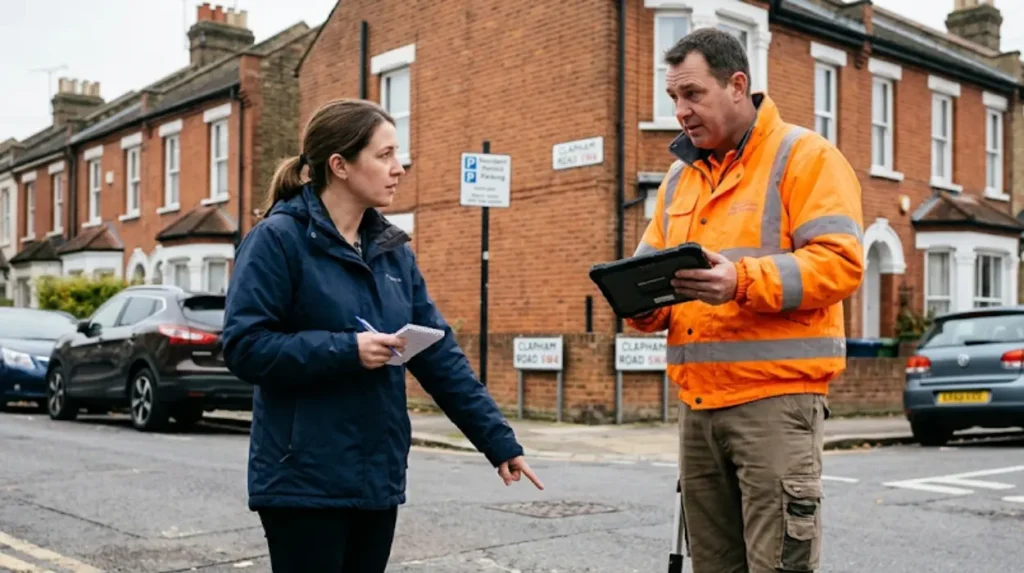
You can claim for reasonable repair costs directly caused by the pothole, including parts, labour, and any necessary ancillary expenses such as temporary transport if your vehicle was unusable, but not for unrelated damage or general wear and tear. The authority will only pay for costs that are clearly linked to the pothole impact.
Core claimable costs include:
- Replacement of damaged tyres, rims, suspension components, or other parts.
- Labour costs for repairs.
- Diagnostic fees if required to confirm the cause of damage.
Some authorities may also consider:
- Reasonable costs for temporary transport if your vehicle was unusable for a short period.
- Storage fees if your vehicle had to be stored due to the damage.
You cannot claim for:
- Pre-existing damage unrelated to the pothole.
- General wear and tear.
- Indirect costs such as lost income or inconvenience unless specifically allowed by the authority.
To support your claim, you must provide:
- Detailed repair invoices showing parts and labour.
- A mechanic’s report linking the damage to the pothole.
- Evidence of any ancillary costs (e.g., transport receipts).
The authority will assess whether each cost is reasonable and directly related to the pothole. If they consider a cost excessive or unrelated, they may reduce or reject that part of your claim.
Can I claim compensation for pothole damage in South London?
Yes. You may be able to claim compensation if you can show that a pothole caused damage to your vehicle and the responsible highway authority failed to maintain the road properly. Claims are made to the relevant borough council, Transport for London (TfL), or National Highways, depending on who manages the road.