Lambeth offers a wide range of outdoor activities across all four seasons, from riverside walks and historic parks to festivals, markets, and open-air sports. Visitors and residents can enjoy Green Flag–award-winning green spaces, cultural events, and South Bank attractions year-round, with activities suited to all ages and interests.
- What outdoor activities are available in Lambeth in every season?
- Which parks and green spaces should visitors prioritise in Lambeth?
- What are the best outdoor activities in Lambeth during spring?
- What outdoor activities are most popular in Lambeth in summer?
- Which outdoor activities work best in Lambeth during autumn?
- What outdoor options remain available in Lambeth in winter?
- Where can digital nomads and remote workers find outdoor hubs in Lambeth?
- How can tourists and families plan a full day of outdoor activities in Lambeth?
What outdoor activities are available in Lambeth in every season?
Lambeth runs a full calendar of outdoor activities across spring, summer, autumn and winter, including park events, riverside walks, markets, festivals and sports. The borough’s 16 Green Flag parks and South Bank location mean options range from Brockwell Park lido swims to winter markets and spring garden trails, with both free and ticketed experiences available.
Lambeth sits on the south bank of the River Thames in central-south London. The borough covers 26.78 square kilometres and includes districts such as Vauxhall, Clapham, Streatham, Waterloo, and South Bank. Lambeth Council manages over 30 public parks and open spaces, with 16 holding Green Flag status in recent years, including Bishop’s Park, Clapham Common, and Ruskin Park.
The outdoor offer splits broadly into:
- Parks and green spaces for walking, running, picnics, and play
- Riverside paths and cultural sites along the Thames and South Bank
- Seasonal festivals, markets, and outdoor arts
- Sports facilities, including lidos, tennis courts, and outdoor gyms
- Nature reserves and community gardens for wildlife and horticulture
As you explore the modern parks and riverside paths, you are moving across land with deep civic and industrial heritage. Read about the full history of Lambeth’s parks, commons, and riverside development to understand how these spaces evolved from medieval fields and industrial zones to today’s award‑winning green network.
Which parks and green spaces should visitors prioritise in Lambeth?
Visitors should prioritise Clapham Common, Brockwell Park, Vauxhall Pleasure Gardens, and Archbishop’s Park for their size, facilities, events, and central locations. These sites combine large open lawns, playgrounds, cafés, and regular programming, making them ideal for families, tourists, and remote workers seeking outdoor hubs.
Clapham Common spans 89 hectares and is one of London’s largest historic commons. It offers three ponds, a windmill, sports pitches, and extensive woodland walks. The common hosts regular events, including outdoor fitness classes and cultural festivals.
Brockwell Park covers 21 hectares in West Norwood and includes Brockwell Lido, a 50‑metre outdoor swimming pool open in warmer months, plus tennis courts, a children’s playground, and panoramic views over London. The park runs community gardening projects and seasonal events.
Vauxhall Pleasure Gardens is a 3.2‑hectare Victorian park close to Vauxhall station. It features a children’s playground, a multi‑use games area, and a bowling green. The park runs summer events and has a café on site.
Archbishop’s Park lies next to Lambeth Palace and Waterloo. It offers formal gardens, a children’s play area, and a café. The park is popular with office workers and tourists due to its proximity to the South Bank and major transport links.
Other notable parks include:
- Ruskin Park (25 hectares) in Denmark Hill, with a lido, bandstand, and formal gardens
- Myatt’s Fields Park in Kennington, with a community orchard and playground
- Kennington Park, with tennis courts, a children’s play area, and a war memorial
- Bishop’s Park, a small but central Green Flag site near Westminster Bridge
What are the best outdoor activities in Lambeth during spring?
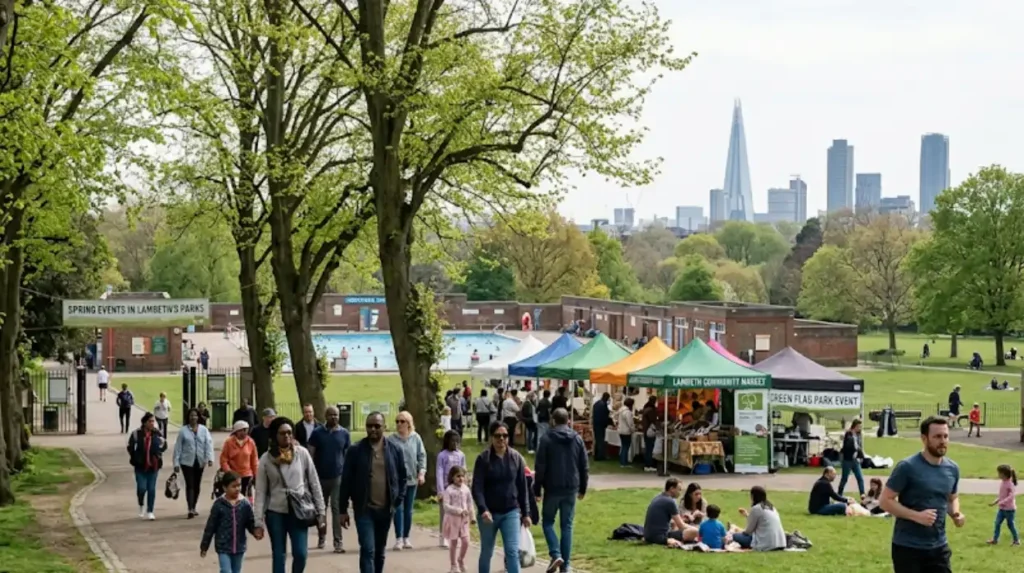
Spring in Lambeth centres on park walks, garden trails, outdoor markets, and early festivals as temperatures rise and daylight increases. March to May sees blossom in parks, the return of lido swimming, and the start of outdoor events on the South Bank and in major green spaces.
Average spring temperatures in London range from 8°C in March to 15°C in May. Lambeth’s parks reopen full programming after winter, including outdoor fitness classes, guided walks, and community gardening sessions.
Key spring activities include:
- Walking tree and blossom trails in Clapham Common, Ruskin Park, and Brockwell Park
- Visiting early outdoor markets such as Lower Marsh Market and Vauxhall Market
- Joining free outdoor yoga and bootcamp sessions in parks like Myatt’s Fields and Kennington Park
- Exploring the South Bank’s riverside path from Westminster Bridge to the Tate Modern, with street performers and open‑air cafés
- Attending spring festivals and cultural events in parks and public squares, often featuring live music and food stalls
Ruskin Park’s formal gardens and bandstand area provide a structured setting for picnics and photography. The park’s wildflower meadows attract early pollinators in April and May.
Waterloo and South Bank become busier from April, with outdoor seating at riverside restaurants and increased footfall along the Thames Path. Tourists combine park time with visits to the London Eye, National Theatre, and outdoor sculptures.
What outdoor activities are most popular in Lambeth in summer?
Summer is Lambeth’s peak outdoor season, with lido swimming, riverside events, festivals, open‑air cinema, and extended park programming from June to August. Daylight lasts until around 9:30 pm in June, and temperatures frequently reach 20–25°C, encouraging all‑day outdoor use.
Major summer activities include:
- Swimming at Brockwell Lido and Ruskin Park Lido, both 50‑metre outdoor pools with sunbathing areas
- Attending large‑scale events on Clapham Common, including music festivals and food fairs
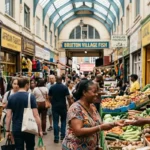
- Visiting outdoor markets such as Lower Marsh Market, Vauxhall Market, and pop‑up street food events
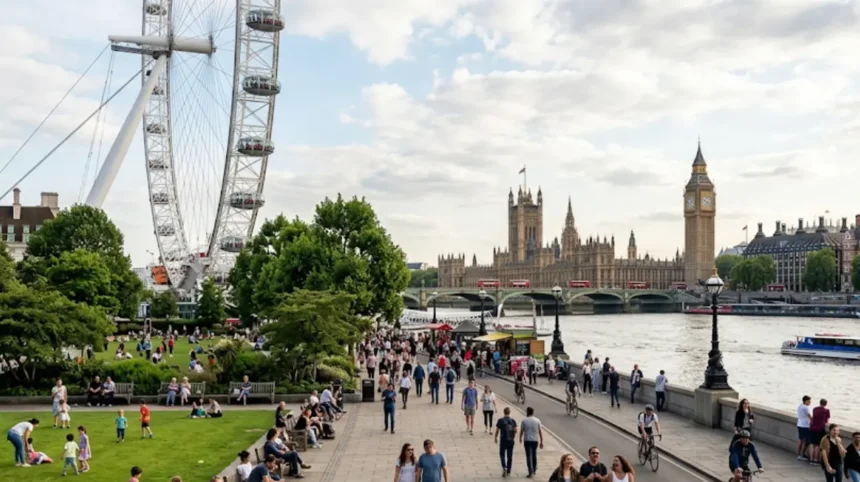
- Walking or cycling the Thames Path from Westminster Bridge to Tower Bridge, passing the London Eye, Tate Modern, and outdoor art installations
- Using outdoor sports facilities, including tennis courts, basketball courts, and outdoor gyms in parks across the borough
- Enjoying open‑air film screenings, theatre performances, and cultural festivals in parks and public spaces
Clapham Common hosts some of Lambeth’s largest outdoor events, including multi‑day music and food festivals attracting thousands of visitors. These events use the common’s open lawns and woodland edges as natural amphitheatres.
The South Bank Centre runs a summer programme of free outdoor performances, dance, and music on terraces and plazas near the National Theatre and Royal Festival Hall. Street performers and buskers add to the busy, festive atmosphere along the riverside walk.
Brockwell Park’s lido operates as a social hub in summer, with a café, sunbathing terraces, and regular swimming sessions. The park’s hilltop location offers views across London, making it popular for sunset walks and picnics.
Which outdoor activities work best in Lambeth during autumn?
Autumn in Lambeth features park walks, harvest festivals, outdoor markets, and cultural events as temperatures cool and foliage changes. September to November brings milder weather, fewer crowds, and a shift toward indoor–outdoor hybrid activities while keeping parks and riverside paths central.
Average autumn temperatures range from 17°C in September to 10°C in November. Parks remain open with reduced programming, but markets, riverside walks, and cultural outdoor events continue.
Core autumn activities include:
- Walking leaf‑change trails in Clapham Common, Ruskin Park, and Bishop’s Park
- Visiting outdoor markets and food events, including Lower Marsh Market and seasonal food fairs
- Joining heritage walks and history trails around Lambeth Palace, Waterloo, and the South Bank
- Using outdoor sports facilities before winter closures, including tennis courts and running tracks
- Attending autumn festivals, Halloween events, and cultural celebrations in parks and public squares
Lambeth Palace and Archbishop’s Park offer structured heritage walks, linking the palace gardens, churchyard, and nearby museums. These routes combine green space with historic architecture and interpretations.
The Thames Path remains busy in autumn, with tourists and residents walking between Westminster and Tower Bridge. Outdoor cafés and kiosks along the route stay open, though with reduced hours compared to summer.
Community gardens and nature reserves, such as Palace Road Nature Garden and Eardley Road Sidings Nature Reserve, run autumn volunteer days and wildlife walks. These smaller sites offer quieter, more focused outdoor experiences away from main tourist routes.
What outdoor options remain available in Lambeth in winter?
Winter in Lambeth still offers outdoor walks, markets, festive events, and limited sports, with parks open year‑round and riverside paths accessible in all weather. December to February sees shorter daylight hours and cooler temperatures, but key sites remain active with seasonal programming.
Average winter temperatures in London range from 5°C to 8°C. Parks stay open, though some facilities, such as lidos and outdoor cafés, close or operate reduced hours. Festive markets and light displays add seasonal interest.
Winter outdoor activities include:
- Walking and running in major parks such as Clapham Common, Brockwell Park, and Vauxhall Pleasure Gardens
- Visiting winter markets and festive events, including Christmas lights, stalls, and seasonal food
- Using well‑lit riverside paths along the Thames, especially between Westminster Bridge and Tower Bridge
- Attending outdoor cultural events, including winter festivals, light installations, and public art trails
- Joining community gardening and conservation volunteer days in parks and nature reserves
Winter markets and festive events often cluster around central locations such as Vauxhall, Waterloo, and the South Bank. These events feature outdoor stalls, food vendors, and seasonal entertainment, drawing both tourists and residents.
Parks such as Clapham Common and Brockwell Park remain popular for dog walkers, runners, and families seeking fresh air. Main paths are generally well‑maintained, though some secondary tracks may be affected by weather.
The Thames Path remains open year‑round, with clear signage and lighting in central sections. Tourists combine riverside walks with visits to indoor attractions, using outdoor routes as connectors between museums, galleries, and transport hubs.
Explore More Area Guide
Where Can Tourists Experience Nature in Lambeth? Parks, Gardens, Walks
Black Culture Market Hosts Summer Pop-Up Event in Brixton 2026
Where can digital nomads and remote workers find outdoor hubs in Lambeth?
Digital nomads and remote workers can use Lambeth’s parks, riverside terraces, and garden cafés as outdoor work hubs, especially in spring and summer. Sites such as Archbishop’s Park, Vauxhall Pleasure Gardens, and South Bank terraces offer Wi‑Fi‑adjacent cafés, seating, and reliable transport links.
Archbishop’s Park sits next to Lambeth North and Waterloo stations, with multiple cafés and kiosks nearby. The park’s lawns and benches provide flexible seating for laptop work, reading, or calls.
Vauxhall Pleasure Gardens and nearby streets host cafés with outdoor seating, close to Vauxhall station and major bus routes. The park’s open layout and central location make it suitable for short outdoor work sessions between meetings.
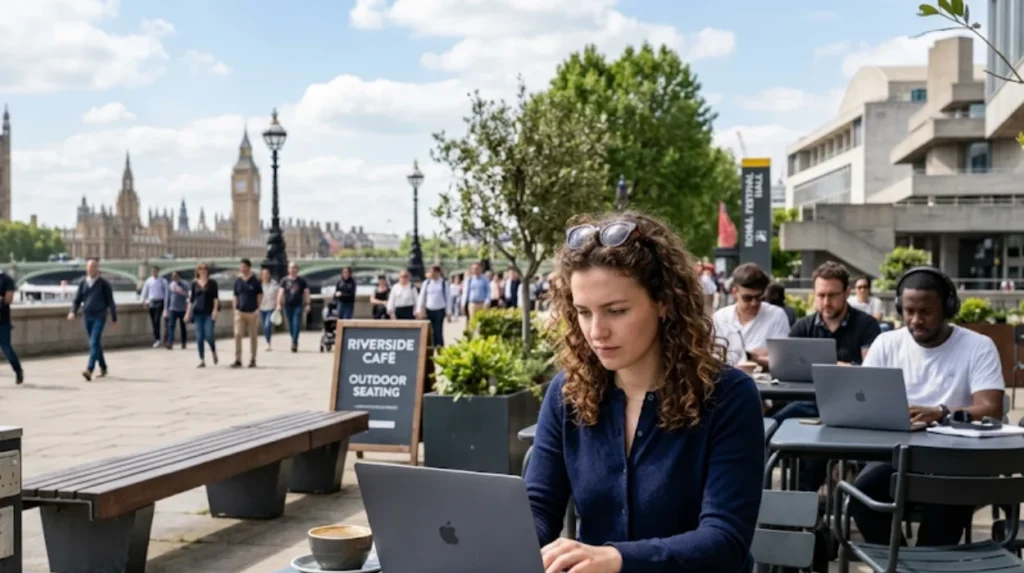
The South Bank’s terraces and plazas outside the National Theatre, Royal Festival Hall, and Tate Modern offer outdoor tables, power‑friendly cafés, and strong footfall. Remote workers use these spaces for informal meetings, writing, and breaks between indoor coworking sessions.
Key factors for outdoor work in Lambeth include:
- Proximity to transport hubs (Waterloo, Vauxhall, Clapham North, Clapham Common)
- Availability of nearby cafés with outdoor seating and Wi‑Fi
- Park facilities such as benches, tables, and sheltered areas
- Event calendars that indicate busy periods and quieter times
Spring and summer provide the most reliable conditions for outdoor work, with longer daylight and warmer temperatures. Autumn and winter require more planning around weather, daylight, and café hours.
How can tourists and families plan a full day of outdoor activities in Lambeth?
Tourists and families can plan a full outdoor day in Lambeth by combining a morning park visit, a South Bank riverside walk, an afternoon market or festival, and an evening park or plaza stop. This structure balances nature, culture, food, and rest while using Lambeth’s compact geography and transport network.
A typical full‑day plan might include:
- Morning: Walk or picnic in Clapham Common or Brockwell Park, using playgrounds and cafés
- Late morning: Travel to Waterloo or Vauxhall and walk the Thames Path towards the London Eye
- Midday: Visit outdoor markets such as Lower Marsh Market or South Bank food stalls for lunch
- Afternoon: Explore Archbishop’s Park or Vauxhall Pleasure Gardens, with a café break and playtime
- Evening: Return to a central park or riverside terrace for sunset views and a relaxed finish
Families can use Clapham Common’s playgrounds and ponds for morning activity, then take a short bus or train ride to Waterloo. The South Bank’s flat, step‑free paths suit strollers and young children.
Tourists can combine outdoor time with cultural stops, such as the London Eye, Tate Modern, and outdoor sculptures along the Thames. Parks and plazas provide rest points between major attractions.
Planning tools include Lambeth Council’s parks map, event listings for major parks, and transport maps for buses, trains, and the Underground. Checking seasonal event calendars helps avoid overcrowding and aligns visits with festivals and markets.
This approach gives tourists, leisure travellers, and families a clear, repeatable framework for experiencing Lambeth’s outdoor offer across all seasons, using the borough’s parks, riverside paths, and public spaces as a connected network rather than isolated stops.