Lambeth is one of South London’s strongest destinations for independent shopping. The borough combines traditional markets, specialist food retailers, vintage stores, bookshops, craft businesses, fashion boutiques and neighbourhood high streets. Visitors can shop independently in Brixton, Herne Hill, Lower Marsh, West Norwood, Streatham, Kennington, Stockwell and surrounding neighbourhoods.
- Where is the best place for independent shopping in Lambeth?
- What can visitors buy at Brixton Village and Brixton Market?
- Where can visitors find independent shops around Herne Hill?
- What makes Lower Marsh a good independent shopping destination?
- Where can visitors discover independent makers in West Norwood?
- Which Lambeth neighbourhoods are useful for independent high-street shopping?
- How do Lambeth’s markets support independent retailers?
- Why is independent shopping important to Lambeth’s visitor economy?
- How should visitors plan an independent shopping day in Lambeth?
- What should visitors look for when shopping independently in Lambeth?
- Which Lambeth shopping areas are best for different types of visitors?
- What is the future of independent shopping in Lambeth?
Independent shopping in Lambeth is different from conventional high-street retail. The borough has numerous small businesses operating from market arcades, local centres, street markets and established shopping parades. Lambeth Council identifies a large network of local centres across the borough, including Brixton Road, Kennington Cross, Lambeth Walk, Acre Lane, Lower Marsh, Streatham Common, Tulse Hill and Wandsworth Road. These centres traditionally provide small shops and services for local communities.
For visitors, this creates several distinct shopping experiences rather than one single retail district. Brixton offers the strongest concentration of independent specialist traders. Herne Hill provides a neighbourhood shopping environment supported by a regular market. West Norwood combines local shops with the monthly West Norwood FEAST. Lower Marsh provides an established Waterloo shopping street close to major cultural attractions.
Where is the best place for independent shopping in Lambeth?
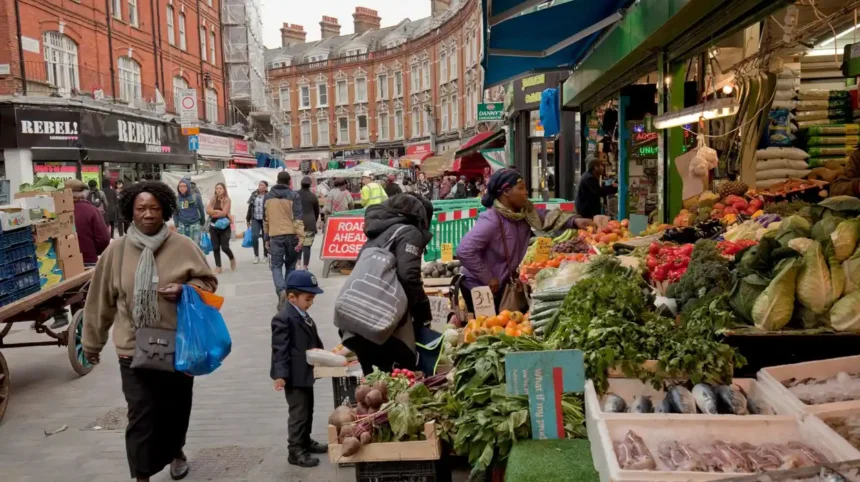
Brixton is the strongest destination for independent shopping in Lambeth because Brixton Village, Brixton Market and surrounding streets combine specialist food shops, boutiques, books, records, crafts and locally operated businesses. The area provides the borough’s broadest concentration of independent retail.
Brixton is the natural starting point for visitors searching for independent shops in Lambeth. Its retail identity is built around several connected destinations rather than one conventional shopping centre.
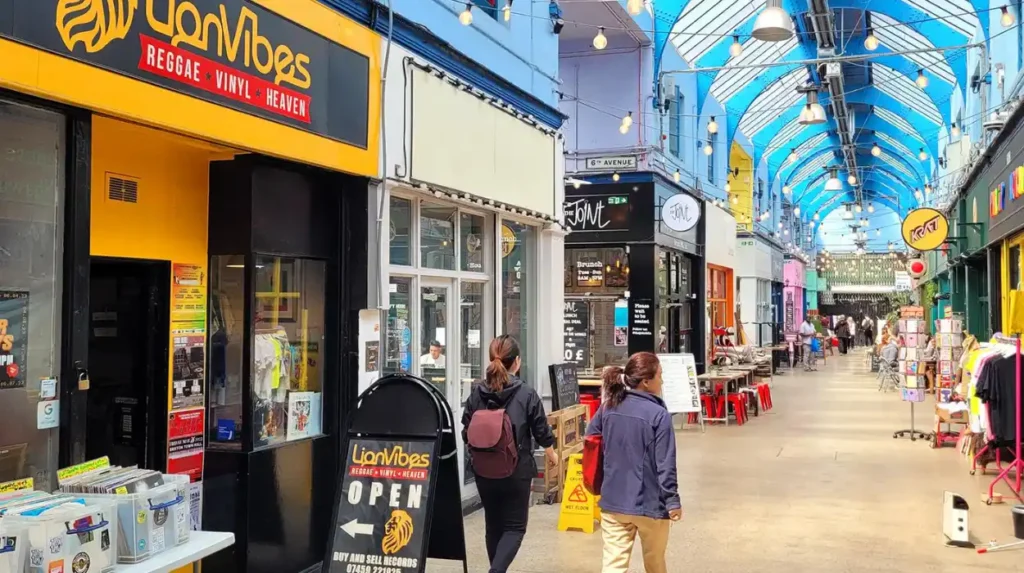
Brixton Village consists of Market Row and Granville Arcade. Its official directory lists a large range of independent retailers, including jewellery businesses, fabric shops, fashion retailers, vintage businesses, bookshops, record shops, specialist food stores and lifestyle retailers. Brixton Village states that it contains more than 100 independent vendors representing more than 50 nationalities.
The shopping offer includes Round Table Books, a bookshop focused on diverse authors, writers and illustrators. Lion Vibes specialises in reggae records and is described by Brixton Village as one of London’s established reggae record retailers. Other examples include Rose and Thorn, which sells homeware, gifts, jewellery and handmade toys, and SoLo Craft Fair, which promotes locally handcrafted goods and independent makers.
Brixton Village also retains traditional food retailers. Greengrocers, butchers, fishmongers and specialist grocery stores form part of its long-standing commercial identity. The official market describes traditional traders as family-owned independent businesses, with some serving the community for more than 30 years.
Beyond the arcade, visitors can explore Brixton Market around Electric Avenue, Pope’s Road and Brixton Station Road. Lambeth Council states that Brixton Market has more than 80 licensed pitches across these locations.
This makes Brixton particularly useful for visitors who want to combine shopping with food, music, culture and local history in one walkable area.
What can visitors buy at Brixton Village and Brixton Market?
Visitors can buy handmade gifts, jewellery, vintage clothing, books, records, fabrics, specialist groceries, fresh produce, homeware and fashion in Brixton. The markets also provide traditional African, Caribbean, European, Asian and Latin American products unavailable in many mainstream retail centres.
Brixton’s independent shopping offer is unusually diverse because different retail categories operate alongside specialist food businesses.
Fashion shoppers can find independent boutiques and vintage retailers. Brixton Village’s current directory includes retailers such as Flow’s Fashion, Ladies Fashion, Lalune London, Leona and Sloe Vintage. These businesses provide alternatives to standard chain-store clothing.
Visitors interested in interiors and gifts can explore businesses such as Rose and Thorn and Rachel and Malika’s. Brixton Village describes its independent retailers as sellers of distinctive lifestyle products, homeware, jewellery and handmade goods.
Book and music shoppers have particularly strong options. Round Table Books provides an independent bookshop experience, while Lion Vibes focuses on reggae records. This creates a specialist cultural-shopping dimension that differs from conventional high-street retail.
Food shopping is another major part of the experience. Visitors can find specialist Caribbean, African, Latin American and international ingredients, including plantains, yams, cassava, callaloo, sorrel and other fresh produce. Brixton Village states that traditional traders have historically provided fresh and hard-to-find ingredients for local households.
The market therefore works as both a visitor attraction and a functioning local shopping environment.
For travellers staying in South London accommodation, Brixton is also practical because the market is close to Brixton Underground station. Brixton Underground is served by the Victoria line. Brixton Village states that the market is approximately one minute from the station via Electric Avenue and provides access from several surrounding streets.
Visitors should check individual retailer opening times before making a dedicated journey because individual businesses operate their own schedules.
Where can visitors find independent shops around Herne Hill?
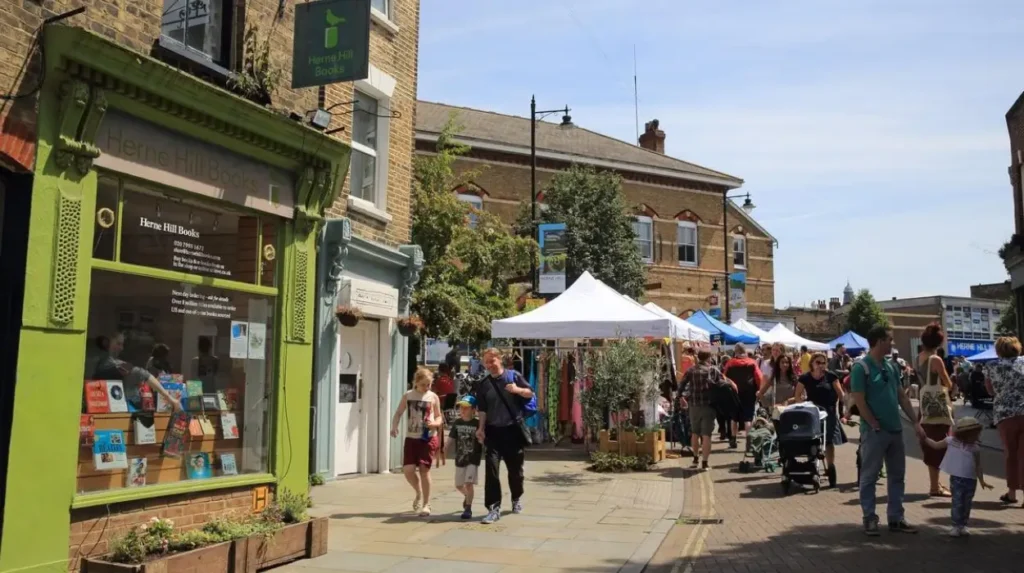
Herne Hill provides a compact neighbourhood shopping experience with independent businesses, specialist food retailers and regular market activity. Its strongest independent-shopping opportunity is Herne Hill Market, which operates on Sundays and complements the permanent shops around Herne Hill Road.
Herne Hill is suitable for visitors who prefer a smaller-scale shopping environment. The area sits between Brixton, Dulwich and North London’s wider South London transport network, making it easy to incorporate into a local itinerary.
The permanent retail environment around Herne Hill Road contains independent services, food businesses and specialist retailers. The area is particularly useful for visitors seeking everyday local shopping rather than large-scale commercial retail.
Herne Hill Market provides an additional layer. Lambeth Council lists Herne Hill Market among the borough’s markets and identifies it as a Sunday market.
Market shopping is important because independent retail does not only mean permanent shops. Market traders operate small businesses through temporary stalls, allowing makers, food producers and specialist sellers to reach visitors without maintaining a conventional shop unit.
The market environment also suits visitors searching for gifts and locally produced items. Availability changes according to the trading calendar, so the market should be treated as a changing retail destination rather than a fixed directory of permanent shops.
Herne Hill is also a useful location for visitors who want to combine shopping with cafés, parks and cultural attractions. The area can be incorporated into a half-day South London itinerary without requiring a long journey between individual destinations.
As you explore the modern shops and market streets, you are crossing land with a deep heritage. Read about the full to understand its origins.
What makes Lower Marsh a good independent shopping destination?
Lower Marsh is one of Lambeth’s established local shopping streets near Waterloo. Its independent retail character comes from small businesses, cafés, food outlets, specialist services and market trading rather than a single enclosed shopping centre or department-store complex.
Lower Marsh is particularly convenient for visitors staying around Waterloo. Its position close to Waterloo station places independent businesses within easy reach of major South Bank attractions.
Lambeth Council identifies Lower Marsh as a local centre and also lists Lower Marsh among the markets operating on behalf of the council.
The area therefore combines permanent shops with market activity. This creates a more traditional street-based shopping environment.
Visitors can use Lower Marsh for practical purchases, food, gifts and local services while exploring the wider Waterloo area. The street is particularly useful for travellers who want to avoid spending their entire shopping time inside large commercial centres.
Its location also makes it suitable for combining shopping with cultural attractions around Waterloo and the South Bank. Visitors can structure an itinerary around independent shopping first, followed by museums, galleries, theatres or riverside attractions.
Lower Marsh demonstrates an important feature of independent retail in Lambeth: shopping is distributed through neighbourhood centres. Visitors do not need to travel to one large destination to find small businesses.
The street also provides a useful alternative for digital nomads and business travellers staying around Waterloo. Independent cafés and food businesses create convenient places for breaks between meetings, while nearby transport connections reduce travel time.
Opening hours vary between individual businesses, so visitors should check the retailer directly when a particular shop is the main purpose of the visit.
Where can visitors discover independent makers in West Norwood?
West Norwood offers independent shopping through neighbourhood businesses and West Norwood FEAST, a volunteer-powered monthly street market. Its Artisans’ Market focuses on handmade products including ceramics, jewellery, prints, clothing, accessories and homewares from independent designers and makers.
West Norwood provides one of Lambeth’s strongest options for visitors seeking independent makers rather than conventional retail chains.
The main recurring event is West Norwood FEAST, which operates on the first Sunday of each month from April to December. The event runs from 10am to 4pm and is volunteer-powered and self-funded.
Its Artisans’ Market is particularly relevant to independent shopping. The organisers describe it as a curated designer-maker market featuring art, prints, ceramics, jewellery, accessories, homewares and clothing. The current location is Devane Way and the area outside West Norwood Leisure Centre.
The Fresh ’n’ Green hub focuses on fresh produce, including meat, fruit and vegetables, cheese, olives, fish and bread, alongside products such as preserves, plants and flowers. This gives visitors another way to buy from small producers and specialist traders.
West Norwood also has permanent independent businesses. The local shopping directory promoted by West Norwood FEAST includes examples such as Bon Velo West Norwood, a family-friendly bicycle shop, Goodways Electronics, which provides electrical repairs, and Clockworks, a creative space combining a museum, workshop, library and meeting space.
For visitors, West Norwood works best when the itinerary matches the market calendar. The first Sunday schedule creates a specific opportunity to see the largest concentration of makers and market traders.
The event also supports a wider local-business ecosystem. West Norwood FEAST explicitly promotes shopping locally and connects visitors with businesses across West Norwood and Tulse Hill.
Which Lambeth neighbourhoods are useful for independent high-street shopping?
Independent shopping extends beyond major markets into Lambeth’s neighbourhood centres. Useful areas include Kennington, Stockwell, Streatham, Tulse Hill, Brixton Hill, Lambeth Walk, Acre Lane, South Lambeth Road and Wandsworth Road, where small shops serve local communities.
Lambeth has a broad network of local centres. The council’s licensing policy identifies numerous shopping parades and neighbourhood centres throughout the borough. Examples include Acre Lane, Brixton Hill, Brixton Road, Kennington Cross, Kennington Lane, Lambeth Walk, Loughborough Junction, South Lambeth Road, Streatham Common, Tulse Hill and Wandsworth Road.
These locations are important because independent shopping in Lambeth is not limited to tourist-oriented destinations.
Kennington provides local shopping around Kennington Cross and surrounding roads. Visitors staying near central South London can explore smaller retailers while travelling between Waterloo, Elephant and Castle and Vauxhall.
Stockwell offers neighbourhood businesses and specialist services around its local shopping streets. It is useful for visitors interested in everyday retail and local food businesses.
Brixton Hill extends the independent retail experience beyond the central market area. Its position between Brixton town centre and Streatham provides a longer shopping route for visitors who prefer walking between neighbourhoods.
Lambeth Walk provides another historic local shopping environment. Its independent businesses serve the surrounding residential community rather than operating primarily as a visitor attraction.
Streatham contains several local centres and shopping parades. Streatham Common and Streatham Vale are among the centres identified by Lambeth Council.
The practical advantage of these neighbourhoods is variety. Visitors can discover specialist businesses that do not appear in conventional London tourist-shopping guides.
How do Lambeth’s markets support independent retailers?
Lambeth’s markets provide flexible retail spaces for small traders selling clothing, handmade goods, fresh produce, food and specialist products. Council licensing and market management create a formal framework that allows independent traders to operate in public spaces.
Markets are a central component of Lambeth’s independent retail economy. Lambeth Council states that its markets offer goods including clothing, hats, luggage, bedding, handmade items, fresh fruit and vegetables and street food influenced by cuisines from around the world.
Brixton Market demonstrates the scale of this system. The council lists more than 80 licensed pitches across Electric Avenue, Pope’s Road and Brixton Station Road.
Other council-listed markets include Lower Marsh, Herne Hill Market, Venn Street Market and Streatham Market. Lambeth Council also lists Brixton Farmers’ Market, Oval Market and West Norwood Feast among its market and event destinations.
Market trading follows different mechanisms from permanent shop retail. A trader uses a designated pitch and operates under licensing requirements. Lambeth Council states that selling or displaying goods in streets, parks, open spaces or other public areas requires appropriate permission or a licence.
This framework helps explain why markets can change regularly. A visitor returning to the same location on different dates can encounter different independent businesses.
For shoppers, this creates discovery opportunities. For small businesses, markets provide physical retail access without requiring the same type of permanent premises as a conventional shop.
Lambeth’s market structure therefore strengthens the borough’s independent-shopping identity by connecting established businesses, emerging traders, producers and makers with local customers and visitors.
Why is independent shopping important to Lambeth’s visitor economy?
Independent shopping gives visitors access to specialist products, local businesses and neighbourhood markets while distributing visitor spending beyond major retail centres. It also preserves commercial diversity and provides spaces for small traders, makers, producers and specialist retailers.
Independent shopping has an economic and cultural role in Lambeth.
A Greater London Authority study of small shops examined the role of small and independent retailers in London and considered their importance within retail planning and consumer demand. The study also examined planning mechanisms designed to support shop units suitable for small and independent retailers.
The local economic effect is also highlighted by West Norwood FEAST, which states that between 50p and 70p of every £1 spent with a local independent business circulates back into the local economy. This is a figure provided by the organisation for its local-shopping campaign rather than a borough-wide government statistic.
For visitors, the practical implication is straightforward. Shopping with independent retailers directs spending towards businesses operating within Lambeth’s neighbourhood economy.
Independent shops also preserve product diversity. Brixton Village demonstrates this through specialist groceries, vintage clothing, records, books, handmade jewellery, fabrics and cultural products.
The visitor experience is therefore connected to local commercial identity. Shopping becomes a way to access products associated with the communities and businesses that shape Lambeth.
This is particularly relevant for travellers seeking authentic local retail rather than standardised shopping centres.
How should visitors plan an independent shopping day in Lambeth?
Visitors should choose one main shopping district and then add a nearby market or neighbourhood centre. Brixton works best for broad retail variety, West Norwood for makers, Herne Hill for market shopping and Lower Marsh for Waterloo-based independent retail.
A successful independent-shopping itinerary depends on location and opening schedules.
Brixton is the strongest choice for a first visit because its market areas provide the widest concentration of independent retail. Visitors can start at Brixton Underground station, walk towards Electric Avenue and continue through Brixton Market and Brixton Village. Brixton Village confirms access from Electric Avenue, Electric Lane, Popes Road, Coldharbour Lane, Atlantic Road and Brixton Station Road.
West Norwood is better suited to visitors whose trip coincides with the first Sunday of the month between April and December. The Artisans’ Market provides the clearest independent-maker focus.
Herne Hill is appropriate for a Sunday itinerary when its market is operating. It provides a smaller neighbourhood experience and works well alongside nearby parks and cultural destinations.
Lower Marsh is the most convenient choice for visitors based around Waterloo. Its location makes it easy to combine independent shopping with a wider South Bank or Waterloo itinerary.
Visitors should also allow time for smaller neighbourhood centres. Lambeth’s official list demonstrates that independent and local retail is distributed across a much wider geography than the headline destinations.
Checking current opening times is essential. Independent businesses operate individual schedules, while markets operate on specific days and seasonal calendars. Brixton Village itself states that the market operates seven days a week but advises visitors to check individual shops and restaurants for their own opening hours.
What should visitors look for when shopping independently in Lambeth?
Visitors should look for specialist products, locally made goods, independent books, vintage clothing, records, handmade jewellery, artisan food, cultural groceries and neighbourhood services. Checking market dates and individual opening hours ensures the planned shopping route matches current trading arrangements.
The strongest independent-shopping experiences in Lambeth are based on specialisation.
A visitor looking for books can explore Round Table Books in Brixton Village. A visitor interested in records can explore Lion Vibes. Someone searching for handmade gifts can consider SoLo Craft Fair or Rose and Thorn. Vintage shoppers can explore retailers listed by Brixton Village such as Leona and Sloe Vintage.
Food shoppers have another extensive category. Brixton’s traditional traders include specialist grocers, fishmongers and butchers. The range of international ingredients reflects the cultural diversity of the market.
West Norwood provides a particularly strong selection for handmade products when FEAST is operating. Its Artisans’ Market includes ceramics, jewellery, prints, clothing, accessories and homewares.
Visitors should also distinguish between a permanent independent shop and a market trader. Permanent shops provide greater consistency, while markets offer a changing selection of businesses.
This distinction is useful when planning purchases. A visitor searching for a particular product should verify the retailer before travelling. A visitor seeking discovery and variety can simply explore the market environment.
Explore More Area Guide
Best Riverside Attractions in Lambeth | South London 2026
What to Discover Around Waterloo in Lambeth, London 2026
Which Lambeth shopping areas are best for different types of visitors?
Brixton suits first-time visitors seeking maximum variety, West Norwood suits craft and maker-focused shoppers, Herne Hill suits relaxed neighbourhood retail, and Lower Marsh suits Waterloo visitors who want independent shops close to central London attractions.
Tourists with limited time should prioritise Brixton. Its combination of Brixton Village and Brixton Market provides food, fashion, books, records, gifts, crafts and specialist groceries in a concentrated area.
Visitors interested in crafts and handmade products should consider West Norwood FEAST. The Artisans’ Market specifically focuses on independent designers and makers.
Visitors seeking fresh produce and specialist food should prioritise Brixton Market, Brixton Village or West Norwood’s Fresh ’n’ Green hub. These destinations connect independent retail with food production and specialist grocery shopping.
Visitors staying near Waterloo should choose Lower Marsh because it provides a local shopping experience within the wider Waterloo district.
Visitors seeking neighbourhood discovery should explore Herne Hill, Kennington, Stockwell, Streatham, Tulse Hill and other local centres identified by Lambeth Council.
Digital nomads and business travellers can combine shopping with cafés and local services, particularly around Brixton, Lower Marsh, Herne Hill and West Norwood. The locations provide practical places to spend downtime without travelling across London.
Families can also use markets as flexible destinations because shopping, food and public spaces frequently sit close together. West Norwood FEAST additionally provides free children’s activities and music during its monthly event.
What is the future of independent shopping in Lambeth?
Independent shopping in Lambeth remains closely linked to markets, local centres, small businesses and community-led retail. Its future depends on maintaining accessible trading spaces, supporting local businesses and preserving the diversity that distinguishes neighbourhood shopping from standardised retail.
Lambeth’s independent retail structure is distributed across many different commercial environments. This reduces dependence on a single shopping district and allows different neighbourhoods to maintain their own retail identities.
Brixton Village demonstrates the strength of a concentrated independent marketplace, with more than 100 independent vendors and a strong mixture of retail, food and cultural activity.
West Norwood demonstrates another model. Its FEAST event creates a recurring platform for makers, food producers and local traders, with a defined Artisans’ Market for handmade products.
Lambeth’s wider local-centre network provides the permanent neighbourhood foundation. The council’s policy identifies numerous local centres containing small shops and local services.
The result is a varied independent-shopping landscape. Visitors can find specialist retail in established markets, discover emerging makers at temporary events and explore everyday independent businesses in local shopping parades.
For anyone asking where to shop independently in Lambeth, the answer is therefore broader than one street. Brixton is the leading destination for variety, West Norwood is strong for makers and market shopping, Herne Hill provides neighbourhood retail, and Lower Marsh provides independent shopping close to Waterloo. Together, these destinations show why Lambeth remains one of South London’s most diverse areas for independent retail.
What is the best area for independent shopping in Lambeth?
Brixton is the best overall area for independent shopping in Lambeth. Brixton Village and Brixton Market offer specialist food, fashion, vintage clothing, books, records, jewellery, crafts, gifts and locally operated businesses in a concentrated shopping district.