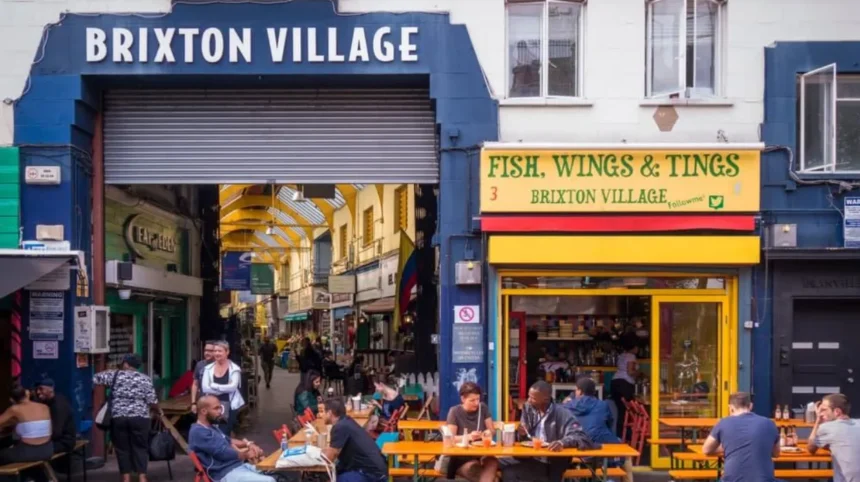
Lambeth is one of South London’s strongest destinations for international food, with Brixton providing the deepest concentration of global flavours and South Bank adding a major riverside food market. Visitors also find international dishes at Lower Marsh, West Norwood and other neighbourhood markets.
- Why is Lambeth known for international food?
- Where can visitors find the widest range of international food in Brixton?
- What international cuisines can visitors try in Brixton Village?
- Is Brixton Market good for Caribbean and African food?
- Where can visitors eat international food near South Bank?
- What food can visitors find at the Southbank Centre Food Market?
- Can visitors find international food at Lower Marsh Market?
- Which Lambeth markets are useful for discovering international street food?
- What makes West Norwood Feast different from a traditional food market?
- How can visitors choose international food by neighbourhood?
- How should visitors plan an international food day in Lambeth?
- How do Lambeth markets maintain food safety standards?
- Why is international food important to Lambeth’s visitor economy?
- What is the best area in Lambeth for international food?
Lambeth’s food culture reflects the borough’s long history of migration, independent trading and neighbourhood markets. Census 2021 data records substantial South American, Caribbean, African, European and other international communities in the borough. South American countries accounted for 4.1% of residents’ reported countries of birth, while Jamaica accounted for 2.5% and Portugal 2.2%.
The result is a food landscape where international cuisine appears in several formats. These include traditional market stalls, independent restaurants, cafés, specialist food shops, street-food traders and weekend food markets.
Why is Lambeth known for international food?
Lambeth is known for international food because its markets, independent businesses and diverse communities have created a concentrated food culture, particularly in Brixton, where African, Caribbean, Latin American, Asian, European and Middle Eastern influences appear across markets and restaurants.
Brixton is the clearest starting point for visitors exploring Lambeth’s international food scene. Lambeth Council describes Brixton as an important cultural destination with indoor and outdoor markets, restaurants and shops that attract both local residents and tourists.
The borough’s demographic profile helps explain this diversity. In Census 2021, 24.0% of Lambeth residents identified within the Black, Black British, Black Welsh, Caribbean or African ethnic group, while 7.3% identified within the Asian, Asian British or Asian Welsh group and 8.1% identified as Mixed or Multiple ethnic groups.
Food markets provide an accessible way to experience this diversity. Visitors can buy prepared meals, fresh produce, spices, breads, meat, fish and specialist ingredients without travelling between distant parts of London.
Lambeth Council currently lists Brixton Market, Brixton Farmers’ Market, Herne Hill Market, Lower Marsh Market, Oval Market, Venn Street Market, Streatham Market and West Norwood Feast among its markets and events.
This makes market-hopping a practical way to explore international food across the borough.
Where can visitors find the widest range of international food in Brixton?
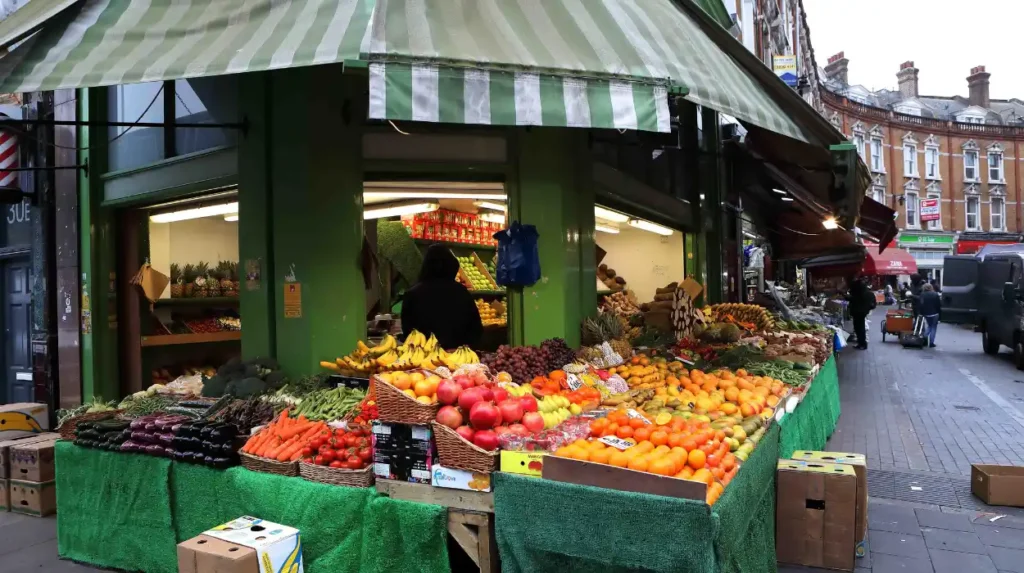
Brixton offers Lambeth’s strongest concentration of international food, centred on Brixton Market and Brixton Village. Visitors can find Caribbean, African, Mexican, Ethiopian, Japanese and other cuisines alongside specialist grocers, traditional traders, cafés and independent restaurants.
Brixton Market is centred around Electric Avenue, Pope’s Road and Brixton Station Road. Lambeth Council states that the market has more than 80 licensed pitches across these locations and includes hot-food stalls alongside traditional market businesses.
The market’s cultural importance is particularly connected with African and Caribbean food. Film Lambeth describes Brixton Market as a major African and Caribbean cultural marketplace and identifies it as a destination with hundreds of stalls and strong food traditions.
Visitors can explore fresh produce before choosing prepared food. This combination is useful for travellers who want both an immediate meal and ingredients associated with international cooking.
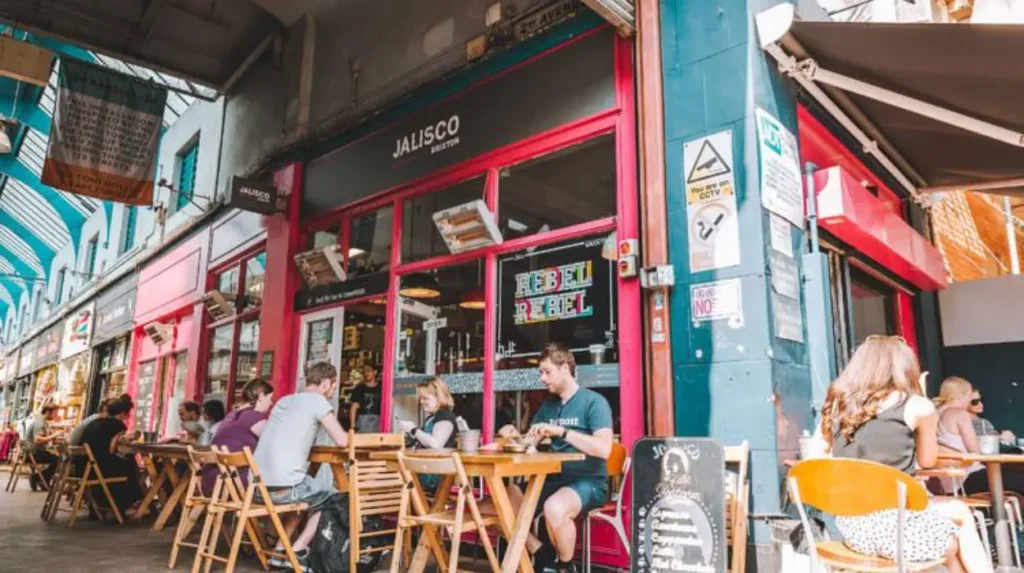
Brixton Village provides a more concentrated restaurant and food-hall experience. The destination consists of Granville Arcade and Market Row and has more than 100 independent traders. These businesses include restaurants, cafés, bars, fishmongers, butchers and greengrocers.
Its food offer includes Jamaican seafood, Mexican street food, Ethiopian injera and Japanese pancakes.
This makes Brixton Village particularly suitable for visitors who want several international cuisines within a short walking area.
As you explore the modern market district, you are crossing land with a deep local heritage. Read about the full to understand its origins.
What international cuisines can visitors try in Brixton Village?
Brixton Village provides a broad international selection that includes Jamaican, Mexican, Ethiopian and Japanese food, supported by independent restaurants and traditional food traders. Its compact layout makes it practical for visitors who want to sample different cuisines during one visit.
Jamaican food forms an important part of Brixton’s wider culinary identity. Visitors can encounter seafood, jerk-style dishes, rice-based meals and other Caribbean specialities in and around the market district.
Mexican food provides another established international option. Street-food formats make it straightforward for visitors to choose smaller portions and combine different dishes during a single market visit.
Ethiopian cuisine adds another distinct food tradition. Injera, a fermented flatbread traditionally used to accompany stews and vegetables, is an important part of Ethiopian dining.
Japanese food also appears in the Brixton Village offer. Japanese pancakes and other dishes demonstrate the market’s wider Asian representation.
The market also includes traditional traders rather than only restaurants. These businesses sell ingredients and specialist products that reflect international food cultures.
This distinction matters for visitors. A food market can provide two experiences at once: eating prepared food and understanding the ingredients behind different culinary traditions.
Is Brixton Market good for Caribbean and African food?
Brixton Market is one of Lambeth’s most significant places for Caribbean and African food, with its history, traders and produce strongly connected to African and Caribbean culture. Visitors can explore prepared dishes, fresh produce and specialist ingredients within the central Brixton market area.
Brixton’s African and Caribbean food identity developed alongside the area’s wider cultural transformation. The market remains an important commercial and social environment for food businesses.
Fresh produce is a major component. Visitors encounter fruit and vegetables that support Caribbean and African cooking, including ingredients less commonly stocked by conventional supermarkets.
The market also provides access to specialist shops. These businesses are valuable for travellers interested in understanding how particular ingredients connect with regional cooking.
For tourists, Brixton is particularly convenient because the international food experience is not confined to one restaurant. Food businesses are distributed through a wider market district.
Visitors can therefore build a food-focused walking route around Electric Avenue, Atlantic Road, Pope’s Road and Brixton Village.
Where can visitors eat international food near South Bank?
Visitors near South Bank can find international food at the Southbank Centre Food Market, where more than 40 producers and independent traders serve food and drink representing worldwide cuisines. The market operates at Southbank Centre Square behind Royal Festival Hall.
The Southbank Centre Food Market is one of Lambeth’s strongest options for visitors combining sightseeing with international food.
Visit London lists more than 40 producers at the market. The food offer spans Asian street food, curries, Mediterranean dishes, pastries, crêpes, Ethiopian food and plant-based cakes.
Its location provides a major advantage for leisure travellers. Southbank Centre Square sits close to Royal Festival Hall and the Thames, placing food within a wider visitor itinerary.
Waterloo is the nearest Underground station, approximately five minutes away on foot. Embankment is around seven minutes away. London Waterloo and London Waterloo East provide nearby railway connections.
The market operates from Friday to Sunday, with additional opening on Monday bank holidays. Visit London currently lists Friday, Saturday and Sunday trading hours, with exact times varying by day.
This makes South Bank especially useful for visitors who want an international lunch or early dinner during a day of sightseeing.
What food can visitors find at the Southbank Centre Food Market?
The Southbank Centre Food Market offers Asian street food, curries, Mediterranean dishes, Ethiopian specialities, pastries, crêpes, burgers, barbecue dishes and plant-based food. Independent traders also sell drinks, fresh produce and specialist food products.
Asian street food provides one of the market’s prominent international categories. Visitors can choose dishes designed for immediate consumption rather than formal restaurant dining.
Mediterranean food provides another major category. Pastries and crêpes add lighter options for visitors exploring the South Bank during the afternoon.
Ethiopian food provides an important African representation. Plant-based Ethiopian dishes also create options for vegetarian and vegan visitors.
The market includes drinks from independent traders, including coffee, juices, beer, cocktails and sparkling wine. Visitors should check individual trader availability because market stalls and menus change.
The market is therefore best understood as a rotating international food destination rather than a fixed restaurant menu.
Can visitors find international food at Lower Marsh Market?
Lower Marsh Market provides international and multicultural lunchtime food in the Waterloo area, alongside fresh produce, independent shops and traditional market businesses. Its weekday street-food operation makes it particularly convenient for visitors exploring Waterloo and the surrounding South Bank area.
Lower Marsh is one of Lambeth’s historic market streets. The market operates on Lower Marsh in SE1 7RG.
Film Lambeth identifies weekday street food from 08:00 to 18:00 and Saturday produce and flea-market trading from 08:00 to 18:00, with Sunday closed.
The market combines food with other independent businesses. Visitors therefore encounter a neighbourhood shopping environment rather than a dedicated food hall.
The location is particularly useful for business travellers staying around Waterloo. A visitor can combine lunch with access to Waterloo station, South Bank attractions and nearby cultural venues.
The food offer changes between traders and trading days. Checking the current market information before travelling gives visitors the most accurate picture.
Which Lambeth markets are useful for discovering international street food?
Several Lambeth markets provide international street food beyond Brixton and South Bank, including West Norwood Feast, Herne Hill Market, Venn Street Market and Streatham Market. These markets extend international food experiences into neighbourhoods across southern Lambeth.
West Norwood Feast provides one of the strongest examples. It operates on the first Sunday of each month from April to December, generally from 10:00 to 16:00.
Its Food Fair focuses on hot and cold street food from around the world. The market also includes fresh produce and independent food businesses.
The 2026 trader programme demonstrates the international range. Traders include Japanese comfort food from Shokudo, Tanzanian and Nashville-inspired dishes from Dala Dala Kitchen, Brazilian food from Agua Na Boca, Ghanaian street food from Zongo Foods, Greek food from Souvlaki Street, North Indian food from Lucknow2London and Filipino-inspired dishes from Harlem2Manilla.
Mandala Street Food adds Himalayan cuisine through handmade dumplings and lunch boxes, with vegan, vegetarian and gluten-free dishes listed for selected 2026 dates.
These examples show how international food in Lambeth extends beyond permanent restaurants.
What makes West Norwood Feast different from a traditional food market?
West Norwood Feast combines international street food with local produce, independent makers, music and community activity. Its Food Fair, Fresh ’n’ Green hub and Artisans’ Market create three connected areas, making the event a broader neighbourhood experience.
The Food Fair is the main destination for international street food. It operates at St Luke’s Church Gardens.
Fresh ’n’ Green focuses on produce. Traders include sellers of meat, fruit, vegetables, cheese, olives, fish, bread, pickles and sauces.
The Artisans’ Market provides a different experience. It focuses on handmade products and includes a smaller number of food and drink stalls.
The market therefore suits visitors who want more than a single meal. Food, shopping and local culture operate together.
The event also changes from month to month. The September 2026 edition listed more than 60 stalls across the three sites.
Visitors should therefore treat West Norwood Feast as a scheduled event rather than a daily market.
How can visitors choose international food by neighbourhood?
Visitors can choose Brixton for the deepest concentration, South Bank for riverside food and major attractions, Waterloo for convenient weekday market food, and West Norwood for monthly international street food. Herne Hill, Venn Street and Streatham provide additional neighbourhood options.
Brixton works best for visitors prioritising food diversity. Brixton Market and Brixton Village provide the largest concentration of international food experiences.
South Bank works well for visitors combining food with major attractions. The Southbank Centre Food Market sits close to the Thames and Royal Festival Hall.
Waterloo works well for weekday travellers. Lower Marsh provides a traditional street-market setting with lunchtime food.
West Norwood works best when the visit matches the first Sunday of the month. Its Food Fair provides a changing selection of international street food.
Herne Hill and Venn Street are useful for visitors staying in southern parts of Lambeth. Lambeth Council identifies Herne Hill Market as a Sunday market and Venn Street as a Saturday market.
This neighbourhood approach prevents visitors from treating Lambeth as a single food district. International food is distributed across the borough.
How should visitors plan an international food day in Lambeth?
A practical international food day starts in Brixton, continues through its markets and independent traders, then moves north towards Waterloo or South Bank. Visitors seeking a monthly market experience can instead plan around West Norwood Feast and its international Food Fair.
A Brixton-focused itinerary provides the greatest density of options.
Start around Brixton Market and explore Electric Avenue, Pope’s Road and Brixton Station Road. Then continue into Brixton Village for independent restaurants and cafés.
Allow time to inspect specialist food shops. Fresh produce and traditional traders provide useful context for the prepared dishes available nearby.
A South Bank itinerary works differently. Begin around Waterloo, visit Lower Marsh Market, then walk towards the Thames and Southbank Centre.
The Southbank Centre Food Market provides the main international food stop. The surrounding South Bank area also contains restaurants serving global cuisines. Visit London identifies South Bank as a destination with a broad selection of global cuisines, restaurants and food stalls.
A West Norwood itinerary should be planned around the monthly FEAST calendar. The event runs on the first Sunday of each month from April through December.
Visitors should check individual market dates, opening hours and trader participation before travelling because food-market schedules and traders change.
How do Lambeth markets maintain food safety standards?
Lambeth food markets operate within formal food-safety requirements covering registration, hygiene training, inspections and HACCP-based food-safety procedures. Food businesses must register with the council at least 28 days before trading, while market traders face additional documentation requirements.
HACCP means Hazard Analysis and Critical Control Point. It is a preventive food-safety management approach that identifies food-safety hazards and establishes controls at important stages of preparation and handling.
Lambeth Council requires new food businesses to register with the local authority at least 28 days before starting food operations. This requirement applies to market stalls and other food premises.
Market traders also need appropriate food-hygiene training. Lambeth states that traders preparing open food require at least Level 2 food-safety training or an equivalent qualification.
For market trading, Lambeth requires a food hygiene rating of three or above unless the business is exempt from the rating scheme. Traders also submit supporting documentation such as food-hygiene training evidence and menu or product information.
These rules support the operation of temporary stalls alongside permanent food businesses.
Explore More Area Guide
Lambeth’s Village-Like Areas: Where to Explore in 2026
Best Things to Do Around Norwood, Lambeth 2026
Why is international food important to Lambeth’s visitor economy?
International food strengthens Lambeth’s visitor economy by connecting tourism with independent businesses, markets, cultural districts and local communities. Brixton, South Bank, Waterloo and West Norwood each provide distinct food experiences that encourage visitors to explore beyond conventional attractions.
Food provides a direct reason to visit neighbourhood markets. It also encourages visitors to spend time in areas outside major tourist landmarks.
Brixton demonstrates this particularly clearly. Lambeth Council identifies its markets, restaurants and shops as attractions for both residents and tourists.
International food also supports independent businesses. Brixton Village has more than 100 independent traders covering restaurants, cafés, food shops and other businesses.
The market system also creates opportunities for small food enterprises. Lambeth Council describes markets as places where traders can operate businesses with relatively low overheads and where start-ups can test the viability of products.
This makes food markets economically significant as well as culturally significant.
For visitors, the practical implication is clear. Lambeth’s international food scene is not concentrated inside a small number of high-profile restaurants. It is embedded in markets, streets, independent shops and community events.
What is the best area in Lambeth for international food?
Brixton is the strongest overall choice for international food in Lambeth because Brixton Market and Brixton Village provide an unusually dense combination of African, Caribbean, Latin American, Asian and other international food experiences within one connected neighbourhood.
Brixton offers the broadest combination of market food, restaurants, specialist groceries and traditional traders.
South Bank is the strongest alternative for visitors prioritising convenience and sightseeing. The Southbank Centre Food Market combines worldwide cuisines with a major cultural destination and riverside location.
West Norwood provides the strongest scheduled community-market experience. Its monthly Food Fair brings traders from different culinary traditions into one neighbourhood event.
Lower Marsh provides a practical weekday option around Waterloo. Herne Hill, Venn Street and Streatham add further neighbourhood choices within Lambeth’s wider market network.
The best choice therefore depends on the visitor’s itinerary. Brixton is the primary destination for breadth. South Bank is the strongest option for sightseeing integration. West Norwood is the best scheduled option for changing street-food selections.
Lambeth’s international food scene ultimately works because food, migration, markets and independent enterprise operate together. Census data confirms the borough’s substantial international demographic profile, while its markets provide physical spaces where those cultural influences become visible through food.
For visitors seeking international food in South London, Lambeth offers a practical route from Caribbean and African food in Brixton to global street food in West Norwood and worldwide flavours beside the Thames.
Where is the best place for international food in Lambeth?
Brixton is the best overall destination for international food in Lambeth. Brixton Market and Brixton Village provide a concentrated selection of African, Caribbean, Latin American, Asian, European and other international cuisines.