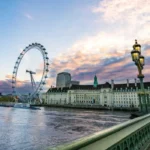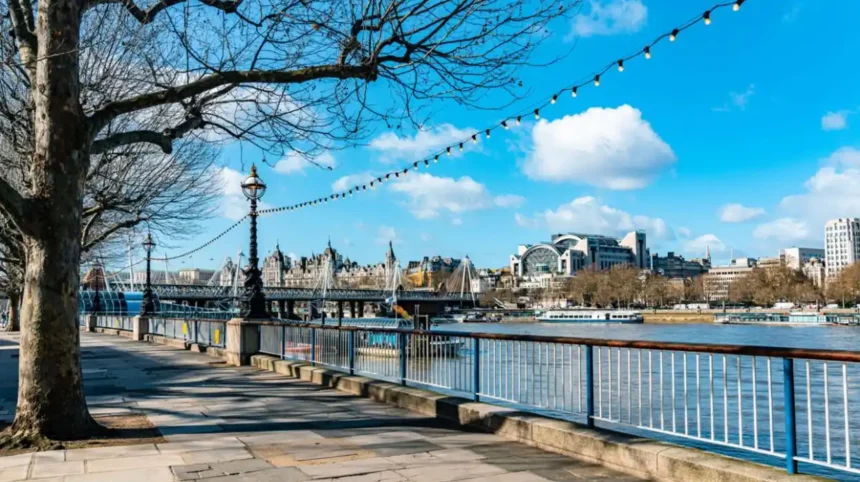
Lambeth’s riverside area is one of South London’s most important visitor districts. It follows the southern bank of the River Thames through a sequence of distinct places, including South Bank, Waterloo, Lambeth, and Albert Embankment. The riverside combines major London attractions, historic buildings, cultural venues, public gardens, walking routes and modern developments.
- What exactly is Lambeth’s riverside area?
- Why is Lambeth’s riverside historically important?
- Which landmarks should visitors see along Lambeth’s riverside?
- What can visitors do on a Lambeth riverside walk?
- Which parks and green spaces are near Lambeth’s riverside?
- How can visitors reach Lambeth’s riverside?
- What should visitors know about food, culture and entertainment?
- How long should visitors spend exploring Lambeth’s riverside?
- Why does Lambeth’s riverside remain important for the future?
- What is the best way to experience Lambeth’s riverside?
The area sits directly opposite some of central London’s most recognisable landmarks. Visitors can see the Palace of Westminster, the Houses of Parliament and Westminster from the southern side of the Thames. The riverside also provides direct access to attractions such as the London Eye, Southbank Centre and Garden Museum.
The character of the riverside changes as visitors move east and west. South Bank has major cultural and entertainment venues. Albert Embankment has a stronger architectural and institutional character. Lambeth Palace and the Garden Museum provide historic interest. Vauxhall adds transport connections, restaurants, public spaces and regeneration projects.
Lambeth Council identifies Albert Embankment as a conservation area extending along the Thames frontage from the borough boundary with Wandsworth towards Westminster Bridge. The designation includes the embankment walk, retaining walls, open spaces and historic developments, including the St Thomas’ Hospital complex.
For visitors, this means Lambeth’s riverside is not a single attraction. It is a connected waterfront district where London’s history, culture, transport and public realm meet.
What exactly is Lambeth’s riverside area?
Lambeth’s riverside area is the Thames-facing part of the London Borough of Lambeth, stretching through South Bank, Waterloo, Lambeth and Albert Embankment towards Vauxhall. It combines attractions, heritage sites, parks, walking routes, cultural venues and transport connections.
The term “Lambeth riverside” describes a broad geographical zone rather than one formally defined neighbourhood. Its central feature is the River Thames and the public spaces running beside it.
South Bank is the busiest visitor section. The official South Bank destination area runs along the riverside from Lambeth Bridge to Blackfriars Bridge. It contains major attractions, arts venues, restaurants and pedestrian routes.
Albert Embankment forms another important section. It runs beside the Thames between Vauxhall and the central riverside. Lambeth Council describes Albert Embankment Gardens as a chain of small open spaces running between Vauxhall and Waterloo along the River Thames.
The geography is important when planning a visit. A traveller who searches for “Lambeth riverside” can encounter several different environments within a relatively short distance.
The western section around Vauxhall has a strong regeneration and residential character. The central section around Lambeth Bridge contains historic buildings, St Thomas’ Hospital and the Garden Museum. The northern section around Waterloo and South Bank is dominated by major cultural and tourist attractions.
This variety makes the riverside suitable for different types of visits. Sightseers can concentrate on landmarks. Heritage visitors can focus on Lambeth Palace and historic churches. Walkers can follow the river. Families can combine attractions with open spaces. Business travellers can use the riverside as a convenient leisure route after meetings in central London.
Why is Lambeth’s riverside historically important?
Lambeth’s riverside developed around the River Thames, with medieval religious connections followed by fishing, boat building, pottery, warehouses and other industries. Victorian embankment construction transformed the waterfront and created the public riverside landscape visitors recognise today.
The Thames shaped Lambeth’s development for centuries. The river provided transport, water access, employment and connections with Westminster and the wider London economy.
Historic development records identify fishing, boat building, glassmaking and pottery among the industries associated with the Lambeth waterfront. Docks, wharves and warehouses occupied sections of the riverbank, while residential development expanded behind the industrial frontage.
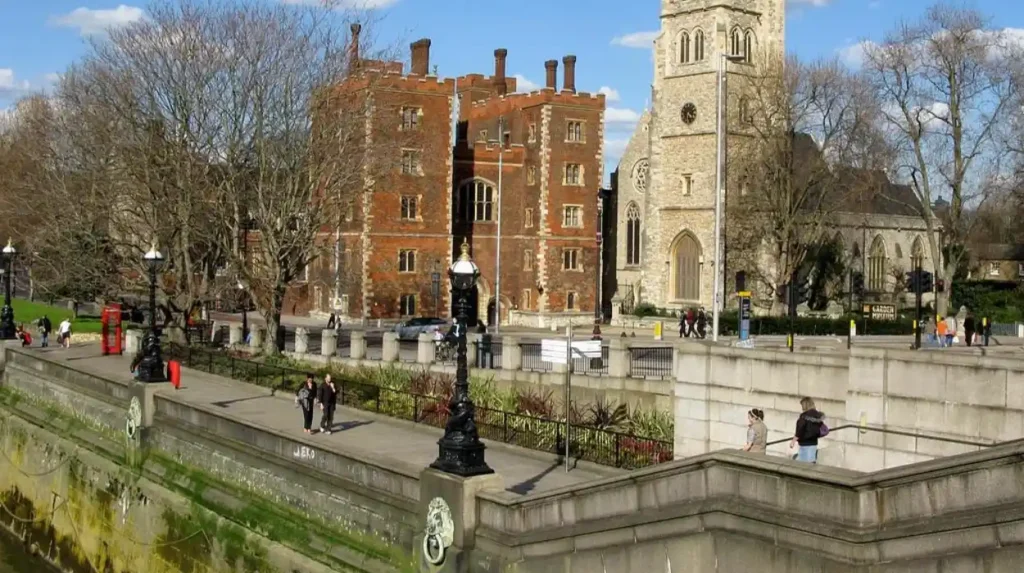
The waterfront also had religious and royal associations. Lambeth Palace has occupied its current site since around 1200. The palace became the London residence of the Archbishops of Canterbury and remains one of the most significant historic sites beside the Thames.
St Mary-at-Lambeth provides another direct connection with the medieval riverside. The church site dates back to at least the 11th century, while the surviving medieval tower dates from 1377. The building now houses the Garden Museum.
The Victorian period produced one of the most significant physical changes to the waterfront. Albert Embankment was constructed between 1866 and 1870. The project reclaimed land, addressed flooding and drainage issues, and replaced older riverside industrial and residential areas with a planned embankment.
The transformation also changed how people experienced the river. Instead of a working industrial shoreline, the waterfront gained a continuous public-facing edge with roads, paths, open spaces and formal architecture.
As you explore the modern site, you are crossing land with a deep heritage. Read about the full [Insert Anchor Text for Lambeth Riverside History Article Here] to understand its origins.
Which landmarks should visitors see along Lambeth’s riverside?
The main riverside landmarks include the London Eye, Southbank Centre, Lambeth Palace, Garden Museum, St Mary-at-Lambeth, St Thomas’ Hospital, Albert Embankment and views towards Westminster. Each provides a different perspective on London’s cultural, political, medical and architectural history.
The London Eye is one of the most recognisable landmarks on the Lambeth-facing Thames. Its location beside the river provides elevated views across central London.
The Southbank Centre forms the cultural core of the riverside. It is one of the most important performing arts complexes in London and hosts concerts, theatre, dance, literature and other cultural programmes.
The Garden Museum is particularly important for visitors interested in history and architecture. It occupies the former St Mary-at-Lambeth Church beside Lambeth Palace. The museum is Britain’s only museum dedicated to the art, history and design of gardens.
The building itself is part of the attraction. Its medieval tower dates from 1377, while the main body of the church underwent substantial Victorian reconstruction. The churchyard contains the tomb of John Tradescant, a major English gardener and plant collector.
Lambeth Palace stands beside the Garden Museum. It has been associated with the Archbishops of Canterbury for centuries. Its historic buildings include the 13th-century chapel and Morton’s Tower, a Tudor gatehouse completed in 1495.
St Thomas’ Hospital occupies a major section of the Albert Embankment riverside. The hospital complex is specifically identified by Lambeth Council as one of the significant developments within the Albert Embankment conservation area.
The riverside also provides important views. From the Lambeth side, visitors can look north across the Thames towards Westminster. These views connect several major landmarks within a single visual setting.
What can visitors do on a Lambeth riverside walk?
A Lambeth riverside walk combines sightseeing, architecture, heritage, photography, parks and river views without requiring a dedicated tour. Visitors can connect Westminster Bridge, Lambeth Bridge, Albert Embankment, Vauxhall and South Bank through riverside paths.
Walking is one of the simplest ways to experience the area. The Thames provides a clear geographical reference point, while bridges divide the waterfront into recognisable sections.
A central walking route can begin near Westminster Bridge and continue south along the river towards Lambeth Bridge. From there, visitors can follow the waterfront towards Albert Embankment and Vauxhall.
Another route can begin around Waterloo and South Bank. This section provides access to the London Eye, Southbank Centre and other visitor attractions before continuing towards Lambeth Bridge.
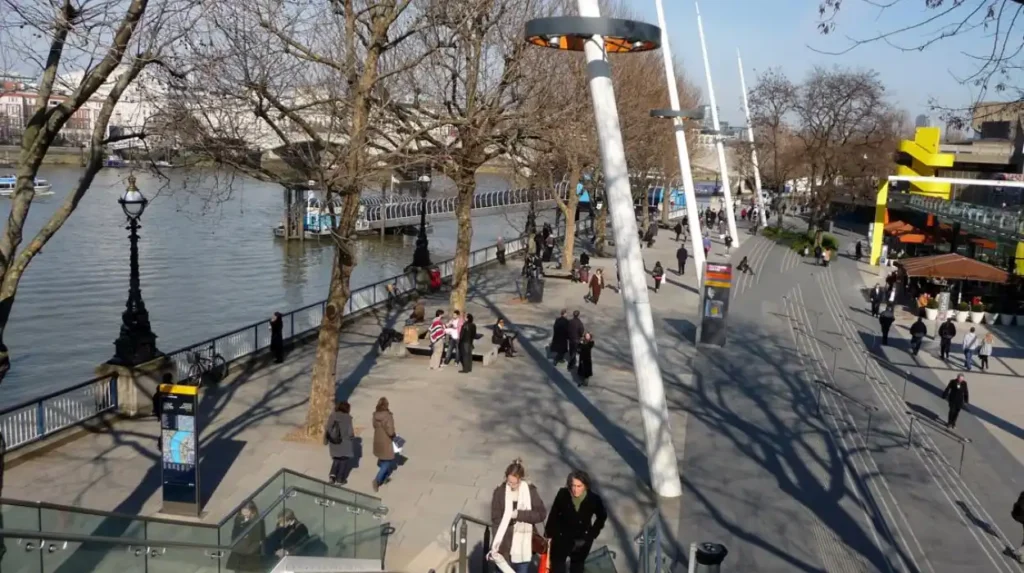
The riverside environment changes noticeably along the way. South Bank has a dense concentration of visitor attractions and public activity. Albert Embankment provides a more architectural setting, with historic walls, institutional buildings and open spaces.
Lambeth Council has identified Thames Path improvements as part of its wider public-realm planning. A council framework identifies a 5-kilometre area for improvements intended to strengthen riverside connectivity and connections with green corridors and surrounding parks.
Visitors should allow additional time for stops rather than treating the route solely as a point-to-point walk. Attractions, viewpoints, gardens and cafés create natural breaks.
Photography is another major activity. The Thames provides direct views towards Westminster, bridges and central London architecture. The riverside also contains historic structures that contrast with newer buildings.
For visitors with limited time, a short riverside walk can connect several major London landmarks without requiring multiple underground journeys.
Which parks and green spaces are near Lambeth’s riverside?
Lambeth’s riverside has several green spaces, including Albert Embankment Gardens, Archbishop’s Park and the gardens around the Garden Museum. These spaces provide seating, walking areas, landscaped surroundings and quieter breaks from the main tourist routes.
Albert Embankment Gardens are particularly relevant to riverside visitors. Lambeth Council describes them as a chain of small open spaces along the Thames between Vauxhall and Waterloo. The gardens are open 24 hours a day.
Archbishop’s Park sits close to Waterloo and Lambeth Palace. It provides a large green space within walking distance of the river and major central London attractions.
The Garden Museum also has gardens connected with its historic building. The museum describes its gardens as a green space in central London that includes a courtyard garden and community garden.
Lambeth has a substantial wider network of public green spaces. The council lists more than 78 parks, commons and other public open spaces across the borough. Examples include Clapham Common, Brockwell Park, Vauxhall Park and Albert Embankment Gardens.
Visitors should distinguish between riverside green spaces and the wider Lambeth park network. Not every Lambeth park sits beside the Thames.
For a riverside-focused trip, Albert Embankment Gardens and Archbishop’s Park are more practical choices because they integrate directly with central riverside routes.
Opening arrangements also matter. Lambeth Council states that its parks and open spaces normally close around dusk, with official closing times varying throughout the year. Albert Embankment Gardens is an exception because the council lists it as open 24 hours a day.
How can visitors reach Lambeth’s riverside?
Visitors can reach Lambeth’s riverside through London Underground, National Rail, buses, walking and cycling. Waterloo, Vauxhall and Lambeth North are important nearby stations, while Westminster Bridge and Lambeth Bridge provide direct pedestrian connections across the Thames.
Transport planning is straightforward because the riverside is surrounded by major central London transport hubs.
Waterloo is particularly useful for South Bank and the eastern part of the Lambeth riverside. Vauxhall provides access to Albert Embankment and the western section. Lambeth North is useful for the area around Lambeth Palace and the Garden Museum.
The Garden Museum states that it is around a 10-minute walk from Vauxhall, Westminster, Waterloo and Lambeth North stations. It also identifies Vauxhall, Waterloo and Victoria as nearby National Rail stations, with London Underground access from Lambeth North, Vauxhall and Waterloo.
Bus services provide another option. Several routes serve the streets around the Garden Museum and Lambeth Palace, including routes 3, 77, 344 and C10.
Walking between transport hubs is practical because the riverside connects several major districts. A visitor can arrive at Waterloo, explore South Bank, cross Lambeth Bridge and continue towards Lambeth Palace without repeatedly using public transport.
Cycling is also part of the riverside transport network. The waterfront connects central London routes with the wider South London cycling network.
Visitors using cars face a less convenient experience. Central Lambeth is within London’s wider traffic-management environment, and parking near major attractions is limited. The Garden Museum specifically states that it has no visitor car park and that nearby paid parking is available.
For a sightseeing day, public transport and walking provide the most direct combination.
What should visitors know about food, culture and entertainment?
Lambeth’s riverside combines restaurants, cafés, cultural venues, museums and entertainment spaces with direct Thames views. South Bank has the highest concentration of visitor facilities, while Albert Embankment and Lambeth provide a quieter mix of hospitality, heritage and local services.
South Bank is the main entertainment centre. Its attractions include the London Eye, London Dungeon, Florence Nightingale Museum, SEA LIFE London Aquarium, Garden Museum and Southbank Centre.
This concentration makes the riverside suitable for a full day rather than a short sightseeing stop.
Visitors can combine an indoor attraction with outdoor walking. This is particularly useful during changeable London weather. The South Bank area contains numerous indoor cultural attractions alongside the open riverside.
The Garden Museum provides a different cultural experience. Its collection focuses on British gardening, garden design, historic gardeners and related subjects. Its archive preserves working records from British garden designers of the 20th and 21st centuries.
Food and drink options are concentrated around South Bank, Waterloo and the streets immediately behind the river. The riverside itself has cafés and hospitality venues, while the surrounding neighbourhoods provide a broader choice.
For digital nomads and business travellers, the area also has practical advantages. Waterloo provides extensive transport connections, while South Bank has cafés, cultural venues and public spaces within walking distance of major offices.
Visitors should separate sightseeing needs from work needs. Busy tourist areas are not consistently suitable for concentrated work. A quieter café or a dedicated workspace away from the busiest riverside attractions provides a better environment for longer working sessions.
How long should visitors spend exploring Lambeth’s riverside?
Visitors should allow at least two to three hours for a focused riverside walk and four to six hours for a fuller itinerary including museums, gardens, landmarks, food and cultural attractions. A complete day suits visitors combining several major attractions.
A short visit can concentrate on the river itself. Visitors can walk between Waterloo, South Bank, Lambeth Bridge and Albert Embankment while stopping at major viewpoints.
A two-to-three-hour itinerary works well for travellers who want the riverside experience without entering multiple attractions.
A half-day provides more flexibility. Visitors can include the London Eye or Southbank Centre, followed by a walk towards Lambeth Palace and the Garden Museum.
A full day allows visitors to combine major attractions with a longer riverside walk, food stops and green spaces.
The area also works well as part of a wider central London itinerary. Its proximity to Westminster means visitors can connect the two sides of the Thames within the same day.
A practical route starts around Waterloo, moves through South Bank, continues towards the London Eye, crosses or approaches Lambeth Bridge, then explores Lambeth Palace and the Garden Museum before continuing along Albert Embankment.
Visitors should check attraction opening hours before travelling. Museum hours, exhibitions, tower access and temporary events change over time. The Garden Museum, for example, publishes current visiting information and seasonal opening arrangements on its official visitor information.
Time planning also depends on transport. A visitor arriving at Waterloo has a different starting point from someone arriving at Vauxhall or Westminster.
Explore More Area Guide
Best Areas of Lambeth for Visitors: South Bank, Brixton & More
What Is Lambeth Known For? Top London Visitor Attractions
Why does Lambeth’s riverside remain important for the future?
Lambeth’s riverside remains important because it combines tourism, public space, heritage, housing, employment, transport and regeneration within one strategic Thames corridor. Ongoing investment focuses on improving public spaces, connectivity, accessibility and relationships between the river and surrounding neighbourhoods.
The riverside is not a static historic district. It continues to change through development and public-realm projects.
Lambeth Council identifies Waterloo and South Bank as an area experiencing significant development and economic growth. Its public-realm framework addresses the pressures created by this growth and sets guidance for investment and improvements.
Vauxhall is another major regeneration area. Lambeth Council identifies plans for nearly 3,500 new homes and 8,000 jobs as part of the wider regeneration programme. The strategy also focuses on creating a greener, safer and more accessible town centre with stronger links to the river and parks.
Heritage protection remains equally important. Lambeth has more than 2,000 statutory listed buildings, ranging from major architectural landmarks to smaller historic structures.
Albert Embankment has specific conservation protection. Its designation recognises the importance of the riverside walls, open spaces and historic buildings along the Thames.
This combination of development and conservation defines the future of the area. New homes, offices and public spaces must coexist with historic landmarks and established riverside views.
For visitors, these changes mean the Lambeth riverside remains an evolving part of central London. The historic waterfront is still visible, but it now operates as a major cultural, residential, commercial and recreational corridor.
What is the best way to experience Lambeth’s riverside?
The best approach is to explore Lambeth’s riverside on foot, combine outdoor walking with one or two major attractions, allow time for historic sites and gardens, and use Waterloo, Lambeth North, Vauxhall or Westminster as convenient transport starting points.
Start with the River Thames as the organising feature of the visit. The river makes navigation simple and connects the major attractions.
For first-time visitors, South Bank offers the highest concentration of major attractions. The London Eye and Southbank Centre provide an immediate introduction to the cultural importance of the waterfront.
For history-focused visitors, Lambeth Palace, St Mary-at-Lambeth and the Garden Museum provide stronger heritage connections. The Garden Museum’s medieval building and collections demonstrate how the riverside developed from a historic parish and ecclesiastical setting into a modern cultural venue.
For walkers, the route between Westminster Bridge, Lambeth Bridge and Albert Embankment provides a strong combination of architecture, river views and public spaces.
For families, the riverside works best when indoor attractions are balanced with open spaces. The concentration of attractions around South Bank makes itinerary changes easy.
For digital nomads and business travellers, the area provides good transport access and a wide range of cafés and public spaces, although the busiest tourist sections are not always ideal for focused work.
For repeat visitors, the historic streets behind the waterfront provide another layer of the district. The river is the starting point, but Lambeth’s identity extends inland into Waterloo, Kennington, Vauxhall and surrounding neighbourhoods.
The most important point is that Lambeth’s riverside should be treated as a connected destination rather than one attraction. Its value comes from the relationship between the River Thames, historic buildings, cultural institutions, green spaces, transport routes and modern development.
That combination gives visitors a clear reason to explore the area beyond the headline landmarks. Lambeth’s riverside provides a compact way to experience several layers of London in one trip: medieval heritage, Victorian engineering, modern culture, public parks, major tourist attractions and an active contemporary waterfront.
What is Lambeth’s riverside area known for?
Lambeth’s riverside is known for its River Thames views, South Bank attractions, London Eye, Lambeth Palace, Garden Museum, Albert Embankment, cultural venues, historic buildings, gardens and riverside walking routes.