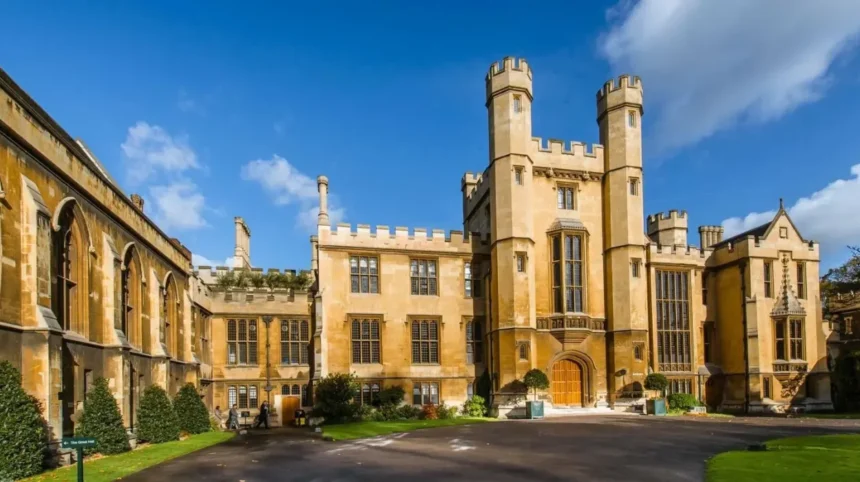
Lambeth is one of South London’s most architecturally diverse boroughs. Located on the south bank of the River Thames, it combines medieval religious buildings, Victorian landmarks, Georgian streets, twentieth-century cultural institutions and modern urban developments. Its architectural character reflects centuries of religious, industrial, civic and cultural change.
- Why Is Lambeth an Interesting Destination for Architecture Enthusiasts?
- What Makes Lambeth Palace an Important Historic Building?
- Why Should Architecture Lovers Visit the Garden Museum and St Mary’s Church?
- Which Buildings Make the South Bank an Architectural Landmark?
- Is the National Theatre Worth Visiting for Brutalist Architecture?
- What Is Special About County Hall’s Architecture?
- Which Historic Churches and Religious Buildings Should You Explore in Lambeth?
- Where Can You Find Victorian and Industrial Architecture in Lambeth?
- Is Brixton Worth Visiting for Modernist and Community Architecture?
- What Can You Discover About Modern Residential Architecture in Lambeth?
- Why Is West Norwood Cemetery an Important Architectural Destination?
- What Architectural Features Make Lambeth Bridge Worth Visiting?
- How Can You Plan an Architecture Walking Tour Around Lambeth?
- South Bank and Historic Lambeth Route
- Kennington and Victorian Architecture Route
- Brixton Architecture Route
- West Norwood Heritage Route
- What Should Visitors Know Before Exploring Lambeth’s Architecture?
- How Does Lambeth’s Architecture Reflect the Future of South London?
- Which Are the Best Places to Visit in Lambeth for Architecture Enthusiasts?
For architecture enthusiasts, Lambeth offers opportunities to examine different building styles within a relatively compact part of London. Visitors can explore the historic residence of the Archbishop of Canterbury, admire post-war cultural buildings along the South Bank, discover Victorian engineering and examine distinctive residential developments.
The borough also provides an important perspective on London’s architectural development. Its historic buildings stand alongside modern cultural destinations, demonstrating how older structures and contemporary designs contribute to the character of an urban environment.
Whether you are interested in Gothic architecture, Tudor buildings, Brutalism, Victorian engineering or modernist design, Lambeth offers several worthwhile places to explore.
Why Is Lambeth an Interesting Destination for Architecture Enthusiasts?
Lambeth is an important architectural destination because it combines medieval landmarks, Victorian buildings, Georgian streets and internationally recognised post-war architecture. Its historic and contemporary structures demonstrate how religious, civic, industrial and cultural developments shaped South London’s built environment.
The London Borough of Lambeth occupies an important position along the River Thames. Its neighbourhoods include Waterloo, Vauxhall, Kennington, Brixton, Clapham, Herne Hill and West Norwood. Each area contains buildings associated with different periods of London’s development.
Lambeth’s architectural significance extends beyond individual attractions. The borough contains conservation areas, listed buildings, historic churches, former industrial premises and significant public buildings.
Historic England identifies numerous important architectural sites throughout Lambeth. These include Lambeth Palace, Brixton Recreation Centre, the former Annie McCall Hospital, West Norwood Cemetery, the Old Vic Theatre and Pullman Court.
The South Bank is particularly significant. Lambeth Council designated its South Bank Conservation Area on 27 July 1982. The area received an extension in 1998, followed by a further boundary change in 2016. It protects an internationally important collection of twentieth-century buildings overlooking the Thames.
Visitors can understand Lambeth’s architectural identity through five broad characteristics:
- Medieval and Tudor architecture, represented by Lambeth Palace and its historic towers.
- Georgian and Victorian architecture, visible in residential streets, churches and former industrial buildings.
- Victorian engineering, represented by historic infrastructure and converted industrial structures.
- Post-war modernism and Brutalism, particularly around Waterloo and the South Bank.
- Contemporary urban development, visible around Vauxhall and the Albert Embankment.
This architectural variety makes Lambeth suitable for independent walking tours, photography and specialist heritage visits.
What Makes Lambeth Palace an Important Historic Building?
Lambeth Palace is one of Lambeth’s most important historic buildings because it has served as the London residence of the Archbishop of Canterbury since 1197. Its medieval towers, Tudor entrance, historic chapel and Great Hall represent centuries of architectural development.
Located beside the River Thames, Lambeth Palace is a major architectural landmark in the borough.
The palace functions as the official London residence and working base of the Archbishop of Canterbury, the senior bishop of the Church of England. Its architectural development spans several centuries, with medieval structures and later additions forming a distinctive historic complex.
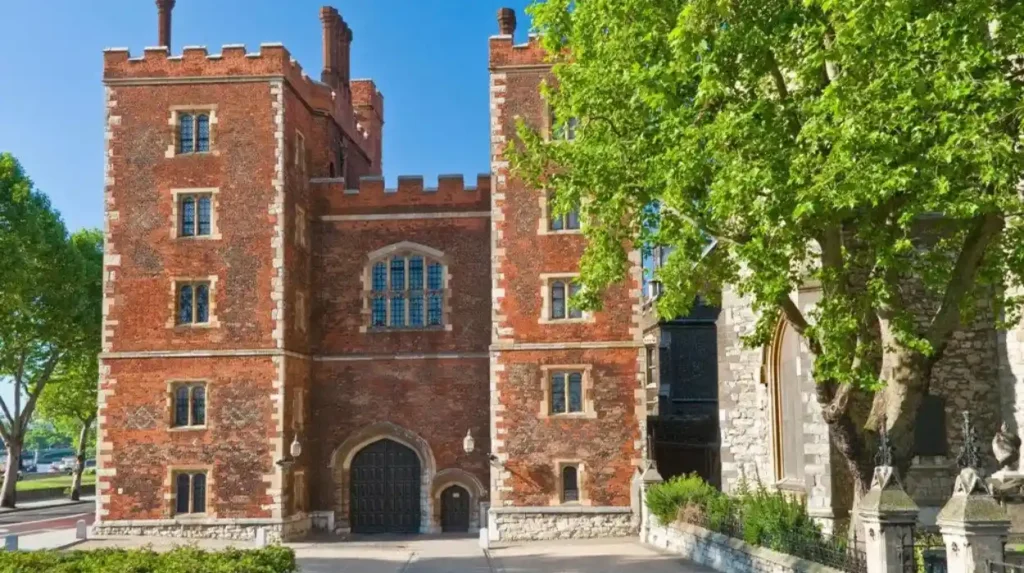
One of its most recognisable features is Morton’s Tower. Built in 1486, this late-medieval Tudor gateway provides the principal historic entrance to the palace. Its brick construction, decorative detailing and large entrance arch demonstrate the architectural character of the period.
Other important structures include:
- Lollards’ Tower: A historic stone tower associated with the medieval palace complex.
- Laud’s Tower: Another important surviving historic structure.
- The Great Hall: A significant ceremonial building rebuilt in 1616.
- The Palace Chapel: A historic religious space within the complex.
The palace’s architecture demonstrates how important religious institutions developed through successive construction periods.
Lambeth Palace is not a conventional walk-in tourist attraction. Visitors should check official arrangements before travelling. Selected guided tours and open days provide access to historic rooms, including the Great Hall, Chapel and Guard Room. Advance booking is recommended because places are limited. lambeth.gov.uk+1
For visitors interested in the relationship between architecture and religious history, the palace is an essential stop.
As you explore this historic complex, you are also crossing land with centuries of religious and political heritage. Discover the full [Historical Development of Lambeth and Its Medieval Heritage] to understand how the palace and surrounding neighbourhood developed.
Why Should Architecture Lovers Visit the Garden Museum and St Mary’s Church?
The Garden Museum is worth visiting because it occupies the former St Mary-at-Lambeth Church, a medieval building beside Lambeth Palace. Its surviving church tower, historic fabric and adapted museum interiors demonstrate how heritage buildings receive new cultural uses.
The Garden Museum occupies the historic building of St Mary-at-Lambeth, located beside Lambeth Palace.
The former church provides an excellent example of adaptive reuse. Adaptive reuse describes the process of converting an existing building into a different functional space while retaining important architectural features.
St Mary’s Church has medieval origins. Its historic tower remains an important part of the Lambeth riverside skyline.
The building’s architectural features include:
- Historic masonry and traditional church construction.
- A distinctive medieval tower.
- Traditional ecclesiastical openings and structural details.
- Historic interior spaces adapted for museum exhibitions.
The conversion demonstrates how historic religious buildings can accommodate modern cultural activities without losing their architectural identity.
The museum focuses on garden history, landscape design and horticultural heritage. Its exhibitions provide additional context for understanding the relationship between buildings, gardens and urban environments.
The Garden Museum also offers visitors an opportunity to examine the relationship between Lambeth Palace, the former church and the surrounding riverside landscape.
Architecture enthusiasts should check the museum’s current opening arrangements and admission information before visiting.
Which Buildings Make the South Bank an Architectural Landmark?
The South Bank is one of Lambeth’s most important architectural destinations because it contains an internationally recognised collection of post-war cultural buildings. Royal Festival Hall, Queen Elizabeth Hall, Hayward Gallery and the National Theatre demonstrate modernist and Brutalist design.
The South Bank is particularly valuable for visitors interested in twentieth-century architecture.
The district underwent major redevelopment following the Second World War. The 1951 Festival of Britain played an important role in establishing its modern cultural identity.
The redevelopment introduced buildings designed around public access, cultural activities and modern construction methods.
Royal Festival Hall
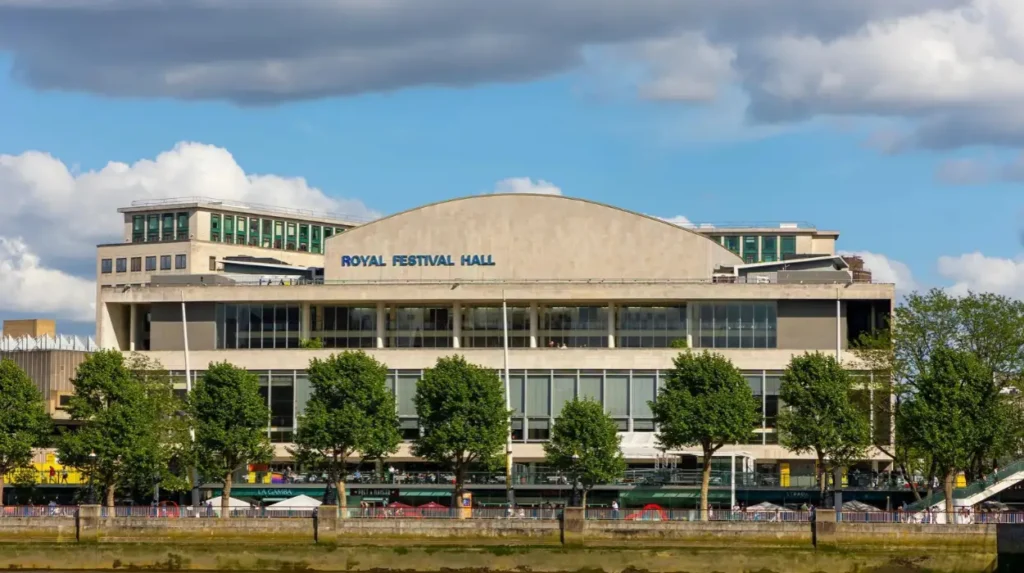
Royal Festival Hall opened in 1951 as a major concert venue for the Festival of Britain.
The building is a landmark of post-war modernist architecture. Its design is associated with architect Leslie Martin and the architectural team responsible for the original Festival Hall project.
Its main architectural characteristics include:
- A large reinforced-concrete structure.
- Extensive glazing.
- Functional interior planning.
- An open relationship between the building and surrounding public spaces.
The building received Grade I listing status, recognising its exceptional architectural and historic importance.
Visitors can examine its riverside position, structural arrangement and relationship with neighbouring cultural buildings.
Queen Elizabeth Hall
Queen Elizabeth Hall forms part of the Southbank Centre complex.
It opened in 1967 and represents the development of post-war modernist architecture.
The building uses exposed concrete and geometric forms. Its design reflects the architectural principles associated with Brutalism, an approach that often emphasises structural materials, strong shapes and functional organisation.
The surrounding complex includes public terraces and pedestrian spaces that connect different cultural venues.
Hayward Gallery
The Hayward Gallery is another important architectural destination.
Opened in 1968, the gallery forms part of the Southbank Centre’s post-war cultural complex.
Its architecture features exposed concrete, angular forms and distinctive rooftop exhibition spaces. These characteristics make it an important example of Brutalist design.
The building also demonstrates how architectural planning accommodates cultural activities. Exhibition spaces, circulation areas and external terraces contribute to the visitor experience.
Together, Royal Festival Hall, Queen Elizabeth Hall and Hayward Gallery form a nationally significant architectural group.
Is the National Theatre Worth Visiting for Brutalist Architecture?
The National Theatre is one of London’s most recognisable Brutalist buildings. Designed by Sir Denys Lasdun and opened in 1976, it uses exposed concrete, interconnected terraces and layered geometric forms to create a major cultural complex.
Located on Upper Ground, the National Theatre is an essential stop for architecture enthusiasts visiting Lambeth.
Architect Sir Denys Lasdun designed the building with architectural input from Peter Softley. Construction took place in stages during the 1970s, and the theatre opened in 1976.
The National Theatre is recognised for its exposed concrete construction and complex arrangement of terraces.
Its architecture contains several distinctive features.
Exposed concrete: The building uses concrete as both a structural and visual material. The surfaces communicate the construction system rather than concealing it behind decorative finishes.
Terraced arrangement: Different levels connect the building’s public spaces, entrances and performance areas.
Geometric composition: Repeated horizontal forms and projecting structures create a layered external appearance.
Functional organisation: The building accommodates several performance spaces, production facilities, public circulation areas and technical departments.
The National Theatre demonstrates how Brutalist architecture combines structural expression with cultural functionality.
Visitors can examine its exterior from the surrounding public spaces. Its foyers and public areas also provide opportunities to experience parts of the building from inside, subject to access arrangements and events.
The National Theatre’s architectural importance extends beyond its theatrical programme. It forms part of the wider post-war transformation of the South Bank.
What Is Special About County Hall’s Architecture?
County Hall is an important example of monumental twentieth-century civic architecture on the Thames. Built as the headquarters of London’s local government, its substantial riverside frontage, traditional detailing and long horizontal composition distinguish it from nearby modernist buildings.
County Hall stands beside Westminster Bridge and provides one of the most recognisable architectural views along the South Bank.
The building was developed as the headquarters of the London County Council. It subsequently accommodated the Greater London Council before the end of that organisation’s existence in the 1980s.
County Hall represents an important period in the development of public administration and civic architecture.
Its architectural characteristics include:
- A substantial riverside frontage.
- A monumental building scale.
- Traditional stone detailing.
- Repeated window arrangements.
- A prominent relationship with Westminster Bridge and the Thames.
The building’s long frontage contrasts with the more sculptural concrete forms of the Royal Festival Hall and National Theatre.
This difference makes County Hall particularly useful for comparative architectural observation. Visitors can examine how civic institutions used traditional monumental design while neighbouring cultural organisations adopted modernist construction.
Its riverside setting also provides views towards the Palace of Westminster and the wider Westminster skyline.
County Hall is not a single-purpose public museum. Different parts of the complex accommodate commercial, hospitality and visitor activities. Access to internal areas depends on the individual venue.
Which Historic Churches and Religious Buildings Should You Explore in Lambeth?
Lambeth contains historic churches and religious buildings that reveal the borough’s architectural development. St George’s Cathedral, Holy Trinity Clapham and St Mary’s former church demonstrate different approaches to religious design, construction materials and community architecture.
Religious architecture is an important part of Lambeth’s built heritage. Churches provide evidence of changing architectural styles, religious institutions and neighbourhood development.
Three buildings deserve particular attention.
St George’s Cathedral
St George’s Cathedral is located on Lambeth Road, opposite the Imperial War Museum.
It serves as the Roman Catholic cathedral of the Archdiocese of Southwark.
The cathedral is an important religious and architectural destination. Its design is associated with Augustus Welby Northmore Pugin, a prominent architect and designer of the Gothic Revival movement.
The building’s architectural character reflects nineteenth-century ecclesiastical design.
Visitors interested in religious architecture can examine its external form, interior arrangements and decorative details. As an active place of worship, visitors should respect services and check access arrangements.
Holy Trinity Church, Clapham
Holy Trinity Church is an important eighteenth-century religious building.
Designed by Kenton Couse, the church was constructed between 1774 and 1776. Its architecture reflects the classical traditions associated with Georgian religious buildings.
The structure is particularly relevant to visitors studying the architectural development of Clapham.
Its position beside Clapham Common also demonstrates the relationship between religious buildings, open spaces and residential neighbourhoods.
St Mary’s Church
The former St Mary’s Church, now incorporated into the Garden Museum, offers a different architectural experience.
Its medieval origins and surviving tower provide a historical contrast with the eighteenth-century design of Holy Trinity Church and the nineteenth-century Gothic Revival traditions visible at St George’s Cathedral.
Exploring these buildings provides a useful overview of religious architecture across different periods in Lambeth.
Where Can You Find Victorian and Industrial Architecture in Lambeth?
Lambeth’s Victorian industrial heritage is visible in former factories, infrastructure buildings and converted industrial structures. These landmarks demonstrate how nineteenth-century engineering, manufacturing and public services influenced the borough’s architectural character and urban development.
Lambeth developed as an important industrial and manufacturing district during the nineteenth century. Its proximity to the River Thames supported manufacturing, transportation and commercial activity.
Several surviving structures provide architectural evidence of this period.
Osborne Water Tower House
Osborne Water Tower House is a distinctive Victorian engineering structure.
The Grade II-listed water tower stands out because of its unusual Victorian Gothic architectural character.
Originally designed for water infrastructure, the building demonstrates how nineteenth-century engineering structures served essential urban functions.
Its conversion into a residential property represents adaptive reuse. The project also illustrates how historic industrial structures receive new purposes within modern neighbourhoods.
Architecture enthusiasts can examine its exterior from the surrounding public streets. It is a private residential property rather than a conventional visitor attraction.
Southbank House and Lambeth’s Pottery Heritage
Southbank House is associated with the former Royal Doulton industrial heritage of Lambeth.
The building is particularly interesting for its Victorian Gothic Revival character and architectural terracotta detailing.
Terracotta is a fired clay material frequently used in nineteenth-century architecture for decorative panels, façades and ornamental features.
The building provides an opportunity to examine the relationship between industrial production and architectural design.
Lambeth’s pottery industry contributed to the area’s manufacturing identity. Historic industrial buildings such as Southbank House help preserve evidence of that commercial and architectural history.
Historic Gas Infrastructure
The former No. 1 gasholder at Kennington Lane Gasholder Station is another significant industrial landmark.
Constructed between 1877 and 1879, the structure was designed by Corbet Woodall for the Phoenix Gas Light and Coke Company. It was subsequently enlarged between 1891 and 1892 under Frank Livesey.
Its engineering design demonstrates the importance of gas infrastructure in supporting nineteenth-century urban growth.
The structure is particularly relevant to visitors interested in industrial archaeology, engineering and the relationship between infrastructure and city development.
Is Brixton Worth Visiting for Modernist and Community Architecture?
Brixton is an important destination for modernist and community-focused architecture. Its recreation centre, historic market buildings, fire station and residential developments demonstrate how public services, commercial activity and modern housing shaped the neighbourhood.
Brixton offers an architectural experience that differs from the historic riverside buildings of Waterloo.
Its built environment includes public buildings, commercial premises, residential developments and historic market structures.
Brixton Recreation Centre
Brixton Recreation Centre is an important example of twentieth-century public architecture.
Designed in 1970 by a team led by George Finch, with Ove Arup and Partners acting as consulting engineers, the building reflects the development of municipal leisure facilities.
The centre combines recreational functions with a substantial urban structure. Historic England identifies it as an important listed building.
Its architectural significance lies in its relationship with public infrastructure and the provision of community facilities.
It demonstrates how local authorities used architecture to support recreation and public services during the twentieth century.
Brixton Market Buildings
Brixton’s historic market environment provides another architectural attraction.
Reliance Arcade, Market Row and Granville Arcade are recognised for their commercial and architectural heritage.
Their covered market structures reflect the development of organised retail spaces in South London.
Visitors can examine traditional shopfronts, covered pedestrian areas and the relationship between commercial architecture and busy urban streets.
These buildings also demonstrate how historic commercial premises continue to serve contemporary communities.
Brixton Fire Station
Brixton Fire Station was constructed between 1904 and 1906.
The building was designed by the Fire Brigade Branch of the London County Council Architects Department.
Its architecture reflects the development of Edwardian public-service buildings.
The structure is an interesting example of how public authorities designed specialised premises to accommodate essential municipal services.
Together, these locations demonstrate that Brixton’s architectural value extends beyond traditional historic attractions.
What Can You Discover About Modern Residential Architecture in Lambeth?
Lambeth contains important residential developments that demonstrate changing approaches to housing design. Pullman Court is a particularly significant example of early International Modern architecture, while surrounding neighbourhoods reveal different periods of urban planning.
Architecture enthusiasts interested in residential design should explore areas beyond the South Bank.
Lambeth’s housing developments demonstrate how architectural priorities changed in response to population growth, housing demand and modern construction methods.
Pullman Court
Pullman Court is one of the borough’s most important residential architectural landmarks.
Designed by Sir Frederick Gibberd and constructed between 1933 and 1935, the development represents early International Modern architecture in Britain.
International Modernism is an architectural movement associated with functional planning, simple geometric forms and reduced decorative ornamentation.
Pullman Court demonstrates these principles through its residential layout and modernist design approach.
Its importance also reflects the influence of European modernist architects and architectural ideas on British housing development.
The development provides an excellent case study for visitors interested in twentieth-century residential architecture.
Vauxhall and Albert Embankment
Vauxhall and Albert Embankment contain a changing mixture of historic buildings, residential towers and contemporary developments.
Their architectural character reflects the transformation of former industrial and commercial land into residential and mixed-use urban environments.
Visitors can examine how newer buildings respond to the River Thames, existing streets and the surrounding historic skyline.
Lambeth Council’s design guidance identifies residential tall buildings and estate renewal as important features of development in Waterloo, Vauxhall and along the Albert Embankment.
This area is particularly useful for understanding contemporary urban design and the relationship between new development and historic conservation.
Why Is West Norwood Cemetery an Important Architectural Destination?
West Norwood Cemetery is an important Victorian heritage destination because it opened in 1837 and contains historic funerary architecture, landscaped grounds and significant monuments. Its buildings demonstrate nineteenth-century approaches to memorial design, landscape planning and burial practices.
West Norwood Cemetery is one of the historic cemeteries known collectively as the Magnificent Seven.
The Magnificent Seven refers to seven privately established nineteenth-century cemeteries developed around London to address growing pressure on existing burial grounds.
West Norwood Cemetery opened in 1837 and was originally known as South Metropolitan Cemetery.
Architect William Tite designed its original layout. His work combined landscaped grounds with an organised arrangement of burial plots, pathways and architectural monuments.
The cemetery contains several architectural features worth examining.
Mortuary architecture: Memorial chapels and burial structures demonstrate different approaches to funerary design.
Monuments: Historic tombs and memorials reflect changing artistic and architectural traditions.
Landscape planning: The arrangement of paths, vegetation and monuments demonstrates nineteenth-century cemetery design.
Augustus Ralli Mortuary Chapel: This distinctive structure is attributed to J. Oldrid Scott and dates from approximately 1872. Its Doric temple design provides a classical architectural reference within the cemetery.
The cemetery is particularly valuable for understanding how Victorian society approached death, commemoration and public landscape design.
Visitors should check current access arrangements before travelling because cemetery access and guided activities can vary.
What Architectural Features Make Lambeth Bridge Worth Visiting?
Lambeth Bridge is worth visiting because its distinctive red-painted structure combines engineering design with historic urban character. Constructed between 1929 and 1932, its five-span steel arch structure provides important views of Westminster and the Lambeth riverside.
Lambeth Bridge connects Lambeth on the south bank of the Thames with Westminster on the north bank.
The current bridge was constructed between 1929 and 1932.
Its five-span steel arch structure demonstrates the relationship between civil engineering and architectural design.
One of its most recognisable features is its red colour, which creates a distinctive visual identity along the river.
The bridge is also Grade II listed, reflecting its architectural and historic importance.
Architecture enthusiasts can examine:
- The steel arch construction.
- The structural arrangement of its five spans.
- The relationship between the bridge and the riverbanks.
- Its position within the wider Westminster and Lambeth townscape.
The bridge is also a useful location for architectural photography.
From its pedestrian areas, visitors can observe the surrounding historic buildings, the River Thames and the contrasting architecture on both sides of the river.
It is a practical addition to a walking route connecting Lambeth Palace, County Hall and the South Bank.
How Can You Plan an Architecture Walking Tour Around Lambeth?
The best way to explore Lambeth’s architecture is to organise visits by neighbourhood. Start with the South Bank and Lambeth Palace, then explore Kennington, Brixton or West Norwood separately to examine different architectural periods.
Lambeth contains architectural landmarks across several neighbourhoods. A planned itinerary reduces unnecessary travel and provides enough time to examine individual buildings.
South Bank and Historic Lambeth Route
This route is suitable for visitors with limited time.
Start at County Hall and examine its monumental civic architecture. Continue towards Royal Festival Hall, Queen Elizabeth Hall and Hayward Gallery.
Next, visit the National Theatre to examine Brutalist design and exposed concrete construction.
Continue towards Lambeth Palace and the Garden Museum to explore medieval and Tudor architecture.
Finish at Lambeth Bridge for views across the Thames.
Allow approximately three to four hours, depending on museum visits and interior access.
Kennington and Victorian Architecture Route
Begin around Kennington Lane and explore the historic gas infrastructure.
Continue towards Osborne Water Tower House to examine Victorian engineering and adaptive reuse.
Explore nearby historic streets and residential buildings to understand the development of the neighbourhood.
This route is particularly useful for visitors interested in industrial architecture and nineteenth-century urban infrastructure.
Brixton Architecture Route
Start at Brixton Recreation Centre and examine its modern public architecture.
Continue towards Reliance Arcade, Market Row and Granville Arcade.
Finish around Brixton Fire Station and nearby historic streets.
This route provides a useful comparison between twentieth-century municipal architecture and traditional commercial buildings.
West Norwood Heritage Route
Visit West Norwood Cemetery to explore Victorian landscape planning, historic memorials and funerary architecture.
Allow additional time to examine the Augustus Ralli Mortuary Chapel and other significant monuments.
This route is particularly suitable for visitors interested in architectural conservation and historic landscapes.
What Should Visitors Know Before Exploring Lambeth’s Architecture?
Visitors should check building access, opening times, photography restrictions and transport connections before planning an architectural visit. Several landmarks are publicly visible from outside, while historic interiors require admission, guided tours or advance arrangements.
A few practical considerations help visitors make the most of their trip.
1. Check admission requirements
Lambeth Palace operates selected tours and open days rather than unrestricted daily public access. Museums and cultural venues also have individual admission arrangements.
2. Explore conservation areas
Lambeth contains several conservation areas protecting buildings and streets with architectural and historic significance. The South Bank Conservation Area is particularly important for twentieth-century architecture.
3. Use public transport
Waterloo, Lambeth North, Vauxhall, Brixton, Clapham Common and West Norwood provide useful transport connections for different architectural destinations.
4. Respect residential properties
Some historic buildings, including Osborne Water Tower House and Pullman Court, are private residential developments. Visitors should appreciate their architecture from publicly accessible streets without entering private premises.
5. Research building histories
Historic England’s National Heritage List for England provides information about listed buildings, architectural significance and heritage designations.
Lambeth Council’s conservation area profiles and design guidance also help visitors understand the borough’s architectural development.
Explore More Area Guide
Most Deprived Borough Named Across South-East London in Lewisham 2026
Best Places to Experience Lambeth’s Contemporary Culture
How Does Lambeth’s Architecture Reflect the Future of South London?
Lambeth’s architectural future depends on balancing new development with historic conservation. Residential growth, public infrastructure improvements and cultural investment continue to influence the borough’s built environment and its architectural identity.
Lambeth faces ongoing urban development pressures associated with housing demand, population growth and changing commercial requirements.
Areas such as Vauxhall and Waterloo demonstrate how contemporary development transforms former industrial and commercial locations.
However, historic buildings remain important to the borough’s identity. Conservation policies protect architectural features, historic streetscapes and important views.
Three factors will continue to influence Lambeth’s architectural character.
Historic building conservation: Maintaining medieval, Georgian and Victorian buildings preserves evidence of the borough’s development.
Sustainable redevelopment: Reusing existing buildings reduces the need for unnecessary demolition and supports more sustainable urban development.
Contemporary architectural design: New residential and commercial buildings introduce modern materials, construction methods and urban planning approaches.
The South Bank provides an important example of how historic and modern buildings coexist within a significant cultural district.
For architecture enthusiasts, these changes make Lambeth an interesting place to revisit. Its buildings provide evidence of past architectural movements while demonstrating how South London continues to develop.
Which Are the Best Places to Visit in Lambeth for Architecture Enthusiasts?
Lambeth offers a diverse architectural experience for visitors interested in London’s historic and contemporary built environment.
Lambeth Palace and the Garden Museum provide opportunities to explore medieval and Tudor heritage. The South Bank introduces visitors to post-war modernism and Brutalist architecture through Royal Festival Hall, Queen Elizabeth Hall, Hayward Gallery and the National Theatre.
County Hall demonstrates monumental civic architecture, while Lambeth Bridge provides an example of twentieth-century engineering. Brixton, Kennington and West Norwood offer additional opportunities to explore industrial buildings, modernist housing, public architecture and Victorian cemetery design.
For first-time visitors, the South Bank and Lambeth Palace provide the strongest starting point. Visitors with more time should explore Brixton, Kennington and West Norwood to understand the wider architectural character of Lambeth.
The borough’s combination of historic preservation, cultural buildings and contemporary development makes it a valuable destination for architecture enthusiasts exploring South London.
What are the best architectural attractions in Lambeth?
The best architectural attractions in Lambeth include Lambeth Palace, the National Theatre, Royal Festival Hall, County Hall, the Garden Museum, Brixton Recreation Centre and West Norwood Cemetery. These landmarks represent medieval, Victorian, modernist and Brutalist architecture.