Lambeth’s Caribbean cultural heritage is most visible in Brixton, where historic landmarks, community archives, traditional markets, independent cultural organisations and Caribbean food businesses preserve the borough’s connections with the Caribbean. Visitors can explore this heritage through Windrush Square, Black Cultural Archives, Brixton Market, Electric Avenue, cultural exhibitions and community celebrations.
- What Makes Lambeth an Important Centre of Caribbean Cultural Heritage?
- Where Can Visitors Learn About Caribbean History at Windrush Square?
- African and Caribbean War Memorial
- Cherry Groce Memorial Pavilion
- Public gatherings and cultural activities
- How Can Visitors Explore Caribbean Heritage at Black Cultural Archives?
- Windrush generation stories
- Historical exhibitions and archival collections
- Educational workshops and events
- What Can Visitors Discover About Caribbean Culture at Brixton Market?
- Caribbean ingredients and traditional produce
- Caribbean food businesses
- Market architecture and commercial history
- Why Is Electric Avenue Important to Lambeth’s Caribbean Heritage?
- Which Cultural Events Help Visitors Experience Caribbean Traditions in Lambeth?
- Windrush Day celebrations
- Black History Month
- Brixton Village cultural programming
- Community-led celebrations
- Where Can Visitors Discover Caribbean Art and Creative Expression in Brixton?
- How Has Caribbean Music Shaped Brixton’s Cultural Identity?
- Where Can Visitors Experience Traditional Caribbean Food in Lambeth?
- Jamaican food traditions
- Trinidadian food traditions
- Caribbean ingredients and cooking methods
- Food businesses as cultural spaces
- Which Community Organisations Preserve Caribbean Heritage in Lambeth?
- Black community heritage organisations
- Local history groups
- Educational and creative organisations
- Churches and community spaces
- How Can Visitors Understand the Windrush Generation’s Connection with Lambeth?
- How Can Visitors Plan a Caribbean Heritage Walk Around Brixton?
- Stop 1: Windrush Square
- Stop 2: Black Cultural Archives
- Stop 3: Brixton Market
- Stop 4: Electric Avenue
- Stop 5: Brixton Village
- When Is the Best Time to Explore Caribbean Cultural Heritage in Lambeth?
- June: Windrush commemorations
- October: Black History Month
- Weekdays: Historical research
- Weekends: Markets and cultural activities
- What Should Visitors Know Before Exploring Lambeth’s Caribbean Heritage?
- How Does Caribbean Cultural Heritage Continue to Influence Modern Lambeth?
- Where Should Visitors Start Exploring Lambeth’s Caribbean Heritage?
South London has an important place in the history of Caribbean migration and Black British culture. Lambeth, particularly Brixton, became a major centre of Caribbean settlement after the Second World War. Generations of Caribbean residents established businesses, churches, social organisations, music networks and community institutions that shaped the area’s identity.
Today, visitors experience this heritage through physical landmarks and contemporary cultural activities. The borough offers opportunities to understand the Windrush generation, explore Caribbean traditions, discover Black British art and enjoy food and music influenced by different Caribbean islands.
Exploring Lambeth’s Caribbean heritage also provides insight into migration, community development, cultural identity and the contribution of Caribbean communities to modern British society.
What Makes Lambeth an Important Centre of Caribbean Cultural Heritage?
Lambeth is an important centre of Caribbean cultural heritage because post-war Caribbean migration transformed Brixton into a major Black British community. Its historic markets, cultural organisations, memorials, music venues and community institutions preserve these contributions for residents and visitors.
The London Borough of Lambeth includes Brixton, Stockwell, Clapham, Kennington, Herne Hill, Streatham and surrounding neighbourhoods. Brixton is particularly associated with Caribbean heritage because of its post-war migration history and the development of established Caribbean communities.
Following the Second World War, people from Jamaica, Trinidad and Tobago, Barbados and other Caribbean territories travelled to Britain. Many arrived to find employment, establish households and contribute to the country’s reconstruction. The arrival of the Empire Windrush at Tilbury on 22 June 1948 became a defining moment in this history.
Brixton developed into an important destination for Caribbean migrants because of its housing, employment opportunities and transport connections. Residents established shops, restaurants, churches, social clubs and community organisations.
Academic research published in Past & Present records that approximately 11,000 people from the Caribbean settled in Brixton between the 1951 and 1961 censuses. This provides an indication of the scale of post-war migration into the neighbourhood.
Caribbean residents also influenced British music, food, fashion, education, political activism and community life. These contributions remain visible in Brixton’s public spaces and independent businesses.
Visitors can understand this history by exploring the area’s memorials, cultural institutions and markets. The neighbourhood provides a connection between historical migration and contemporary Caribbean-influenced culture.
Where Can Visitors Learn About Caribbean History at Windrush Square?
Windrush Square in Brixton is a central location for discovering Lambeth’s Caribbean heritage. Its memorials commemorate Caribbean migration and military service, while its proximity to Black Cultural Archives provides opportunities to explore Black British history.
Windrush Square is one of the most recognisable heritage locations in Brixton. It commemorates the arrival of the Empire Windrush, which travelled from Jamaica to Tilbury in 1948 carrying 492 passengers.
The square provides a public space where visitors can explore the historical significance of Caribbean migration. It also acts as a meeting point for residents, community organisations and cultural events.
Lambeth Council records that Windrush Square combines two previously separate public spaces: the original Windrush Square and Tate Library Gardens. Their redevelopment created a unified public plaza, completed in 2010.
Several features make the square important to Caribbean heritage.
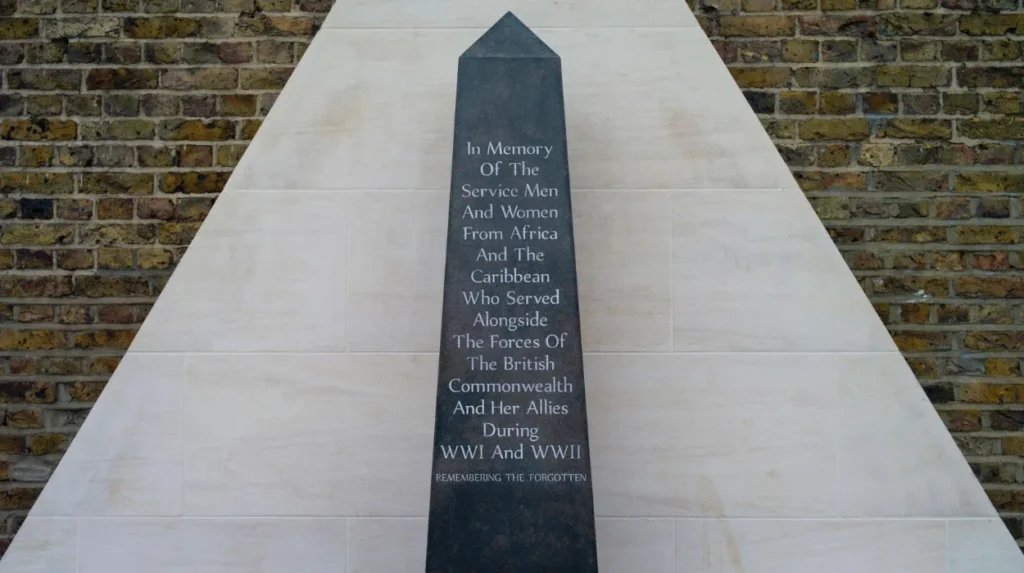
African and Caribbean War Memorial
The African and Caribbean War Memorial commemorates African and Caribbean service personnel who fought in the First and Second World Wars.
It recognises the contribution of people from African and Caribbean communities to Britain’s military history. Visitors can use the memorial to understand the relationship between Caribbean history and Britain’s wider imperial and wartime past.
Cherry Groce Memorial Pavilion
The Cherry Groce Memorial Pavilion commemorates Cherry Groce, who was shot in her home by police in 1985. Her shooting became a significant event in Brixton’s history and contributed to wider discussions about policing and racial equality.
The pavilion was installed in 2021 and designed by architect Sir David Adjaye. It provides another important perspective on the experiences of Black communities in Lambeth.
Public gatherings and cultural activities
Windrush Square also provides space for community gatherings, exhibitions and cultural activities. Its location makes it a useful starting point for a heritage walk through central Brixton.
The square is open 24 hours a day, and visitors can explore its public memorials without purchasing an admission ticket.
How Can Visitors Explore Caribbean Heritage at Black Cultural Archives?
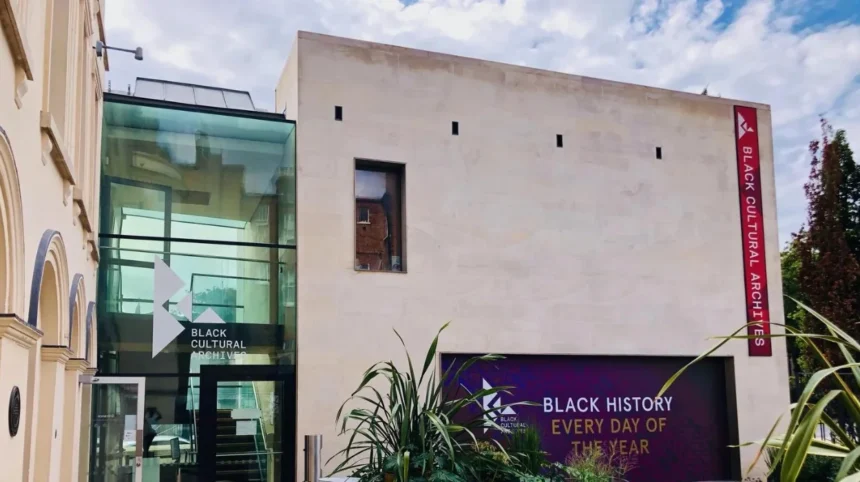
Black Cultural Archives is a national heritage institution at 1 Windrush Square, Brixton. It collects, preserves and celebrates the histories of African and Caribbean people in Britain through archival collections, exhibitions, educational programmes and community events.
Black Cultural Archives (BCA) is one of the most important institutions for understanding Caribbean heritage in Lambeth. Established in 1981, it works to preserve historical records and make Black British history more accessible.
Its permanent home at 1 Windrush Square opened in 2014. The institution provides a place for visitors, researchers, students and community groups to engage with the experiences of African and Caribbean communities in Britain.
The organisation’s collections and activities cover several important subjects.
Windrush generation stories
The Windrush generation refers to Caribbean migrants who arrived in Britain during the post-war period, particularly between 1948 and the early 1970s.
Black Cultural Archives preserves stories that explain their experiences of migration, employment, family life and community development.
Its digitised oral history material, including extracts from the Windrush oral history collection, gives visitors access to personal accounts of migration and settlement.
Historical exhibitions and archival collections
The archives contain historical documents, photographs, museum objects and other materials relating to Black British history.
Exhibitions provide context about migration, identity, activism and the achievements of Caribbean communities. Their subjects help visitors understand how individual experiences contributed to wider social change.
Educational workshops and events
BCA also organises learning programmes, workshops and public engagement activities. These programmes support schools, universities, researchers and community groups interested in Black history.
Visitors should check the official Black Cultural Archives website before travelling. The organisation currently states that visits are by appointment, with selected open days and events available. Its reading room and library operate on Wednesday, Thursday and Friday, with appointments required. Black Cultural Archives+1
What Can Visitors Discover About Caribbean Culture at Brixton Market?
Brixton Market provides a practical introduction to Caribbean cultural heritage through traditional food ingredients, specialist grocery shops, independent traders and Caribbean-inspired restaurants. Its markets connect historic migration with contemporary food traditions and everyday community activity.
Brixton Market is one of Lambeth’s most recognisable cultural destinations. Its trading streets and covered arcades provide opportunities to discover the influence of Caribbean communities on local food and commerce.
The market developed alongside Brixton’s growth as a Victorian shopping district. Caribbean and other international communities subsequently influenced its products, businesses and food culture.
Lambeth Council identifies more than 80 licensed pitches across Electric Avenue, Pope’s Road and Brixton Station Road. These stalls offer fresh produce, clothing, household goods and international street food.
Visitors interested in Caribbean heritage can explore several aspects of the market.
Caribbean ingredients and traditional produce
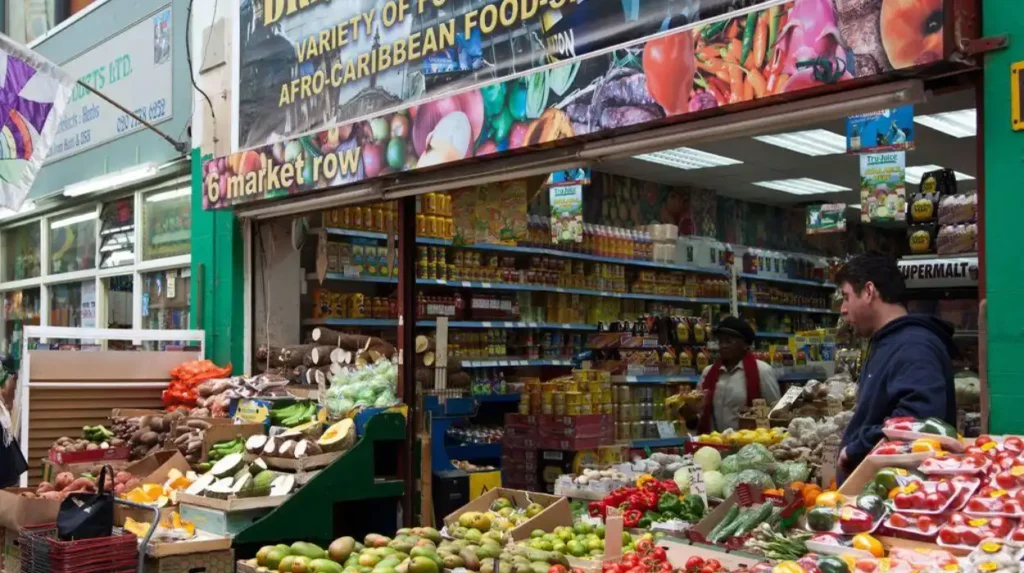
Market traders sell ingredients associated with Caribbean cooking. Examples include plantain, yams, cassava, Caribbean seasonings, fresh herbs and tropical fruit.
These ingredients are used in traditional dishes across Jamaica, Trinidad and Tobago, Barbados and other Caribbean islands.
Their availability demonstrates how migrant communities maintained connections with familiar food traditions while developing businesses in Britain.
Caribbean food businesses
Independent restaurants and food stalls introduce visitors to different Caribbean cooking styles.
Popular dishes include jerk chicken, curry goat, rice and peas, fried plantain, patties and roti. These dishes represent different culinary influences and regional traditions rather than one uniform Caribbean cuisine.
Visitors can ask traders about the origins of ingredients and preparation methods. This provides an opportunity to understand the cultural meaning of food beyond the finished dish.
Market architecture and commercial history
Brixton’s markets include Electric Avenue, Market Row and Brixton Village.
Market Row was developed in the early twentieth century, while Granville Arcade opened in 1937 and later became known as Brixton Village. These historic market spaces remain important parts of Brixton’s commercial identity.
The market is therefore an important destination for understanding how Caribbean communities influenced the economic and cultural development of Lambeth.
Why Is Electric Avenue Important to Lambeth’s Caribbean Heritage?
Electric Avenue is a historic shopping street in Brixton known for its multicultural market and Caribbean businesses. It reflects the commercial and cultural influence of migrant communities and remains an important place to experience Brixton’s changing identity.
Electric Avenue is one of Brixton’s most recognisable streets. It was constructed in the 1880s and became famous for being the first shopping street in Britain illuminated entirely by electric lighting.
The street later developed into an important trading location for Caribbean and international businesses. Its shops and market stalls introduced residents to products, ingredients and services associated with different parts of the world.
The London Picture Archive documents Electric Avenue’s historic market activity and its association with Caribbean, African, South American and Asian produce. London Picture Archive+1
Visitors can explore the street to discover:
- Caribbean grocery shops selling ingredients such as plantain, yam and spices.
- Independent food businesses serving traditional Caribbean dishes.
- Market traders selling clothing, household products and specialist goods.
- Historic shopfronts that reflect Brixton’s commercial development.
Electric Avenue also has a connection with British popular music. Jamaican-British musician Eddy Grant released his song Electric Avenue in 1983. The song reflected social tensions surrounding unemployment, policing and the 1981 Brixton uprising.
The street therefore connects Caribbean-influenced commercial life with wider cultural and political developments in modern Britain.
Visitors interested in the historical development of this neighbourhood can also explore the [Insert Anchor Text for Brixton’s Historical Background Article Here] to understand how migration, local businesses and community activism shaped modern Brixton.
Which Cultural Events Help Visitors Experience Caribbean Traditions in Lambeth?
Caribbean cultural events in Lambeth include Windrush celebrations, Black History Month programmes, community markets, music performances and educational gatherings. These activities provide opportunities to experience Caribbean traditions, understand migration history and support local cultural organisations.
Lambeth’s cultural calendar includes activities organised by the council, independent venues, community organisations and heritage institutions.
The programme changes throughout the year. Visitors should check event organisers’ announcements before planning a trip around a particular celebration.
Windrush Day celebrations
Windrush Day takes place annually on 22 June. It commemorates the arrival of the Empire Windrush at Tilbury in 1948 and recognises the contributions of Caribbean migrants and their descendants.
Brixton is an important location for understanding this commemoration because of its historical connections with Caribbean settlement.
Activities associated with Windrush commemorations include historical exhibitions, public discussions, community gatherings and cultural performances. Windrush Square provides a significant public setting for recognising the occasion.
Black History Month
Black History Month takes place in October in the United Kingdom. It recognises the histories, achievements and contributions of Black communities.
Lambeth’s programme includes cultural markets, exhibitions, educational activities and community events.
For example, Lambeth Council has listed a Black Culture Market event at The Department Store in Brixton. The event supports emerging businesses owned by people of African and Caribbean descent and provides a platform for independent creative products.
Visitors can use Black History Month to discover local entrepreneurs, artists, designers and community organisations.
Brixton Village cultural programming
Brixton Village organises cultural activities alongside its food and retail businesses.
Its programme includes live music, DJ performances, exhibitions, artist residencies, supper clubs and creative gatherings. Some activities take place in the market’s communal spaces and courtyards.
The venue describes its cultural programme as a platform for experiences connected with Brixton’s food, music, arts and community heritage. Brixton Village
Visitors should consult the venue’s events calendar to identify performances and exhibitions taking place during their visit.
Community-led celebrations
Local organisations also arrange cultural gatherings throughout the year. These activities provide opportunities for residents and visitors to engage with Caribbean music, food, dance and historical discussions.
Community-led programmes are particularly valuable because they allow visitors to encounter traditions through the people and organisations that maintain them.
Where Can Visitors Discover Caribbean Art and Creative Expression in Brixton?
Visitors can explore Caribbean-influenced creative expression through Brixton’s independent galleries, public art, cultural spaces and community exhibitions. Organisations such as 198 Contemporary Arts and Learning provide platforms for Black artists and discussions about identity, heritage and society.
Art is an important part of Lambeth’s Caribbean cultural identity. Brixton has developed a strong relationship with Black British creative movements, including visual art, photography, music, design and community-based exhibitions.
198 Contemporary Arts and Learning
198 Contemporary Arts and Learning is located at 198 Railton Road, near Herne Hill.
Established in 1988, the organisation initially aimed to provide a platform for Afro-Caribbean and Asian artists during the development of the Black Arts Movement.
Its work includes exhibitions, workshops, educational projects and discussions involving artists, activists, young people and local communities.
The organisation provides an opportunity to explore how Black artists respond to historical experiences and contemporary social issues.
Its exhibitions also connect local creative expression with broader conversations about representation, identity and cultural diversity.
When planning a visit, check the gallery’s exhibition schedule. Its published visitor information lists free exhibition entry, with opening arrangements depending on the exhibition programme. Contact & Visit Us
Brixton’s public art and murals
Brixton’s streets contain public artworks that reflect its cultural identity and social history.
Murals and community artworks often commemorate local figures, celebrate Black British achievements and highlight important neighbourhood events.
Visitors can explore the streets around Railton Road, Atlantic Road and central Brixton to discover examples of public art.
These works help communicate cultural histories outside traditional museums and galleries.
Music and creative performance
Brixton has a long-standing association with Black music and Caribbean musical traditions.
Reggae, ska, dub, sound system culture and later British music movements influenced the neighbourhood’s cultural development.
Live performances, DJ events and music gatherings continue to provide opportunities for visitors to experience this creative heritage.
How Has Caribbean Music Shaped Brixton’s Cultural Identity?
Caribbean music has shaped Brixton through reggae, ska, dub, sound system culture and the development of Black British musical movements. Local venues, independent promoters and community events continue to connect these musical traditions with contemporary performances.
Music is one of the most recognisable expressions of Caribbean heritage in Lambeth.
Caribbean migrants brought musical traditions from Jamaica, Trinidad and Tobago and other islands. These traditions developed within British communities and influenced new forms of popular music.
Reggae and sound system culture
Reggae originated in Jamaica during the late 1960s. It developed from earlier Jamaican musical styles, including ska and rocksteady.
Sound systems became an important part of Caribbean community entertainment. These mobile music setups use turntables, amplifiers, speakers and selectors to create public dance events.
In Britain, Caribbean sound system culture provided opportunities for communities to gather, celebrate and maintain cultural connections.
Brixton became an important location for this musical development. Brixton Village’s historical account identifies 1965 as an important period in the growth of the local sound system scene. Brixton Village
Contemporary music venues
Brixton has several venues associated with live music and entertainment.
O2 Academy Brixton is a major concert venue, while Electric Brixton and smaller independent spaces host different musical performances.
Not every performance focuses on Caribbean music. However, the wider music environment provides opportunities to discover reggae, dancehall, dub and other genres influenced by Caribbean traditions.
Music as cultural preservation
Caribbean music also communicates historical experiences and social concerns.
Songs, performances and sound system gatherings have addressed migration, discrimination, identity, community relationships and political change.
For visitors, attending an appropriate live performance provides a way to experience this cultural influence in a contemporary setting.
Event listings should be checked before travelling because performance schedules and musical genres change.
Where Can Visitors Experience Traditional Caribbean Food in Lambeth?
Visitors can experience traditional Caribbean food across Brixton’s markets, independent restaurants and specialist grocery shops. Local businesses serve dishes influenced by Jamaica, Trinidad and Tobago and other islands, including jerk chicken, curry goat, roti and rice and peas.
Food is an important part of Caribbean cultural heritage because traditional recipes preserve family knowledge, regional ingredients and cooking methods.
Brixton’s food businesses provide opportunities to explore these traditions through meals, ingredients and conversations with local traders.
Jamaican food traditions
Jamaican cuisine is particularly visible in Brixton’s food scene.
Jerk chicken is one of its best-known dishes. It uses a seasoning mixture that commonly includes allspice, Scotch bonnet peppers, thyme and other spices.
Other Jamaican dishes include rice and peas, ackee and saltfish, oxtail and patties.
Trinidadian food traditions
Trinidad and Tobago has a distinct culinary identity influenced by African, Indian, European and other cultural traditions.
Roti is a familiar example. It is often served with curried fillings such as chickpeas, chicken or goat.
Doubles, another popular Trinidadian street food, consists of curried chickpeas served between two pieces of fried flatbread.
Caribbean ingredients and cooking methods
Visitors can discover ingredients that form the foundation of Caribbean cooking.
Plantain is used in fried and boiled dishes. Yam and cassava provide traditional sources of starch, while Scotch bonnet peppers contribute heat and flavour.
Marinades, slow cooking, grilling and seasoning techniques also play important roles in different Caribbean food traditions.
Food businesses as cultural spaces
Caribbean restaurants and independent food businesses also act as community spaces.
They provide opportunities for cultural exchange, social interaction and the continuation of traditional recipes.
Brixton Village is a useful starting point because its businesses combine food, shopping and cultural activities in one location. Visit individual traders to explore their menus and current opening arrangements.
Which Community Organisations Preserve Caribbean Heritage in Lambeth?
Community organisations preserve Lambeth’s Caribbean heritage through historical research, educational programmes, cultural activities and local support networks. Their work maintains connections between Caribbean traditions, migration experiences and younger generations growing up in South London.
Caribbean cultural heritage is not preserved by museums alone. Community organisations, local historians, artists, churches and voluntary groups contribute to the continuation of traditions and collective memory.
Their activities help visitors understand how Caribbean communities established themselves and developed institutions in Lambeth.
Black community heritage organisations
Black Cultural Archives provides a national platform for preserving African and Caribbean history. Its work includes collecting historical materials, organising exhibitions and supporting educational activities.
Its presence at Windrush Square makes it a central institution for understanding Black British heritage.
Local history groups
The Brixton Society documents the development of Brixton through historical research, photographs and local heritage resources.
Its historical material helps visitors understand how Brixton’s streets, markets and public spaces changed over time.
The society also provides information about the area’s architectural and social history. The Brixton Society+1
Educational and creative organisations
Organisations such as 198 Contemporary Arts and Learning connect cultural heritage with contemporary creative expression.
Their programmes introduce younger generations to Black British art, historical experiences and community identity.
Visitors can explore exhibitions and educational activities to understand how cultural traditions develop across generations.
Churches and community spaces
Churches and community halls have also played important roles in Caribbean settlement.
For many migrant families, religious institutions provided places for worship, social interaction, mutual support and cultural activities.
Caribbean Christian traditions, including Pentecostal and other Protestant denominations, became part of the wider religious landscape of South London.
Visitors interested in this aspect of heritage should look for publicly advertised community events and historical activities rather than assuming that every religious building operates as a visitor attraction.
How Can Visitors Understand the Windrush Generation’s Connection with Lambeth?
The Windrush generation’s connection with Lambeth developed through post-war migration, employment, family settlement and community building. Brixton became an important centre where Caribbean migrants established businesses, cultural institutions and social networks.
The Windrush generation is a significant part of modern British social history.
The term commonly describes Caribbean people who migrated to Britain during the post-war period, particularly those arriving between 1948 and 1971.
The Empire Windrush arrived at Tilbury on 22 June 1948. Its passengers included 492 migrants from Jamaica, according to Lambeth Council’s historical account.
Caribbean migration continued beyond this arrival.
People travelled from Jamaica, Barbados, Trinidad and Tobago, Grenada and other Caribbean territories. Many came to Britain for employment, education and family opportunities.
Employment and settlement
Caribbean migrants contributed to Britain’s post-war economy.
They worked in public services, transport, healthcare, manufacturing and other industries. Many experienced racial discrimination in housing and employment despite their contributions.
Brixton became an important settlement area because of its housing stock and access to employment and transport.
Family and community development
Caribbean residents established family networks and community institutions.
These networks supported new arrivals and helped maintain connections with Caribbean cultures.
Food businesses, churches, social clubs and music gatherings became important parts of everyday life.
Understanding historical experiences
Black Cultural Archives provides an important starting point for researching these experiences.
Its collections and oral histories help visitors understand migration through personal accounts, photographs and historical documents.
The experience also connects with wider British history, including citizenship, race relations, social change and the development of multicultural communities.
Visitors should approach Windrush heritage as a continuing history rather than a single historical event. Caribbean communities continue to influence Lambeth’s cultural, social and economic life.
How Can Visitors Plan a Caribbean Heritage Walk Around Brixton?
Visitors can explore Lambeth’s Caribbean heritage through a walking route connecting Windrush Square, Black Cultural Archives, Brixton Market, Electric Avenue and nearby cultural spaces. The route combines memorials, historical institutions, food businesses and contemporary creative activities.
A walking visit provides an efficient way to explore Brixton’s main Caribbean heritage locations.
Most central attractions are within walking distance of Brixton Underground and National Rail stations.
A practical heritage route includes the following stops.
Stop 1: Windrush Square
Start at Windrush Square to understand the historical importance of Caribbean migration.
Explore the African and Caribbean War Memorial, Cherry Groce Memorial Pavilion and the public space surrounding the square.
Allow approximately 20–30 minutes for the public memorial area.
Stop 2: Black Cultural Archives
Continue to Black Cultural Archives at 1 Windrush Square.
Explore its available exhibitions, educational resources or scheduled events.
Visitors interested in detailed historical research should arrange access in advance because the institution currently operates appointment-based visits.
Stop 3: Brixton Market
Walk towards Brixton Market to explore its independent traders and international food businesses.
Look for Caribbean ingredients, specialist grocery shops and traditional food.
Allow approximately 30–45 minutes, depending on shopping and dining plans.
Stop 4: Electric Avenue
Continue through Electric Avenue to explore its historic commercial character.
Observe the street’s market stalls and shopfronts while learning about its development as an early electrically illuminated shopping street.
Stop 5: Brixton Village
Finish at Brixton Village to experience its restaurants, independent businesses and cultural programme.
Check for live performances, exhibitions and special community activities before visiting.
This route generally takes around two to three hours without an extended meal or archive visit. Additional time is necessary when exhibitions or scheduled events are included.
When Is the Best Time to Explore Caribbean Cultural Heritage in Lambeth?
Visitors can explore Lambeth’s Caribbean heritage throughout the year because its markets, memorials and cultural institutions provide permanent points of interest. June’s Windrush commemorations and October’s Black History Month offer additional opportunities for cultural activities.
The best time depends on the type of experience visitors want.
June: Windrush commemorations
June is particularly relevant for visitors interested in Caribbean migration history.
Windrush Day takes place on 22 June. Community activities and commemorations provide opportunities to understand the experiences of the Windrush generation.
Visitors should monitor Lambeth Council and Black Cultural Archives announcements for confirmed programmes.
October: Black History Month
October offers opportunities to discover Black British history through exhibitions, educational events, cultural markets and community activities.
Brixton’s cultural venues and independent organisations provide useful places to investigate during this period.
Weekdays: Historical research
Weekdays are suitable for visitors interested in archives and educational resources.
Lambeth Archives and Black Cultural Archives provide opportunities to investigate historical materials, subject to their respective opening and appointment arrangements.
Weekends: Markets and cultural activities
Weekends are useful for exploring Brixton Market, independent restaurants and creative spaces.
Visitors can combine food experiences with shopping and scheduled cultural activities.
However, event schedules, opening hours and individual trader availability should always be checked before travelling.
What Should Visitors Know Before Exploring Lambeth’s Caribbean Heritage?
Visitors should check institutional opening arrangements, event schedules, transport options and accessibility information before exploring Lambeth’s Caribbean heritage. Windrush Square and Brixton Market offer public access, while archival research and selected exhibitions require advance planning.
A little preparation helps visitors make better use of their time.
Transport: Brixton Underground Station is served by the Victoria line. Brixton National Rail Station provides additional connections. Local buses connect Brixton with other parts of Lambeth and South London.
Accessibility: Windrush Square is a public space with seating and accessible routes. Individual cultural venues have different facilities. Visitors should check their requirements directly with each organisation.
Archive appointments: Black Cultural Archives requires visitors to arrange access in advance. Its reading room and library have separate operating arrangements.
Photography: Public photography opportunities are available around Brixton’s streets and markets. Visitors should ask permission before photographing individuals, private premises or activities where photography is restricted.
Food requirements: Caribbean restaurants serve different dishes and ingredients. Visitors with allergies or dietary requirements should confirm ingredients directly with food businesses.
Event information: Windrush Day celebrations, Black History Month activities and independent cultural programmes have changing schedules. Official organisers provide the most reliable information.
These practical considerations help visitors experience the area’s heritage respectfully while supporting local businesses and cultural organisations.
Explore More Area Guide
How to Explore Lambeth’s Food Culture and Local Cuisine
Which Places in Lambeth Celebrate London’s Cultural Diversity?
How Does Caribbean Cultural Heritage Continue to Influence Modern Lambeth?
Caribbean cultural heritage continues to influence Lambeth through independent businesses, music, food, artistic expression, education and community organisations. Its legacy remains visible in Brixton’s public spaces and everyday commercial life.
Caribbean heritage is not limited to historic buildings or commemorative events. It remains part of Lambeth’s contemporary identity.
Independent businesses continue to introduce Caribbean food and products to new generations of residents and visitors.
Cultural organisations preserve historical records while supporting modern creative expression. Music venues and independent promoters maintain connections with reggae, dub, sound system culture and other musical traditions.
Educational institutions also contribute by introducing students to migration history, Black British achievements and the development of multicultural communities.
The work of Black Cultural Archives is particularly important because it provides a permanent institutional foundation for preserving these experiences.
Meanwhile, Brixton’s markets demonstrate how cultural traditions influence everyday commerce. Caribbean ingredients, specialist products and traditional dishes remain part of the area’s trading environment.
These developments show that heritage preservation involves both historical documentation and active community participation.
For future generations, maintaining access to archives, supporting independent cultural organisations and recognising Caribbean contributions will remain important parts of Lambeth’s cultural development.
Where Should Visitors Start Exploring Lambeth’s Caribbean Heritage?
Lambeth offers several opportunities to discover Caribbean cultural heritage, with Brixton providing the most concentrated collection of historical landmarks, cultural institutions and independent businesses.
Visitors should begin at Windrush Square and Black Cultural Archives to understand the historical significance of Caribbean migration and the Windrush generation. Brixton Market, Electric Avenue and Brixton Village provide further opportunities to explore Caribbean food, shopping and community life.
Cultural organisations such as 198 Contemporary Arts and Learning introduce visitors to Black British art, while Windrush commemorations and Black History Month activities provide additional opportunities to engage with local traditions.
Together, these destinations demonstrate how Caribbean communities have influenced Lambeth’s history, identity and contemporary cultural landscape.
Exploring these places provides a deeper understanding of Brixton and the wider contribution of Caribbean communities to South London and British society.
Where can visitors explore Caribbean cultural heritage in Lambeth?
Visitors can explore Caribbean heritage in Brixton through Windrush Square, Black Cultural Archives, Brixton Market, Electric Avenue and Brixton Village. These locations showcase Caribbean history, food, music and community traditions.